
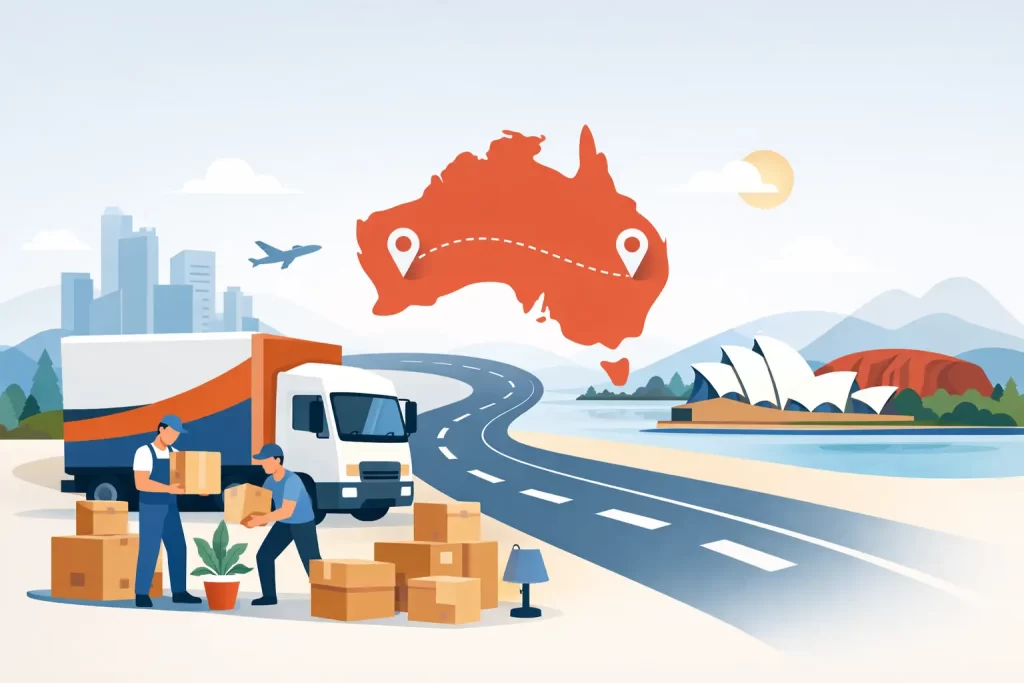
Moving a household from NSW to another state is not just a longer version of a local move. Collection times, access at both properties, packing quality and delivery arrangements all need to line up. This interstate moving guide Australia gives you a practical way to prepare, so moving day feels controlled rather than rushed.
Start Planning Before You Start Packing
The earlier you organise an interstate move, the more options you will have around dates, transport and packing support. Four to six weeks is a sensible starting point for most households, while larger homes, school-holiday moves and end-of-lease periods may need more notice.
Begin with the two dates that matter most: when you must leave your current property and when you can access the new one. These dates are not always the same. If there is a gap between them, you may need to discuss flexible delivery timing or storage options before booking your removalist.
Also check the practical details at each address. Apartments may need lift bookings, loading-zone permits or a particular moving window. Narrow driveways, steep access, stairs and long carries from truck to front door can affect the crew, vehicle and time required. Sharing these details upfront helps your quote reflect the actual job.
Get a Detailed Interstate Removal Quote
A low price means very little if it does not cover the work you need. When comparing interstate removal quotes, make sure each company understands the size of your move, the pickup and delivery suburbs, access conditions and any items requiring special care.
Ask whether the quote includes loading, transport, unloading and basic furniture protection. If you need help with cartons, wrapping, dismantling or reassembly, confirm that too. It is better to discuss these services early than try to arrange them while the truck is already at your door.
Delivery timing is another key question. Some interstate moves are delivered directly, while others may be scheduled as part of a consolidated run. Neither option is automatically better. A direct delivery can suit customers with a fixed handover date, while a planned run can be a practical and affordable choice where timing is more flexible. What matters is knowing the expected delivery window and having clear communication throughout the move.
For households moving from Nowra, Wollongong or the wider Illawarra, a removalist familiar with regional collection points can help plan the first stage of the journey properly, particularly where access is limited or travel needs to fit around settlement dates.
Sort Your Home Before Packing
Interstate transport is the right time to be selective. Every item takes space, handling time and packing materials, so moving unwanted furniture or boxes of unused belongings can add cost without adding value.
Work room by room and separate what you will keep, sell, donate, recycle or dispose of. Start with storage areas, spare rooms and sheds, as these are often where the least-used items collect. Be realistic about furniture that will not suit the new home. A large lounge may fit through your current doorway but not into an apartment lift or smaller living area.
Avoid placing loose, mixed items into boxes simply to get the job done faster. Clearly labelled cartons are easier to stack safely, easier to unload and much easier to find when you need the kettle, medication or school uniforms during your first night.
Pack for the Distance
Good packing protects belongings through loading, transport and unloading. Long-distance moves involve more travel time and more movement on the road, so cartons need to be strong, filled correctly and sealed securely.
Use quality moving boxes rather than worn supermarket cartons where possible. Keep heavy items such as books in smaller boxes, and use larger cartons for lighter items like linen, cushions and clothing. Fill empty space with packing paper so contents cannot shift around, but do not overfill boxes until they are difficult to lift safely.
For fragile items, wrap each piece separately and label cartons clearly as fragile. Plates should be packed upright rather than flat, while TVs, mirrors, artwork and glass furniture need suitable protection. Professional wrapping and packing can be worthwhile for customers with valuable, awkward or delicate items, especially if time is short.
Keep a separate essentials box or bag with what you will need before the rest of the home is unpacked. Include chargers, toiletries, basic kitchen items, important documents, a change of clothes, pet supplies and any daily medication. Carry passports, jewellery, financial records and irreplaceable personal items with you rather than putting them on the truck.
Items That Need Extra Planning
Some belongings cannot be transported in a standard removal truck or need specific preparation. Check with your removalist well before moving day if you have any of the following:
- flammable liquids, gas bottles, chemicals, aerosols or other hazardous goods
- plants, particularly when moving across state borders with biosecurity rules
- large safes, pianos, pool tables or oversized furniture
- motorcycles, boats, trailers or vehicles requiring separate transport
- appliances that need draining, defrosting or disconnection
Your fridge and freezer should be emptied, cleaned and defrosted ahead of collection. Washing machines need to be drained and prepared according to the manufacturer’s instructions. If you are unsure about an item, ask before the move rather than leaving it for the crew to assess on the day.
Handle State Borders and Address Changes Early
A move across state lines can bring extra admin. Registration, licences, vehicle insurance, school enrolments, utilities and pet requirements may all need attention after you arrive. Requirements differ by state, so make a simple timeline based on your destination rather than assuming the same rules apply everywhere.
Arrange disconnection and connection dates for electricity, gas, internet and water as soon as your moving dates are confirmed. Internet installation can take longer than expected, particularly in new estates or regional areas, so do not leave it until the final week.
Update your address with your bank, insurer, employer, doctor, children’s school, subscription services and any government agencies relevant to you. Redirecting mail is also useful, but it should be a backup, not the only way important organisations learn your new address.
If you are renting, photograph the condition of the property once it is empty and keep copies of your final inspection paperwork. Homeowners should retain settlement documents and check whether keys, remotes or building access cards need to be collected at a particular time.
Make Moving Day Easier for Everyone
The best moving days are prepared before the truck arrives. Have pathways clear, parking arranged and boxes sealed and labelled. Set aside anything that is not going with the removalists, so there is no uncertainty about what should be loaded.
Walk the crew through the home at the start, pointing out fragile pieces, furniture that needs dismantling and cartons containing essentials. If someone else will meet the truck at the destination, make sure they have the address, access instructions and a reliable mobile number for updates.
Before the truck leaves, do one final check of every room, cupboard, garage, shed and outdoor area. Then, at delivery, guide the team on where major furniture belongs. Putting beds, whitegoods and large pieces in the correct rooms from the start will save a great deal of lifting later.
Choose Support That Matches Your Move
A DIY interstate move can appear cheaper, but it often means managing truck hire, fuel, loading, long-distance driving, unloading and the risk of damage yourself. For a small, flexible move with minimal furniture, that may suit. For a family home, a busy work schedule or valuable belongings, professional removal support usually provides more certainty and less physical strain.
Mr Muscle Removals can assist with interstate transport, careful furniture handling and professional packing support, helping households move from collection to unloading with one organised plan. A clear quote and an honest discussion about access, timing and the items you are moving are the best foundation for a smooth result.
Give yourself enough time, pack with purpose and choose a team that communicates clearly. That is how an interstate move becomes a manageable job rather than weeks of unnecessary stress.