
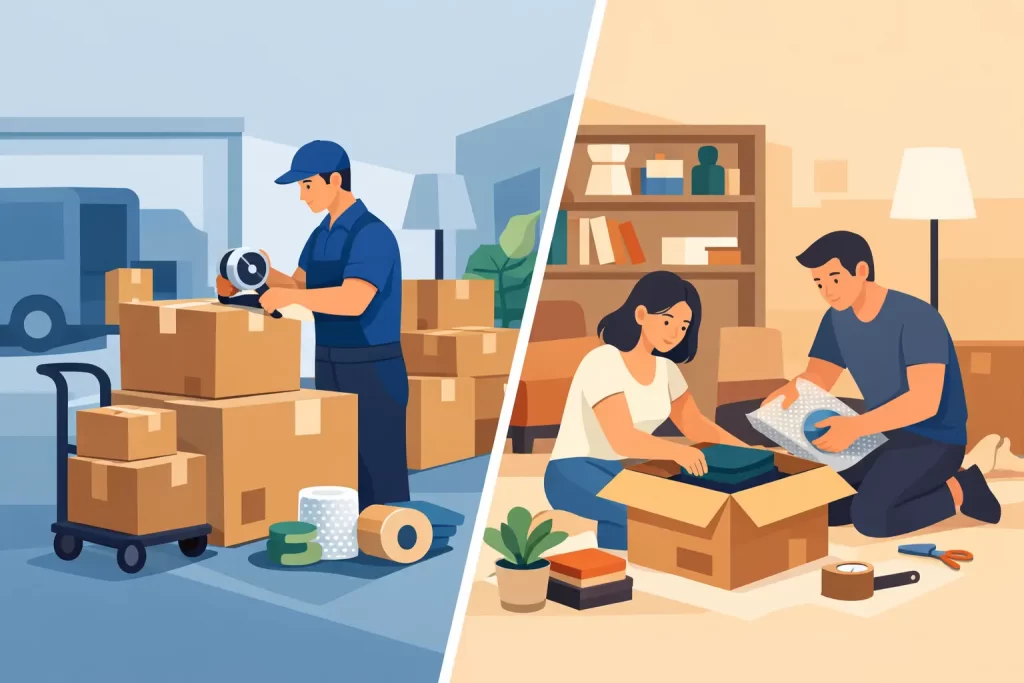
The last week before moving day is usually when packing becomes a problem. Boxes are still open, the kitchen is half-packed, fragile items are waiting on the bench, and the move suddenly feels much bigger than expected. When weighing up packing service vs self packing, the right choice comes down to more than the price of boxes. It is about your available time, the type of belongings you own, and how much pressure you want to carry into moving day.
A professional packing service can take a major job off your hands, while self packing gives you more control and may reduce your upfront costs. Both options can work well. The key is choosing the level of support that genuinely suits your move.
Packing service vs self packing: the real difference
Self packing means you source the boxes and materials, sort your belongings, wrap breakables, label cartons and have everything ready before the removalists arrive. It can be a good option for smaller moves, people with flexible schedules, or households that have already started decluttering well ahead of time.
A packing service means trained movers handle some or all of that preparation for you. They bring suitable cartons, wrapping materials and protective packing supplies, then pack your belongings in an organised way before transport. Depending on the service booked, this may cover the whole home or only high-risk areas such as the kitchen, artwork, glassware, books, wardrobes or home office.
The difference is not simply convenience. Professional packing is designed to protect items in transit, reduce the physical workload and help the move run to schedule. Self packing is more hands-on and can be satisfying when you have the time and confidence to do it properly.
When self packing makes sense
Self packing can be the practical choice when your move is straightforward. If you are relocating from a small unit, have relatively few fragile belongings and can pack steadily over several weeks, doing it yourself may keep costs lower.
It also gives you complete control over how your things are sorted. Some people prefer to decide exactly what goes in each box, particularly when they are packing personal documents, sentimental items, children’s belongings or collections. You can label boxes according to the rooms and priorities that make sense to you.
The savings only hold up, however, if you allow enough time and use suitable materials. Thin cartons, overloaded boxes and loose glassware can create problems that cost more later. A box packed with books may be too heavy to lift safely, while a carton with poorly wrapped plates can easily shift during transport.
Self packing works best when you are organised before the final few days. Start with items you do not use often, such as spare linen, décor, out-of-season clothes and books. Leave daily essentials until last, but do not leave the bulk of your packing until the night before the truck arrives.
When a professional packing service is worth it
A packing service is often worth considering when time is tight or the home contains a lot of delicate, valuable or awkward items. Families juggling work, school and settlement dates can find that packing becomes the most stressful part of the move. Having a professional team pack the household can free up days of work and give you space to focus on utilities, keys, cleaning and the many other moving tasks.
It is especially useful for larger homes, interstate relocations and office moves. The longer or more complex the move, the more important it is that cartons are secure, clearly labelled and built to travel well. Professional packers know how to protect fragile items, prevent movement inside cartons and prepare furniture for loading.
There is also a practical safety benefit. Packing and moving can involve repeated lifting, bending, carrying and climbing stairs. Heavy boxes, mirrors, televisions and furniture need careful handling. A trained team can reduce the risk of injury and avoid last-minute scrambling to make bulky items fit into a car or ute.
For business owners and office managers, professional packing can minimise downtime. Files, IT equipment, stock and office furniture can be packed in a structured order so the new space is easier to set up. That makes a real difference when staff need to get back to work quickly.
The true cost is more than the packing quote
Self packing looks cheaper at first because you are not paying for labour. But it is worth accounting for the full cost: cartons, tape, butcher’s paper, bubble wrap, mattress covers, time away from work, fuel for supply runs and the possibility of replacing damaged belongings.
A professional packing service has a higher upfront cost, but it includes the experience and materials needed to pack efficiently. Instead of spending several evenings wrapping glassware and hunting for boxes, the job may be completed in a much shorter window. For many busy households, that time has real value.
The best option depends on your priorities. If your main goal is the lowest possible upfront spend and you have plenty of time, self packing may suit you. If your goal is to reduce stress, protect fragile belongings and keep the move on track, professional packing may offer better value overall.
A middle option can be the smartest choice
You do not always need to choose one approach for the entire home. Many customers pack easy, low-risk items themselves and book professional help for the rooms that take the most time or need the most protection.
For example, you may pack clothes, books, toys and linen, then have removalists handle the kitchen, fragile décor, artwork and large mirrors. This keeps the service focused where it provides the greatest benefit while still allowing you to manage part of the move yourself.
This approach can work particularly well if you have already made a good start but are running out of time. Rather than rushing the remaining boxes, you can get experienced help for the final packing work and move day preparation.
Questions to ask before you decide
Before choosing between a packing service and self packing, be honest about your timeline and the size of the job. Consider these four points:
- How many hours can you realistically set aside before moving day?
- Do you have fragile, valuable or unusually shaped belongings that need specialist wrapping?
- Are you moving locally, interstate or into a property with difficult access?
- Will packing yourself leave you tired, rushed or distracted when the actual move begins?
If the answer to the last question is yes, professional help may be a sensible investment. Moving day is easier when cartons are sealed, labelled and ready to load, rather than still being packed as the truck arrives.
How to prepare, whichever option you choose
Even with a full packing service, a little preparation helps the day run smoothly. Set aside passports, jewellery, medicines, chargers, important paperwork and anything you will need in the first 24 hours. These items are usually best kept with you rather than packed onto the truck.
Clear out rubbish, donate unwanted goods and separate items that are not moving. This reduces the volume that needs to be packed and transported, which may also reduce your moving costs. Let the packing team know about any fragile, sentimental or high-value belongings that need extra care.
If you are self packing, use sturdy cartons and avoid making them too heavy. Fill gaps with packing paper so items do not move around, and label every box with both the room and a short description of what is inside. Mark fragile cartons clearly, but remember that careful wrapping inside the carton matters just as much as the label.
For households moving around Nowra, Wollongong or the wider South Coast, Mr Muscle Removals can provide practical packing support as part of a planned removal service. The right level of help can be tailored to the size of the move, the access at each property and the items that need extra protection.
A move does not have to be an endurance test. Choose the approach that gives your belongings proper care and leaves you with enough time and energy to settle into your new place properly.