
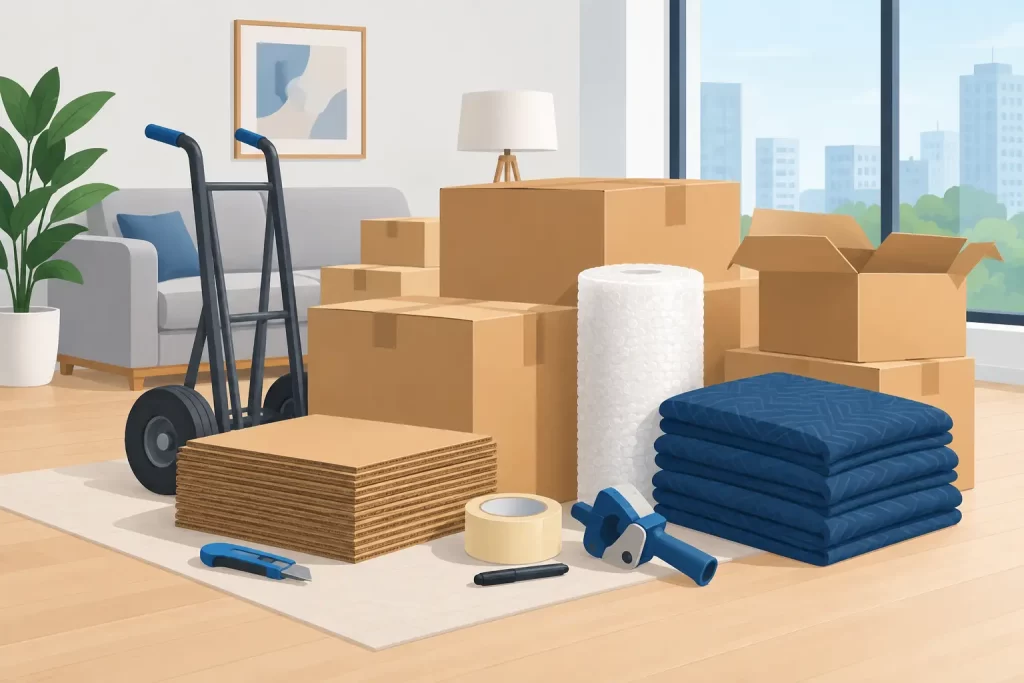
Apartment moves have a way of getting tight quickly. There may be stairs, lifts, loading-zone time limits, narrow hallways and a handover deadline on the same day. Having the right essential apartment moving supplies ready before packing starts helps protect your belongings, keeps the move organised and avoids a last-minute run to the shops.
The aim is not to buy every packing product available. It is to use sturdy, practical materials that suit what you own, how far you are moving and whether professional removalists are handling the heavy lifting. A few well-chosen supplies can make unpacking easier too.
Start with strong boxes in useful sizes
Good moving boxes are the base of a safe pack. New or quality used boxes are better than tired supermarket cartons, which can buckle when stacked or split underneath heavy items. Choose a mix of small, medium and large boxes rather than relying on one size for everything.
Small boxes are best for books, pantry items, tools, records and other heavy belongings. Medium boxes suit kitchenware, toys, shoes and folded clothes. Reserve large boxes for lighter, bulky items such as doonas, pillows, linen and lampshades. A large box filled with books may be impossible to lift safely, even with two people.
If you have access to stackable plastic tubs, they can be useful for a short local move, particularly for items you need straight away. They cost more upfront and take up storage space afterwards, so cardboard boxes are usually the more practical choice for most apartment moves.
Packing tape, labels and the tools that keep things moving
Packing tape is one supply that should not be stretched too far. Use wide, heavy-duty tape and seal the bottom of every box with several strips, especially boxes carrying fragile or heavy items. A tape dispenser is a small extra that saves time and makes packing less frustrating.
You will also need a thick permanent marker and clear labels. Write the room, a brief description and any handling instruction on at least two sides of each box. “Kitchen – mugs and glasses – fragile” is far more useful than simply writing “kitchen”. Numbering boxes can help as well, particularly if you are checking that everything has arrived.
Keep a marker, tape, scissors, a box cutter and spare labels together in one small tote. Packing tends to slow down when these basics disappear under a growing pile of cartons.
Don’t overfill boxes
A box should close flat and be manageable to carry. If the sides bow out, the carton is too full or too heavy. Add a little packing paper to fill empty space, close it securely and move on. Properly packed boxes stack better in the truck and reduce the chance of items shifting in transit.
Use the right protection for breakables
Fragile items need more than a label. Packing paper, bubble wrap and cardboard dividers all have a role, but they should be used where they provide real protection rather than wrapped around everything.
Packing paper is ideal for plates, bowls, glassware and ornaments. Wrap each item individually, place heavier pieces at the bottom and fill gaps so nothing rattles. Bubble wrap is useful for picture frames, mirrors, electronics and delicate décor. For plates and framed items, packing them vertically rather than flat can reduce pressure during transport.
Avoid using newspaper directly against valuable items, as ink can transfer. Clean tea towels, bath towels and clothing can provide useful cushioning for sturdy items, but they are not a substitute for proper protection around glass, artwork or screens.
For televisions, computers and monitors, original boxes are best if you still have them. Otherwise, use a correctly sized box, plenty of padding and a clear fragile label. Photograph cable connections before unplugging them, then place cords, remotes and screws in labelled bags. Tape the bags to the relevant item or keep them in your essentials box.
Essential apartment moving supplies for furniture
Furniture needs protection too, especially when it has to pass through lifts, stairwells and shared corridors. Moving blankets or furniture pads protect timber, upholstery and appliance finishes from scuffs. Stretch wrap can hold drawers and cupboard doors closed, secure protective covers and keep loose components together.
Do not apply sticky packing tape directly to polished timber, painted surfaces or fabric. It can leave residue or damage the finish. Use stretch wrap over a moving blanket where needed instead.
Mattress protectors are worth using for mattresses moving through common areas or travelling in a truck. They keep mattresses clean and dry, particularly on a wet moving day. Sofa covers can be useful for lighter-coloured upholstery, although moving blankets provide better protection against knocks.
If you are disassembling a bed frame, desk or shelving unit, keep an Allen key, screwdriver, adjustable spanner and small bags for hardware close at hand. Label each bag clearly. A bag marked “bed screws” is much easier to deal with at 9 pm than a handful of mixed fittings in the bottom of a carton.
Prepare for the practical parts of an apartment move
Apartment moving is not only about packing. You may need supplies for cleaning, access and the first few hours in the new place. Set aside cleaning cloths, multipurpose spray, bin liners, paper towel, a broom and a small vacuum or dustpan. Even a well-kept apartment needs a final wipe-down before keys are returned.
A basic trolley or hand truck can help with boxes if you are managing part of the move yourself, but use it carefully in lifts and on ramps. For heavy furniture, washing machines and large appliances, the safer option is professional equipment and trained removalists. These items can be damaged easily, and they can cause serious injury when moved without the right technique.
Check building rules before moving day. Many apartment buildings require lift bookings, approved moving times, protective coverings in common areas or a bond for lift use. Confirm where the removal truck can park and whether loading-zone access needs to be arranged. A smooth move often comes down to these details.
Pack a first-night essentials bag
Do not pack everything you need into boxes. Keep a backpack, suitcase or clearly labelled crate with the items you will need before unpacking is complete. This should travel with you, not in the removal truck.
Include identification, keys, lease or settlement paperwork, medication, chargers, toiletries, a change of clothes, snacks, water and basic cleaning supplies. If you have children or pets, pack their comfort items, food and any daily essentials separately. It is also smart to keep a roll of toilet paper, a mug, kettle or coffee supplies, and phone chargers within easy reach.
For a family move, this small bag can prevent a stressful evening. You may not know which box contains the towels or toothbrushes, but you will know exactly where the essentials are.
Supplies you may not need to buy
Some moving supplies are useful only in certain situations. Wardrobe boxes are convenient for suits, dresses and delicate hanging clothes, but most everyday clothing can be packed in regular cartons or suitcases. Vacuum storage bags save space for doonas and seasonal clothing, though they are not suitable for items that crease easily.
Corner protectors are a sensible extra for valuable artwork and mirrors. Moisture absorbers may help when belongings are going into storage. Labels with colour coding can speed up unloading in a larger home, but clear written labels are usually enough for a one or two-bedroom apartment.
If packing feels like one more job you cannot fit into the week, professional packing can be the better value option. Mr Muscle Removals can provide careful wrapping and packing support alongside your move, so your belongings are protected and ready for transport.
A simple way to buy only what you need
Walk through each room and estimate what needs to be boxed, wrapped, dismantled or kept with you. Buy enough boxes for the volume of your belongings, then add a small buffer rather than doubling the order. It is better to have a few spare cartons than to finish the kitchen with worn-out boxes and no tape left.
Pack room by room, starting with items you do not use every day. Keep boxes from each room together where possible, and leave daily essentials until last. This approach gives you a clearer view of what remains and makes the final day less rushed.
The best moving supplies are the ones that protect your belongings without creating extra work. Pack steadily, label clearly and arrange help for the heavy items, then you can walk into your new apartment ready to settle in rather than search through boxes.