
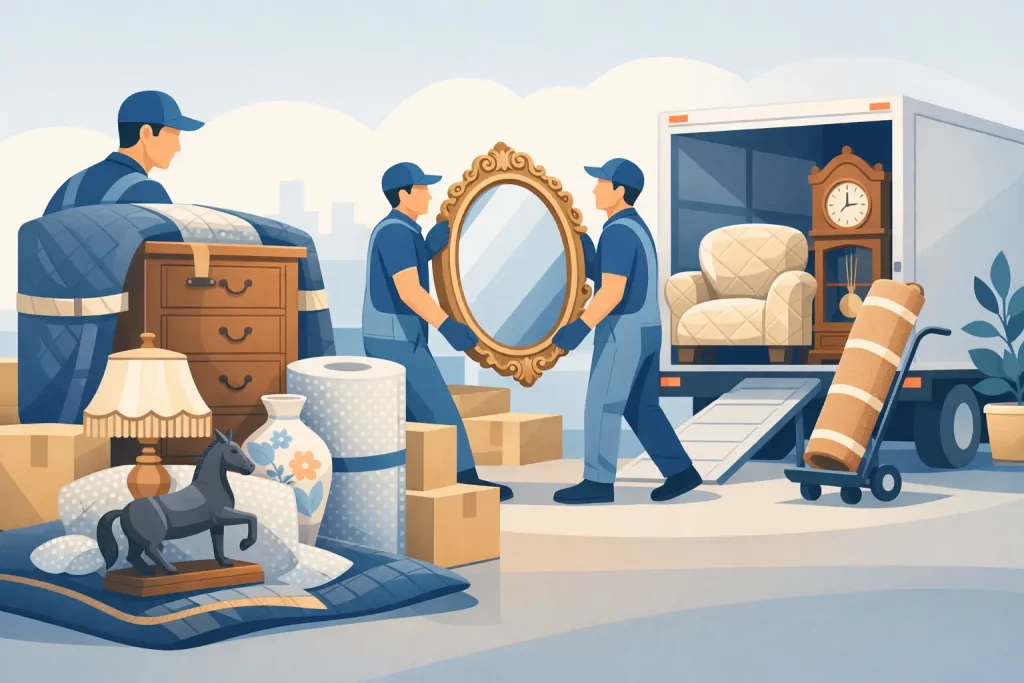
An antique cedar chest, a delicate display cabinet or a family dining table can be worth far more than its price tag. The best way to move antiques is to plan for their condition, materials and weak points before anyone starts lifting. A rushed move can turn a small crack, loose joint or worn veneer into permanent damage.
Antiques need a different approach from standard furniture. Older pieces may have dried timber, original glass, hand-painted surfaces, fragile decorative features or repairs that are not obvious at first glance. The goal is not simply to get the item from one address to another. It is to protect its structure, finish and history throughout the move.
Start with a condition check before moving antiques
Before packing, inspect every antique in good light. Take clear photos from all sides, including close-ups of existing scratches, chips, marks, loose handles and damaged corners. For valuable pieces, photograph maker’s marks, serial numbers, labels and any paperwork that supports provenance or valuation.
This gives you a record of the item’s condition before the move and helps you make better packing decisions. A table with a wobbly leg, for example, should not be lifted by its top. A cabinet with loose glass should be secured or removed before transport.
If an item is particularly valuable, rare or sentimental, consider getting a current valuation before moving day. This is especially useful when arranging transit cover, as many policies require you to nominate the value of higher-value belongings. Do not assume standard removal insurance automatically covers the full replacement or agreed value of an antique.
Identify what can be removed safely
Drawers, shelves, mirrors, detachable legs and loose ornaments can often be packed separately. Removing these parts reduces weight and limits movement inside the piece. However, do not force old fittings or dismantle an item just because it appears possible.
Many antiques have timber screws, glued joints or handmade construction that can be damaged during disassembly. If you are unsure, it is safer to protect the item as a whole and let an experienced removalist assess the best handling method.
Use the right materials, not just more materials
A few old blankets and a roll of tape are rarely enough for antiques. The best protection comes from using the right materials in the right order. Start with a clean, soft barrier around the surface, then add cushioning and a durable outer layer for transport.
Avoid placing plastic wrap directly against polished timber, leather, painted finishes or delicate metal. Plastic can trap moisture and, in warm conditions, may affect some finishes. Instead, use acid-free tissue or clean packing paper as the first layer for sensitive surfaces. Soft furniture blankets, padded covers and strong cardboard corners can then provide impact protection.
Glass-fronted cabinets, mirrors and framed artwork need special care. Glass should be protected with corner guards and a rigid layer that spreads pressure across the surface. Never lay a mirror or glass panel flat underneath heavy items. It should travel upright, secured so it cannot shift.
For smaller antiques such as clocks, ceramics, lamps and collectables, use sturdy double-wall cartons. Wrap each piece individually and fill all empty space so nothing can move inside the box. A carton that rattles when gently lifted is not ready for the truck.
Protect timber from scratches and pressure marks
Timber furniture is vulnerable to both impact and friction. Do not drag antiques across floors, concrete driveways or the back of a truck. Even a short drag can gouge a leg, damage veneer or loosen a joint.
Use padded blankets that fully cover exposed corners, then secure them with tape or straps around the padding rather than directly around the furniture. Tape applied to antique timber can pull off finish or leave residue. It is a small detail that can make a major difference.
Plan the lifting path before the removal truck arrives
Most damage happens at tight doorways, stairs, sharp turns and uneven paths. Measure large antiques before moving day, then measure the doorways, halls, stairwells and lift spaces at both properties. This avoids discovering halfway through the job that a large buffet or wardrobe will not clear the frame.
Clear the route of pot plants, mats, boxes, toys and other trip hazards. If rain is expected, prepare a dry covered area near the entry where items can be wrapped and staged. Wet blankets, muddy paths and hurried lifting are a poor combination for antique furniture.
Think about access at both ends of the move. A long driveway, steep front steps, limited parking or an apartment lift booking can affect the time and equipment required. Giving your removalist accurate access details when requesting a quote helps them organise the right crew, truck size and protective equipment.
Choose professional packing for high-risk pieces
DIY packing can work for sturdy, lower-value items if you have the time and correct materials. But antiques with glass, marble, fine veneer, carved details, original upholstery or structural weakness are usually better handled by professionals.
Professional wrapping and packing services are particularly useful when you are moving a full household and cannot give every fragile item the attention it needs. A trained team knows how to pad awkward shapes, protect corners, secure loads and carry heavy furniture without putting pressure on vulnerable areas.
At Mr Muscle Removals, careful packing and handling can be included as part of a planned home removal, helping take the pressure off busy households across Nowra, the Shoalhaven and Wollongong. The key is to raise antiques during the quote process, rather than treating them like ordinary furniture on moving day.
Be clear about any special requirements. Tell the team if an item is unusually heavy, needs to stay upright, has loose components, contains glass or has a high declared value. Good information allows the removalists to plan properly instead of making quick decisions at the front door.
Load antiques so they cannot move in transit
A well-packed truck matters as much as a well-wrapped item. Antiques should be loaded in a position where they are supported, upright where required, and protected from contact with harder or heavier items.
Heavy boxes should never be stacked on antique furniture. Likewise, an antique should not be used as a gap filler between appliances, toolboxes or loose cartons. The load needs to be balanced and tied down so braking, cornering and road vibration do not cause items to shift.
Some pieces travel best on their side, while others must remain upright. A grandfather clock, for instance, may need its pendulum and weights removed and separately packed, while a tall display cabinet generally needs to stay upright. There is no single rule for every item, which is why the material, age and design need to be considered individually.
For interstate moves or longer trips, ask how your belongings will be handled during transport and whether they may be transferred between vehicles. Longer journeys can involve more handling and more vibration, so stronger packing and clear labelling become even more important.
Let antiques settle after delivery
Once delivered, resist the urge to unwrap everything in a hurry. Move antiques into their intended rooms, remove outer protection carefully and compare their condition with your pre-move photos. Check legs, joints, handles, doors, drawers and glass before signing off on the job where possible.
Give timber furniture time to adjust if it has moved between very different temperatures or humidity levels. Avoid placing a valuable timber piece directly beside a heater, air conditioner or sun-facing window straight away. Sudden changes can contribute to movement in older wood.
If a drawer sticks or a door no longer sits perfectly after a move, do not force it. The item may simply need time to settle, or it may need a furniture restorer to assess the fitting. Gentle handling after delivery protects the work you put into moving it safely.
The safest move starts well before the truck is loaded. When an antique matters to your home or family, give it the time, packing and professional care it deserves.