
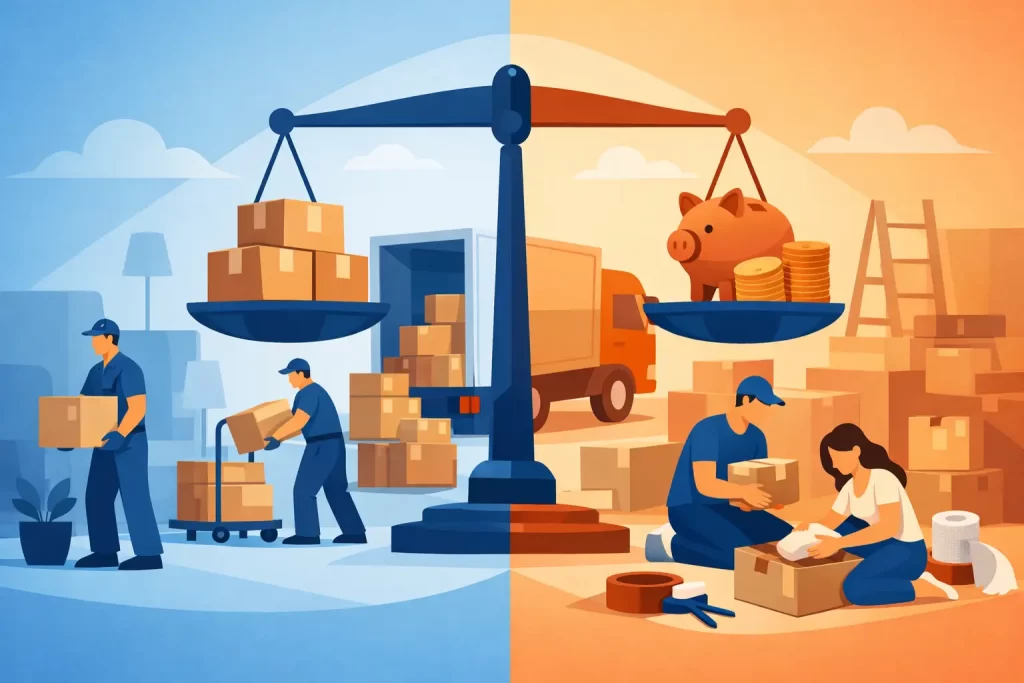
Packing service vs DIY moving is rarely just a question of who puts items into boxes. It affects how much time you lose before moving day, how well your belongings are protected, and whether the final week feels manageable or exhausting. The right choice depends on the size of your move, your available time, your budget and what you are moving.
For a small unit with a flexible settlement date, packing yourself can be a sensible way to keep costs down. For a family home, a long-distance relocation or an office move with a fixed deadline, professional packing can remove a large amount of pressure and reduce the chance of avoidable damage.
Packing Service vs DIY Moving: The Real Difference
A DIY pack means you source boxes and packing materials, sort every cupboard, wrap fragile items, label cartons and make sure everything is ready before the removalists arrive. You remain in control of every decision, from what goes in each box to how the kitchen glasses are protected.
A professional packing service puts that work in the hands of trained movers. They bring suitable cartons, paper, wrapping and protective materials, then pack and label items in an organised order. Depending on the service booked, they may pack the full property or focus on the rooms and items that take the most care, such as kitchens, artwork, books, glassware and bulky furniture.
The difference is not that one option is always better. It is about where you want to spend your time and where the risk sits. DIY packing costs less upfront when you have the capacity to do it properly. Professional packing costs more, but it can protect your schedule, reduce physical work and give delicate belongings more consistent handling.
What DIY Packing Really Costs
The biggest appeal of DIY packing is obvious: you avoid paying for packing labour. However, it is worth looking beyond the price of a removal truck.
You will still need strong moving boxes, tape, labels, packing paper, bubble wrap and furniture protection. Second-hand cartons can be useful for books or linen, but weak, damp or mismatched boxes can collapse when stacked. Fragile belongings need more than old newspaper and crossed fingers.
Time is the other cost. Packing a two or three-bedroom home can take many evenings and a full weekend, particularly when you are still working, caring for children or trying to organise utilities and cleaning. People often underestimate how long the last 20 per cent takes: clearing pantry shelves, emptying cupboards, dismantling furniture and dealing with the items stored in the shed.
There is also the risk of rushed packing. Overfilled boxes, unlabelled cartons and poorly protected glassware can slow down the moving crew and make unpacking harder. If a box has no room label, it may land in the wrong room. If it is too heavy, it becomes harder and less safe to carry.
DIY packing works well when your move is small, you have several weeks to prepare and you are comfortable lifting, sorting and wrapping. It can also suit people who prefer to personally pack valuables, important documents and sentimental items.
DIY packing needs a clear plan
If you choose to pack yourself, start with the rooms you use least. Pack seasonal clothes, spare linen, books, decorations and rarely used kitchenware first. Keep a separate essentials carton for the first night with medication, chargers, toiletries, a kettle, basic food, towels and important documents.
Label each box with both its destination room and a short description of what is inside. “Kitchen” is helpful, but “Kitchen – mugs and pantry containers” is better. Do not pack boxes so heavily that one person cannot lift them safely. Books, tools and records should go into smaller cartons.
When a Professional Packing Service Makes Sense
Professional packing is often most valuable when time is tight or the move involves a lot of fragile, heavy or awkward belongings. Families preparing to settle a house sale, renters facing a strict handover date and businesses needing minimal downtime often benefit most.
Packers work methodically because packing is their job, not another task squeezed into the evening. They know how to wrap glassware, protect furniture surfaces, secure lamps, prepare mirrors and use cartons that stack properly in the truck. That can mean fewer damaged items and less time spent repacking boxes that were not strong enough.
A packing team can also make moving day faster. When cartons are labelled, sealed and ready to load, the removalists can focus on carrying and loading rather than waiting for last-minute sorting. This matters for interstate moves, where a delayed collection can affect the entire schedule.
For households around Nowra, Wollongong and the South Coast, a full packing service can be particularly useful when a move involves coordinating keys, cleaners, school routines or a longer trip to a new home. It allows you to focus on the decisions only you can make while experienced movers handle the practical packing work.
It is not an all-or-nothing decision
Many customers choose a middle ground. You might pack clothing, books and everyday items yourself, then book professionals for the kitchen, fragile items and furniture wrapping. This approach keeps some control over the budget while getting help with the areas that are most time-consuming or easy to damage.
Partial packing can also suit office moves. Staff can pack personal desk items and files according to internal requirements, while a removals team protects monitors, chairs, cabinets and shared equipment. The goal is to have the new workspace ready with as little disruption as possible.
Comparing Cost, Time and Risk
When comparing quotes, ask what is included rather than looking only at the bottom-line figure. A professional packing quote may include cartons, wrapping materials, labour, furniture protection and packing on a scheduled date. A DIY budget should include the materials you need, vehicle access, disposal of unwanted items and the value of your own time.
Professional packing is usually the stronger option if a delay would cost you money or create major stress. That could include taking unpaid leave, missing a settlement deadline, extending a rental period or shutting an office for longer than planned. In those cases, the upfront cost may be easier to justify.
DIY can be the better value option if you are moving a modest amount, have reliable help and can pack carefully over time. The key is to be realistic. If you are still filling boxes at midnight before removal day, the saving can disappear quickly through stress, rushed decisions and extra labour time.
Risk should be considered separately from cost. No packing method can remove every risk, but quality materials and careful wrapping make a real difference. Before booking any service, ask what protection is provided, how fragile items are handled and what insurance arrangements apply. If you pack yourself, make sure you understand any conditions that may affect cover for owner-packed cartons.
Questions to Ask Before You Decide
Start with your deadline. If you need to be out by a certain day and have not begun packing, professional help may be the practical choice. Next, consider the volume of belongings. A home that looks tidy can still hold dozens of cartons once wardrobes, garages, kitchen cupboards and storage areas are emptied.
Think honestly about difficult items too. Fine china, large mirrors, artwork, electronics, antiques and bulky furniture need more care than general household goods. If replacing an item would be expensive or upsetting, it may be worth having it professionally wrapped.
Finally, decide what part of moving you want to manage yourself. Some people find packing satisfying and want full control. Others would rather spend that time preparing the new home, organising children or keeping a business running. Both approaches are valid when the move is planned properly.
Choose the Support That Fits Your Move
The best moving plan is the one that leaves you prepared before the truck arrives. If DIY packing gives you enough time and confidence, invest in good-quality materials, label clearly and start earlier than you think you need to. If your move is large, urgent or full of fragile items, professional packing can turn a demanding week into a straightforward job.
Mr Muscle Removals can provide practical packing support alongside home, office and interstate removals, so you can choose full packing or help where it matters most. Before you commit, ask for a clear quote based on your property, access, timing and the level of packing support you need. A well-planned move starts with knowing exactly what help will make the day easier.