
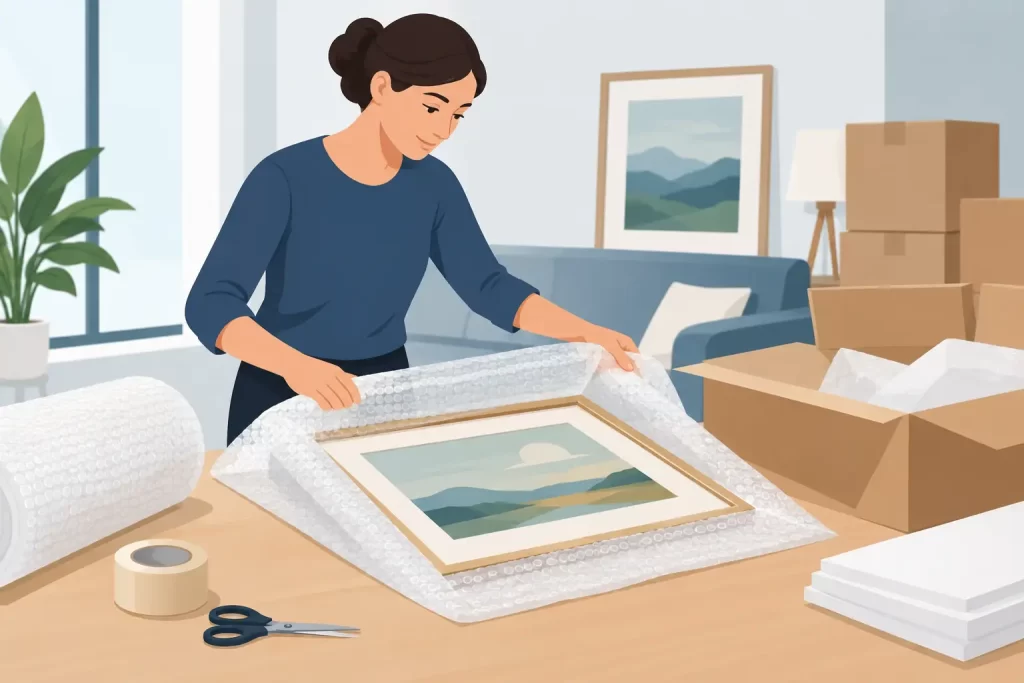
A framed print may look tough while it is hanging on the wall, but a sharp turn in the ute or one heavy box stacked in the wrong place can crack glass, damage a frame or mark the artwork itself. Packing fragile artwork properly is one of the most worthwhile jobs to get right before moving day, particularly if you have original pieces, family photos, canvases or mirrors that cannot easily be replaced.
The goal is not simply to add more wrapping. It is to create a protective layer around each item, stop movement inside the carton and make sure the artwork is loaded where it cannot be crushed or toppled.
Start by sorting artwork by size and material
Before you pack, lay your artwork out in a clean, dry area and group it by size. Separate framed pieces with glass from canvases, unframed prints, mirrors and sculptures. Each type needs a slightly different approach.
Take a quick photo of valuable or sentimental items before wrapping them. It gives you a clear record of their condition and helps when deciding which pieces should travel with you rather than in the removals ute. If an item is very old, unusually valuable or has a fragile surface, speak with a specialist art handler or conservator before the move.
Remove loose hooks, hanging wire and detachable parts where possible. Tape them in a labelled bag and keep it with the item, rather than leaving metal fittings to scratch the frame or catch on wrapping.
Use the right packing materials for fragile artwork
New, sturdy materials make a real difference. Old cartons, thin shopping boxes and newspaper can leave artwork exposed to impact, moisture and ink transfer. For most household artwork, use clean packing paper, bubble wrap, cardboard corner protectors, strong tape and purpose-made picture boxes or double-walled cartons.
For framed artwork with glass, place masking tape in a large X across the glass before wrapping. This will not prevent the glass from breaking, but it can help hold fragments together if an impact occurs. Avoid applying tape directly to an unframed print, painted surface or delicate finish.
Wrap the face of the frame first with acid-free tissue or clean packing paper. Add cardboard corners, then wrap the entire frame in bubble wrap with the bubbles facing outwards. The smooth side against the artwork reduces the chance of bubble marks or pressure impressions on delicate surfaces.
Canvases need care too. Never place bubble wrap directly against a painted canvas, especially in warm conditions, as it may stick to the surface or leave marks. Cover the face with clean glassine-style paper or acid-free tissue first, protect the corners, then add a loose outer layer of bubble wrap and cardboard.
How to pack paintings and frames in boxes
Choose a carton that is only slightly larger than the artwork. A box that is too large allows the item to shift, while one that is too tight can put pressure on the frame. Picture cartons are ideal because they are shaped for flat items and can often be combined for larger pieces.
Line the bottom of the carton with a layer of scrunched packing paper or foam. Place the artwork upright, never flat, with the heaviest framed pieces at the back and lighter pieces towards the front. Keep frames standing on their edge as you would store records, rather than stacking them face to face.
If more than one piece is going into the same carton, put a rigid cardboard divider between every item. Fill all open spaces with packing paper so nothing can slide when the box is gently moved. Do not overfill the carton. The sides should close without force, and the box should not bulge.
Seal each box securely along the centre seam and across both ends. Mark it clearly with “FRAGILE”, “ARTWORK”, “THIS SIDE UP” and the room it belongs in. Labels do not replace proper packing, but they help movers place the carton correctly and reduce unnecessary handling during unloading.
Larger artwork needs a different plan
Large framed art, oversized mirrors and heavy wall pieces are often safer outside a standard carton. Protect the corners, wrap the item in paper and bubble wrap, then sandwich it between two rigid sheets of cardboard. Secure the bundle with tape around the cardboard only, not directly around the frame.
For particularly large pieces, a custom crate or professional packing service is usually the better option. It costs more than a basic box, but it provides rigid protection and can be worth it for a valuable item or a frame that is difficult to repair.
Avoid the packing mistakes that cause damage
The most common damage happens when artwork is packed with household goods that move around, such as books, lamps or kitchen items. Keep artwork in dedicated cartons wherever possible. A frame can be well wrapped and still break if a saucepan shifts into it during transport.
Moisture is another risk, especially for canvases, paper prints and timber frames. Do not use damp, recycled wrapping paper. Keep artwork away from wet cleaning supplies, pot plants and cartons that may have been stored in a garage or shed. If rain is expected on moving day, make sure the path from the house to the ute is covered where practical and that items are loaded promptly.
Heat can also affect artwork. Avoid leaving paintings in direct sun, a hot car or an unventilated storage space for long periods. This matters most for oil paintings, photographs, adhesives and older frames.
Finally, do not rely on “fragile” written on the carton as your only protection. Good materials, tight packing and sensible loading are what prevent damage.
Loading fragile artwork into the removals ute
Artwork should be loaded late in the packing process, after heavier furniture has been secured. It needs a stable, upright position against a solid wall of the ute, ideally in a designated picture or mattress space. Never place framed art underneath furniture, and do not lean it where it can slide when the vehicle brakes or turns.
Professional removalists use furniture blankets, straps and careful load planning to keep items from moving in transit. Let the crew know which cartons contain artwork and point out any pieces that are particularly valuable, oversized or awkward to handle. Clear communication at pickup makes a safer load and a smoother delivery.
At the new property, unpack artwork early enough to check its condition, but do not rush to hang it. Let canvases and framed pieces acclimatise if they have moved between very different temperatures or humidity levels. Choose a clean, dry room and keep them away from busy doorways until furniture is in place.
When professional packing is the sensible choice
DIY packing works well for sturdy, low-value framed prints when you have time, suitable materials and a careful plan. Professional packing is often the smarter choice when you have a large collection, oversized pieces, valuable originals or a tight moving schedule. It also helps if you are managing a family move, an office relocation or an interstate job where artwork will be in transit for longer.
A trained packing team can assess the item, supply appropriate materials and prepare it for safe transport without adding another demanding task to your moving week. For households moving around Nowra, Wollongong or the wider Illawarra, Mr Muscle Removals can assist with professional packing and careful removals planning for delicate household items.
Your artwork deserves more than a spare box and a quick layer of wrap. Give each piece the space, support and handling it needs, and it will be far more likely to arrive ready for its new wall.