
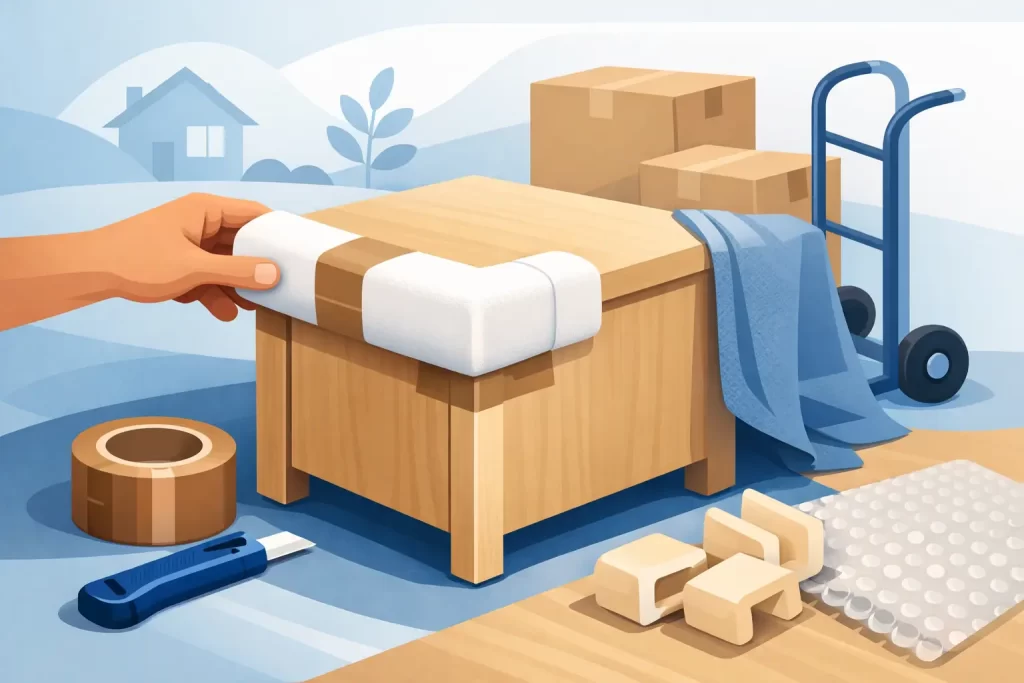
A small knock to an unprotected corner can leave a dining table chipped, a bookshelf dented or a favourite cabinet marked for good. Knowing how to protect furniture corners before moving day helps prevent the damage that most often happens when items are lifted through doorways, loaded into a truck and carried into a new home.
Corners take the impact because they stick out furthest. They are the first part of a piece to meet a wall, door frame, stair rail or another item in the truck. The right protection is not complicated, but it needs to suit the furniture, the distance of the move and how many times the item will be handled.
Why furniture corners need extra protection
Furniture corners are vulnerable because they concentrate force in one small area. A light brush against a painted wall may do no harm to a flat surface, but the same contact can split veneer or remove a patch of paint from a sharp timber corner.
The risk is higher with particleboard furniture, laminated pieces, glass-topped tables, antiques and furniture with decorative timber edging. Even solid hardwood can dent if it is knocked against a metal trolley, the tailgate of a truck or another heavy item.
Corners also suffer when furniture shifts during transport. A well-wrapped cabinet that is not secured can still slide across the truck floor and strike a hard surface. Protection works best as part of the full moving process: wrap it properly, carry it safely, load it in the right position and secure it for the trip.
How to protect furniture corners with the right materials
The best material depends on the item. A bedside table being moved from one room to another needs less protection than a large sideboard travelling interstate. Start by cleaning off any dust or grit, as trapped debris can scratch the finish while the wrapping is in place.
Use cardboard corner protectors for sharp edges
Purpose-made cardboard corner protectors are a simple, reliable option for tables, cabinets, desks and framed mirrors. They sit over the exposed point of the furniture and spread the force of a bump across a wider area.
For heavier items, use thick double-wall cardboard protectors or make your own by folding several layers of clean cardboard into an L-shape. Place one on every exposed corner, not just the top ones. Lower corners are often damaged when an item is set down or manoeuvred through tight spaces.
Avoid using thin cereal-box cardboard on valuable furniture. It may stop minor scuffs, but it will crush easily under pressure.
Add moving blankets for cushioning
Furniture blankets provide the padding that cardboard alone cannot. Wrap the whole piece so the blankets cover the sides, top and corners, then secure them with packing tape, stretch wrap or moving straps.
Do not apply packing tape directly to polished timber, painted finishes, leather or veneer. Adhesive can lift coatings or leave residue, particularly if the furniture sits wrapped for several days. Tape the blanket to itself instead.
For a dining table, remove the legs where possible and wrap them separately. Protect each tabletop corner with cardboard first, then cover the top with a moving blanket. This makes the table easier to carry and reduces the chance of a leg twisting or catching on a doorway.
Use bubble wrap carefully on delicate pieces
Bubble wrap is useful around fragile detailing, glass panels and vulnerable edges, but it is not always the best first layer for timber. When left against a timber finish in heat or humidity, plastic can trap moisture. It can also leave an imprint on delicate surfaces.
For antiques, polished timber or high-gloss furniture, place a soft paper or clean cotton sheet against the surface first. Add bubble wrap over that layer, concentrate extra padding around the corners, then finish with a blanket or protective wrap.
Stretch wrap keeps protection in place
Stretch wrap is useful for holding blankets, cardboard corners and drawers in position. It does not provide meaningful impact protection by itself, so think of it as the outer layer rather than the main safeguard.
Wrap firmly enough to stop loose materials slipping, but not so tightly that you place pressure on fragile corners, handles or decorative trim. If a piece has drawers, remove them where practical or secure them closed with stretch wrap around the full cabinet. Never rely on a single strip across the front.
Prepare furniture before you lift it
Most corner damage occurs during handling, so preparation matters as much as wrapping. Clear a path from each room to the truck and measure tight doorways, hallways and stairwells before attempting to move large items. Removing a door from its hinges can be safer than forcing a wide cabinet through a narrow opening.
Take off loose shelves, glass inserts, knobs and detachable legs. Pack these separately and label the box clearly. Loose parts can move around, create pressure points and turn a manageable item into an awkward one.
For tall furniture such as bookcases and display cabinets, empty every shelf before moving it. Even a few books or stored items can shift the weight suddenly, making the piece harder to control around corners. Secure doors shut and protect protruding handles with a small amount of padding.
If an item is too heavy or awkward to lift safely, use a trolley, furniture dolly or lifting straps. Do not drag furniture across concrete, pavers or a truck floor. Dragging quickly wears through blankets and exposes the lower corners to damage.
Load furniture so protected corners stay protected
A careful wrap can only do so much if the truck is packed poorly. Heavy, sturdy items should generally be loaded first and positioned against the truck walls, with blankets between them and the vehicle where needed. Keep fragile furniture upright if it is designed to stand that way, especially cabinets with glass or delicate joins.
Use ratchet straps or load restraints to stop furniture moving in transit. Secure items to anchor points without overtightening the straps over a vulnerable edge. A blanket or folded pad placed beneath the strap protects the surface and prevents direct pressure on a corner.
Keep hard-edged items away from softer furniture. Metal bed frames, toolboxes and appliances can damage a timber cabinet even during a short trip if they are allowed to rub together. Fill small gaps with blankets, cushions or packing materials so loads cannot shift when the truck brakes or turns.
It is tempting to pack the truck as tightly as possible, but access matters at delivery too. Place bulky furniture in an order that allows it to be removed safely rather than pulling it past other items. Rushing at the end of a long moving day is when wrapped corners are most likely to strike door frames and walls.
Common mistakes that lead to corner damage
One common mistake is using only plastic wrap. It holds drawers and doors closed, but it will not prevent a chip from a hard impact. Another is wrapping furniture after it has already been carried outside, where it may hit a doorway before any protection is in place.
Overloading drawers is another problem. A chest of drawers may appear easier to move with contents inside, but the added weight puts strain on joints and makes it harder to lower gently. For short, light moves this may be manageable, but larger drawers and heavier items should be emptied.
People also underestimate weather conditions. Rain can soften cardboard protectors and dampen moving blankets, while hot conditions can make tape residue more likely. If rain is expected, cover wrapped furniture while it is outside and move it into the truck promptly.
Finally, do not treat damage protection as a one-person job for large items. Furniture can twist unexpectedly when one person carries more weight than the other. Two capable handlers, clear communication and a planned route protect both the furniture and the people moving it.
When professional packing is worth it
Professional wrapping and packing is especially worthwhile for expensive furniture, antiques, large dining settings, office desks, glass cabinets and interstate moves. These items may be handled several times between collection and delivery, which increases the chance of corner knocks.
A trained removals team brings the right blankets, corner protection, trolleys and load restraints, along with the experience to move bulky furniture through tight access points. For homes and businesses around Nowra and Wollongong, Mr Muscle Removals can provide careful wrapping, packing and transport when you would rather not leave valuable furniture protection to chance.
A few layers of the right protection can save an expensive repair, but care should continue right through to unloading. Take your time at each doorway, keep the load secure, and treat every exposed corner as the part most likely to take a knock.