
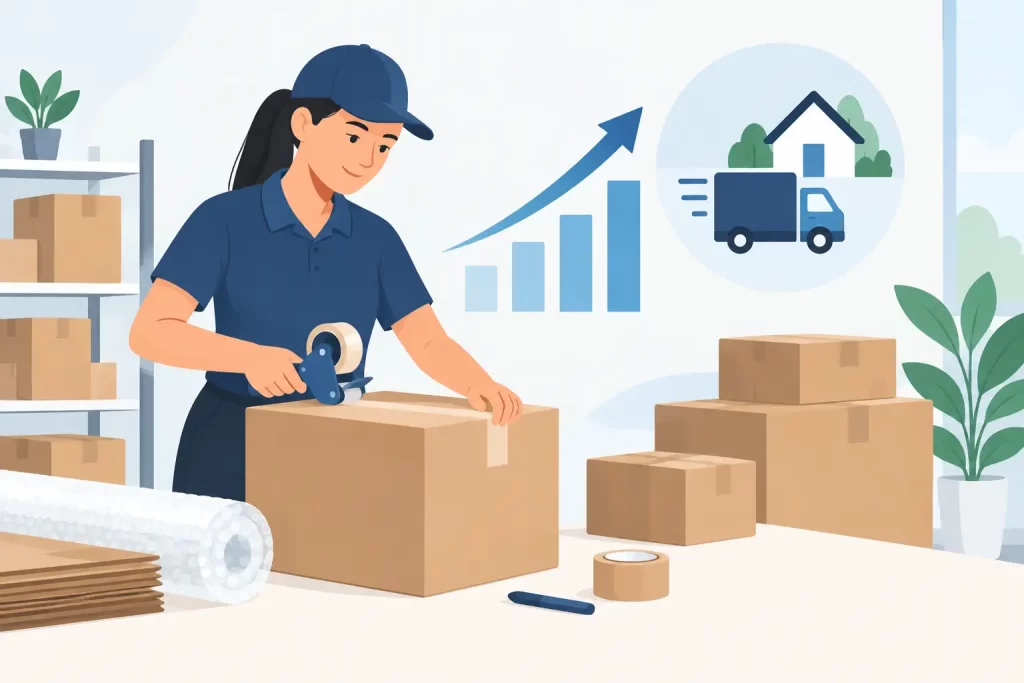
A move can look straightforward until the packing starts. One room becomes a stack of boxes, fragile items need wrapping, and the job that was meant to take a weekend starts competing with work, family and the rest of life. That is a major reason behind the rising demand for packing services across Australia.
For households and businesses, professional packing is no longer seen as an extra reserved for large relocations. It is practical support that protects belongings, saves time and makes moving day far easier to manage. Whether you are moving a family home in Nowra, relocating an office in Wollongong or planning an interstate move, having the right team pack your items can remove one of the biggest pressures from the process.
Why packing services are in higher demand
People are busier, homes are fuller and moves often happen on a tight schedule. Renters may need to hand back keys by a fixed date, homeowners may be settling a sale, and businesses cannot afford to pause operations for days. Packing everything properly while meeting those deadlines is a substantial job.
Many customers also have more items that need careful handling. Large TVs, computers, glassware, artwork, mirrors, appliances and flat-pack furniture all need different packing methods. A box filled quickly with whatever is nearby may survive a short trip, but it can also leave items exposed to movement, pressure and damage.
Professional packers bring the materials, experience and system needed to prepare a move efficiently. Instead of searching for cartons, using too little wrapping or guessing how much weight a box can take, customers can rely on a team that packs for transport every day.
There is also a growing recognition that time has a real cost. Taking annual leave to pack, making repeated trips to buy supplies and spending evenings sorting cupboards can be more expensive, and far more tiring, than arranging help from the start.
What professional packing changes on moving day
A well-packed move is easier to load, safer to transport and quicker to unload. Cartons can be stacked correctly, fragile items are protected, and belongings are grouped in a way that makes sense at the new address. This helps prevent the familiar moving-day problems: overloaded boxes splitting, loose items rolling around, or essential things disappearing into the wrong room.
The value is not only in the boxes themselves. Professional packing creates order before the removal truck arrives. Furniture can be wrapped where required, kitchenware can be secured, and boxes can be labelled clearly by room or contents. That gives the removal team a better starting point and gives the customer a clearer idea of what is going where.
For families, this can mean arriving at the new home with beds, kitchen essentials and children’s belongings easier to locate. For an office, it can mean workstations, files and equipment are packed in a way that supports a faster set-up. The move still requires planning, but it is no longer a last-minute scramble.
The rising demand for packing services in local moves
It is easy to assume packing assistance only makes sense for interstate relocations. In reality, local moves often create the same pressure. A short drive does not make fragile items safer, nor does it reduce the number of cupboards, wardrobes and drawers that need sorting.
Local customers may choose a full packing service when they are short on time, dealing with a settlement date or moving a larger household. Others prefer partial packing. This is a sensible middle ground for people who are happy to box up clothes and books but want trained help with breakables, artwork, electronics or bulky furniture.
The right option depends on the size of the move and the customer’s schedule. Packing a small unit can be manageable with good preparation. Packing a four-bedroom home while working full-time and caring for children is a different task altogether. A reliable removals company should explain the options clearly and provide a quote based on what is actually needed.
Packing is about protection, not just convenience
Convenience is a strong reason to book packing support, but protection matters just as much. The way an item is packed affects how well it handles lifting, loading, transport and unloading.
Fragile items need cushioning and separation. Heavy items need sturdy cartons that are not overloaded. Furniture may require wrapping to reduce scuffs, scratches and contact damage. Electronics need protection from impact, while important documents should be kept together and clearly identified.
Using the right materials is part of the job. Quality cartons, packing paper, protective wrap, tape and mattress covers all have a purpose. Improvised packing can work for low-risk items, but it is rarely the best choice for possessions that are valuable, sentimental or difficult to replace.
There is a trade-off to consider. A full professional packing service costs more than packing yourself, and customers should be upfront about their budget. However, for many moves, the added cost is balanced by less time off work, fewer rushed decisions and a lower risk of damage caused by poor packing.
How businesses benefit from professional packing
Office relocations need a more organised approach than most residential moves. Computers, monitors, files, stock, furniture and shared equipment all need to be packed, tracked and placed correctly. If the process is disorganised, staff can lose valuable time trying to find what they need after the move.
Professional packing helps businesses keep disruption to a minimum. Items can be packed in sections, labelled by department or workstation, and prepared for transport in a logical order. This is particularly useful for small and mid-sized businesses that do not have an internal team available to manage a relocation.
Timing matters too. Some businesses need packing completed after hours, over a weekend or in stages so they can continue trading. That requires a removal team that can plan around the business rather than force the business to fit around the move.
Choosing a packing service with care
Not all packing services offer the same level of support. Before booking, ask what is included in the quote, whether packing materials are supplied, and whether the service covers full-home packing, selected rooms or fragile items only. It is also worth confirming the expected timing, especially if you have a fixed move date.
A dependable provider should be clear about how they handle furniture, delicate belongings and access challenges such as stairs, narrow driveways or apartment lifts. Good communication before moving day prevents surprises and allows the team to bring the right number of people, the right materials and an appropriately sized vehicle.
Insurance and careful handling should also be part of the conversation. While no move can remove every possible risk, choosing experienced, insured movers provides greater confidence than relying on hurried packing and unplanned transport.
How to get the most from a packing team
Professional packers can handle the hard work, but a little preparation from the customer makes the service even more effective. Set aside valuables, passports, medication, keys and personal documents that you want to carry yourself. Let the team know about items needing special attention, such as family heirlooms, high-value equipment or boxes that must be opened first.
It also helps to use the move as a chance to reduce clutter. Packing unwanted items only adds time, space and cost. Donate, sell or dispose of what you no longer need before the packing date where possible. The team can then focus on getting the belongings you want to keep safely ready for transport.
Mr Muscle Removals provides professional wrapping and packing as part of a practical end-to-end moving service, helping households and businesses move with less lifting, less stress and more confidence in the care of their belongings.
If packing is the task holding your move back, do not wait until the final days to solve it. Arrange the support you need early, keep your essentials aside and give yourself the time to arrive at your new place ready to settle in.