
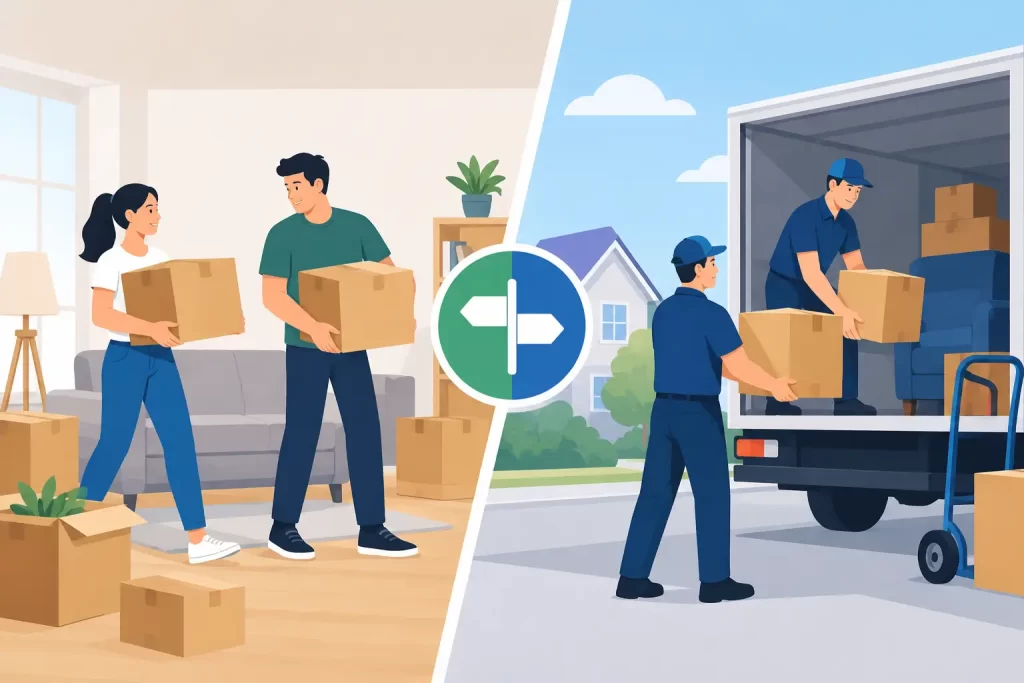
A mate with a ute, a stack of boxes and a free Saturday can make a DIY move look like the obvious budget choice. But when you compare DIY versus removalists, the real decision comes down to more than the truck hire price. It is about your time, physical workload, the safety of your belongings and how much disruption your move can realistically handle.
For a small, simple move, doing it yourself may be perfectly sensible. For a family home, a heavy furniture load, a tight settlement date or an interstate relocation, professional help can save far more than it costs. The best choice is the one that gets you into your new place safely, on schedule and without creating extra stress along the way.
DIY versus removalists: start with the size of the move
The first question is not whether you can lift a lounge. It is whether you can organise every part of the move without putting too much pressure on yourself, your household or your work schedule.
A DIY move can work well when you are moving from a studio, a small unit or a lightly furnished rental. If the distance is short, access is easy and you have enough capable people available, a hired van or ute may be all you need. This is especially true if you are flexible about making a few trips over several days.
The equation changes quickly with a three-bedroom home, stairs, narrow access, large appliances, fragile items or a long-distance move. Beds need dismantling, fridges must be moved upright and secured properly, and bulky furniture needs to be protected from scrapes, dents and moisture. A single trip can become a full weekend of loading, driving, unloading and returning equipment.
Removalists are built for that workload. A trained crew arrives with the right vehicle capacity, trolleys, furniture blankets, straps and lifting techniques. Instead of working out how to manoeuvre a washing machine down a path, you have a team that handles these tasks every day.
The true cost is more than truck hire
DIY is often cheaper at face value, but only when the move goes smoothly and stays small. Before deciding, write down every likely cost rather than comparing a truck rental with a removal quote alone.
A DIY move may include vehicle hire, fuel, kilometre charges, insurance excesses, packing boxes, tape, protective blankets, trolley hire and extra cleaning time. You may also need to cover food for friends helping out, take leave from work or pay for another day of vehicle hire if the job runs late.
Then consider the cost of damage. A scratched timber table, broken television, damaged stairwell or dropped fridge can wipe out the savings of a self-move very quickly. Not every accident is covered by the insurance that comes with vehicle hire, particularly if items were packed or loaded poorly.
A professional removal quote is usually easier to budget for because the labour, vehicle and equipment are planned together. Ask what is included, whether travel time applies, and whether packing or special handling is needed. Clear information upfront matters more than simply choosing the lowest number.
When DIY may be the cheaper option
DIY is worth considering if you have a small load, suitable vehicle access, confident helpers and time to spare. It can also make sense if you have already moved most items gradually and only need to transport a mattress, a few boxes and basic furniture.
The important point is to be realistic. A move that is inexpensive because you own a trailer is not necessarily inexpensive if it requires six separate trips, two days off work and a sore back for the next week.
When removalists offer better value
Professional movers often provide better value when the move is larger, more time-sensitive or physically demanding. This includes homes with heavy lounges, large dining tables, fragile art, antique pieces, pianos, office equipment or multiple bedrooms of furniture.
For local moves around Nowra, Wollongong and the Illawarra, a removal team can also reduce the challenges of coordinating keys, lift bookings, driveway access and settlement times. They load efficiently, keep the job moving and help you avoid asking friends to carry furniture they are not equipped to handle.
Time is usually the biggest difference
Moving day has a habit of taking longer than expected. What looks like four hours on paper can turn into ten once you add packing gaps, furniture disassembly, traffic, refuelling, parking, loading and unloading.
With DIY, you are responsible for the full plan. You need to collect the vehicle, check its condition, work out where to park, organise helpers, protect furniture, pack the load safely and return the vehicle on time. If someone cancels or the weather turns, the pressure lands on you.
Removalists make the process more predictable. A professional crew works to a schedule and understands how to load a truck for both space and safe transport. They can also dismantle and reassemble suitable furniture, place items in the rooms you nominate and keep the heavy work moving at a steady pace.
This is particularly useful for households moving with children, pets or demanding work commitments. Rather than spending the final week surrounded by half-packed boxes and loose jobs, you can choose a packing service or have your major items professionally wrapped and moved.
Consider the physical risk before you volunteer your back
Moving furniture is not just hard work. It can be risky work. Incorrect lifting, poor footwear, a wet path or an awkward turn through a doorway can result in strains, falls and damaged belongings.
A removalist team uses techniques and equipment designed for heavy loads. Trolleys, straps, ramps and protective covers are not extras when you are moving a fridge or solid timber buffet. They make the job safer and help prevent damage to floors, walls and furniture.
That does not mean DIY is always unsafe. It means you should not rely on enthusiasm alone. If you are handling the move yourself, keep loads manageable, use proper lifting practices, protect sharp corners and avoid packing boxes so heavily that no one can safely carry them. Never move large items alone just to save time.
Packing is where many DIY moves unravel
Loading a truck is only one part of a successful move. Packing well protects your belongings and makes unpacking far easier.
DIY packing gives you full control and can reduce costs, but it takes longer than most people expect. Glassware, electronics, paintings and sentimental items need more than a few sheets of newspaper. Boxes should be strong, clearly labelled and packed so they do not collapse or shift in transit.
Professional packing is most useful when time is short or the contents are valuable and fragile. Experienced packers use suitable wrapping materials and know how to prepare furniture, mirrors, appliances and delicate household items for transport. For offices, organised packing and labelling can also reduce downtime because equipment, files and workstations arrive where they need to be.
Mr Muscle Removals can handle packing as well as transport, which gives households and businesses the option to choose the level of support they need rather than managing every job themselves.
Long-distance and office moves need a stronger plan
A local DIY move has room for small mistakes. You can return for a forgotten box or make another trip for the garage items. Interstate moves do not offer that flexibility. Every loading decision matters when your belongings are travelling hundreds of kilometres.
Long-distance removals require careful scheduling, secure loading and confidence that your furniture will be protected throughout the journey. A professional service is usually the safer option when you are moving a full home between regions or states, particularly if you cannot be present at both properties for an extended period.
Office moves deserve the same attention. Lost cables, poorly labelled boxes and a damaged desk can delay a team getting back to work. Professional office removalists can move workstations, furniture and equipment in an organised sequence, helping businesses reopen faster with less disruption.
How to make the right call for your move
Choose DIY if the move is genuinely small, local and flexible, and you have reliable help, practical equipment and enough time. Choose removalists if the move involves a larger property, heavy or fragile furniture, difficult access, strict timing or a long distance.
There is also a middle ground. You may pack your own boxes and hire removalists for the heavy furniture. Or you might move a few car loads yourself while leaving the main truckload to professionals. This approach can keep costs sensible without leaving you to manage the hardest parts alone.
Before committing, walk through your home and picture every item getting from its current room to its new one. Include the stairs, gates, driveways, parking, weather and people needed to make it happen. The right moving choice is the one that lets you close the door on your old place feeling relieved, not exhausted.