
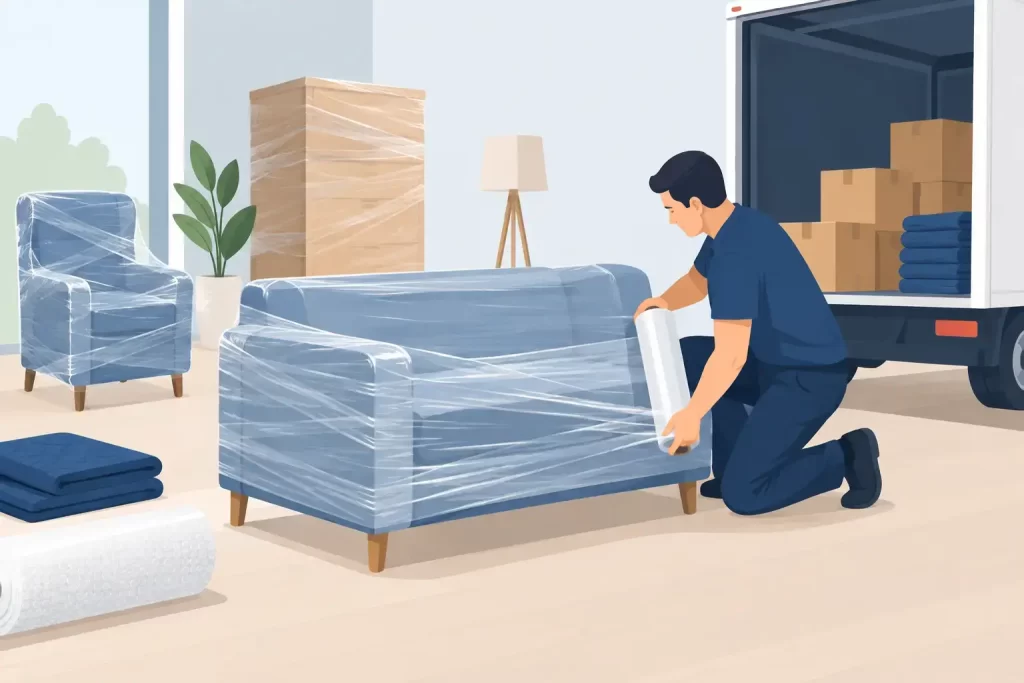
A timber dining table can pick up a deep scratch in seconds when it shifts against a metal bed frame. A fabric sofa can collect dust, moisture or marks before it even reaches the truck. Wrapping furniture before transport is not an extra detail – it is one of the practical steps that helps your belongings arrive in the same condition they left.
For households, renters and businesses planning a move, the right wrapping protects surfaces, corners, upholstery and fragile moving parts. It also makes loading safer and more efficient. The method depends on the item, the distance travelled and the conditions on moving day.
Why wrapping furniture before transport matters
Furniture rarely gets damaged because someone intends to handle it roughly. Damage usually happens when items rub together in the truck, are placed down on an uneven surface, or move during braking and turns. Polished timber, glass, leather, veneers and painted finishes are particularly vulnerable.
Good wrapping creates a protective barrier between each item and the vehicle, other furniture and hard surfaces. It reduces scuffs, dents and scratches while also keeping removable parts together. For interstate moves or longer trips, this protection becomes even more valuable because furniture is handled and transported for longer.
Wrapping also helps professional removalists carry bulky pieces securely. A protected item can be gripped without handling delicate surfaces directly, while padded layers help prevent contact points from causing damage.
Start by preparing each piece
Before any wrapping goes on, furniture should be cleaned, emptied and checked for existing marks. Take photos of valuable or delicate pieces so you have a clear record of their condition before the move. Empty drawers, cupboards and shelves wherever possible, especially if the furniture is heavy or likely to be tipped during loading.
Remove loose components such as shelves, legs, knobs and glass panels. Place screws and fittings in clearly labelled bags, then secure each bag to the relevant furniture item or pack it in a labelled essentials box. This small step can save a great deal of time when you are setting up at the new property.
Doors and drawers should be secured so they cannot swing open in transit. Avoid using strong packing tape directly on timber, painted finishes or upholstery. Adhesive can leave residue or lift the surface when removed. A moving blanket, stretch wrap or purpose-made furniture cover is usually the safer option.
Choose the right protection for the furniture
There is no single wrapping material that suits every item. Using the wrong one can cause problems, particularly if plastic is left against natural timber or leather for an extended period.
Timber tables, cabinets and drawers
Wrap timber furniture first with moving blankets or padded furniture pads. Pay extra attention to corners, legs and edges, as these are the parts most likely to be bumped. Secure the padding with stretch wrap around the blanket, not directly against the finished surface where possible.
For drawers and cabinets, ensure doors are closed and protected from opening. Larger pieces may need to be partly dismantled if access is tight or there are stairs to manage. However, not every item should be taken apart. Some flat-pack furniture can become less stable once dismantled, so it depends on its construction and condition.
Sofas, armchairs and mattresses
Upholstered furniture needs protection from dirt, rain and rubbing. A breathable furniture cover or clean moving blanket is ideal for fabric sofas and chairs. Plastic covers are useful for short loading periods or wet weather, but moisture should not be trapped against fabric or leather for a long time.
Mattresses should be placed in purpose-made mattress bags or clean protective covers. Keep them upright where practical and avoid placing heavy furniture on top. This prevents tears, stains and permanent indentations.
Glass, mirrors and stone tops
Glass and mirrors need more than a blanket. Cover the face with cardboard or a protective board, then wrap the item in padding and secure it carefully. Mark it as fragile and keep it upright during transport. Glass should never be laid under heavy boxes or squeezed between unprotected furniture.
For marble, stone or glass table tops, professional handling is often the sensible choice. These pieces can be extremely heavy, awkward to carry and expensive to replace. Their frames and corners must be supported properly, not just the centre of the surface.
Beds, desks and modular furniture
Beds, desks and modular office furniture are often easier to move when dismantled into manageable sections. Keep bolts, brackets and tools organised, and protect panels individually before stacking them. Desks with cable trays, screens or detachable legs need particular care so fittings are not bent or lost.
For office moves, label each component by workstation or room. This helps the reassembly process move quickly and reduces disruption when the team arrives at the new premises.
Avoid common wrapping mistakes
The most common mistake is using too little padding around corners and relying on plastic wrap alone. Stretch wrap can hold drawers closed and blankets in place, but it does not provide much impact protection by itself.
Another issue is wrapping furniture while it is still dirty or damp. Dirt can rub into upholstery during transport, while moisture may lead to marks, mould or damage to timber finishes. Let wet items dry fully before packing, especially after rain or a last-minute clean.
Avoid overloading furniture with loose items. Filling drawers with books or heavy objects can make a cabinet difficult to lift and place stress on its runners. Lightweight soft items may be fine in some cases, but ask your removal team if you are unsure.
It is also risky to leave fragile furniture unwrapped because the move is only a short distance. Local moves still involve driveways, doorways, stairs, loading ramps and vehicle movement. The distance between properties is only one part of the job.
Loading matters as much as wrapping
Even well-wrapped furniture needs to be loaded properly. Heavier items should be positioned securely, with weight distributed across the truck. Sofas, mattresses and large timber pieces can create stable walls when packed correctly, while fragile items need dedicated protected spaces.
Furniture should not be allowed to slide or lean loosely against sharp edges. Removal blankets, straps and careful stacking all work together to limit movement on the road. A professional crew will assess the load as it is built rather than treating every item the same.
Access can affect the plan too. Narrow hallways, steep driveways, apartment lifts and tight staircases may mean certain items need extra wrapping before they leave the room. Telling your removalist about access issues ahead of time helps them bring the right equipment and allocate enough time.
When professional wrapping is worth it
DIY wrapping can work for simple, low-risk pieces when you have the time, materials and help to do it carefully. But professional wrapping is often worth considering for valuable furniture, large homes, office moves, interstate transport or items with glass, stone and delicate finishes.
A trained removals team knows how to protect different materials, carry awkward items safely and load a truck so that furniture remains stable. It can also remove a major job from your moving checklist when there are utilities, keys, cleaning and change-of-address tasks to organise.
Mr Muscle Removals provides professional wrapping and packing support for customers who want their furniture prepared and moved with care. Whether you are moving around Nowra, heading to Wollongong or planning a longer relocation, arranging the right level of packing support early gives the move a calmer start.
Before moving day, walk through each room and identify the pieces you would be most upset to see damaged. Those are the items that deserve proper protection, careful loading and a plan that does not rely on luck.