
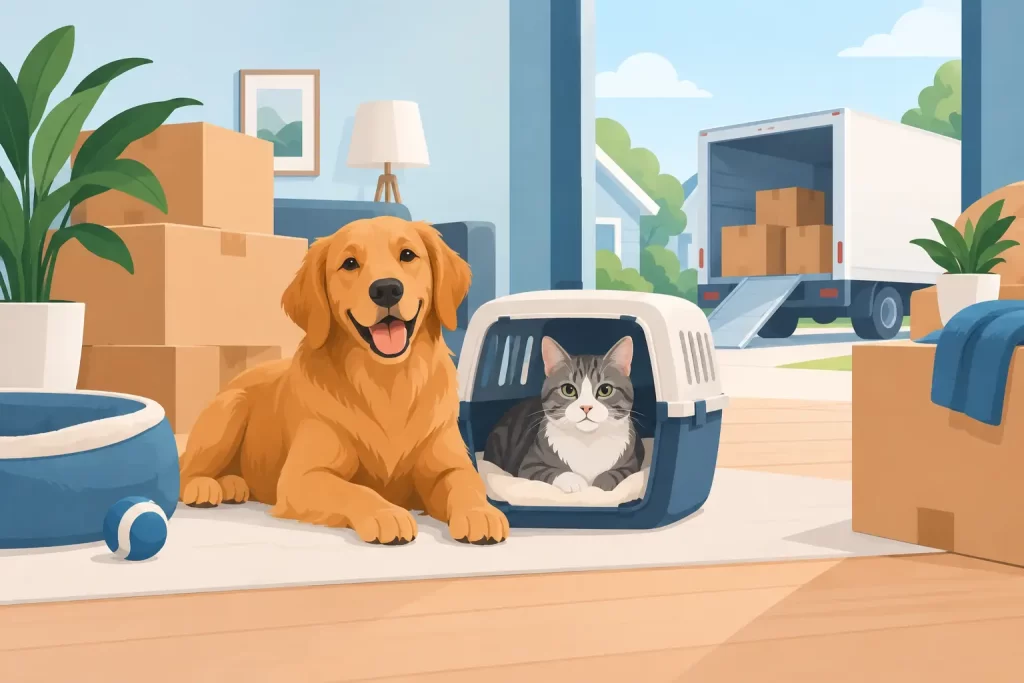
The removalists arrive, the front door is open, boxes are stacked by the wall and people are carrying furniture through unfamiliar noise. For most pets, that is not an exciting change of address. Moving with pets needs its own plan, separate from packing the kitchen or booking the truck, because a frightened animal can slip out, hide for hours or become distressed very quickly.
A calm move is possible when you plan for your pet’s routine as carefully as you plan for your furniture. The key is to keep them secure on moving day, travel with them yourself wherever possible, and give them time to settle once you arrive.
Plan moving with pets before the boxes appear
Start preparing a couple of weeks before the move. Pets notice changes in routine, and a sudden pile of cartons or missing furniture can be unsettling. Leave their bed, favourite toys, food bowls and scratching post in place until the final day where possible. Those familiar smells matter more than most owners realise.
Check that your pet’s microchip details and council registration are current. Update your mobile number and new address as soon as practical. A collar with an ID tag is also worthwhile, particularly for dogs and cats that may bolt when doors are opened repeatedly.
If your pet is prone to anxiety, speak with your vet well before moving day. They can advise whether behaviour strategies, calming aids or medication are appropriate. Do not try a new treatment for the first time on the day of the move. Every animal responds differently, and you want to know how they will react before a busy removal day.
It also helps to book a vet check if your pet is due for vaccinations, prescriptions or parasite prevention. Pack copies of their medical records, vaccination history and any medication in a clearly marked pet bag that travels with you, not in the removal truck.
Get carriers and car travel sorted early
Cats, birds and small animals should travel in a secure, well-ventilated carrier. If the carrier only appears once a year before a vet visit, introduce it early. Leave it open with bedding, treats or a familiar toy inside so it becomes part of the room rather than a warning sign.
Dogs should be safely restrained in the car with an appropriate harness, crate or barrier. Let them have several short practice drives if car travel is not already familiar. Keep the vehicle comfortably ventilated and never leave an animal unattended in a parked car, even for a quick stop. Australian temperatures can become dangerous fast.
Keep pets out of the moving-day traffic
The safest option is usually for pets to stay with a trusted friend, family member, boarding facility or pet sitter while furniture is loaded. This keeps them away from open doors, heavy items and the noise of the move. It also lets you focus on last-minute access, keys and paperwork without worrying about where the cat has disappeared to.
If off-site care is not possible, set up one quiet, secure room well before the crew arrives. Choose a room that will be emptied last, then place a note on the door: “Pet inside – keep closed.” Give your pet water, bedding, food if needed, their carrier and a familiar toy. For dogs, a secure backyard may seem easier, but it is not always reliable during a move. Gates can be left open and anxious dogs can find surprising ways out.
Let your removal team know there is a pet on site when they arrive. A professional crew can work around a designated pet room and take extra care with access. At Mr Muscle Removals, clear communication before and on the day helps keep the job organised, especially when a family pet is part of the moving plan.
Pack a pet essentials bag and keep it in your car. It should include:
- food, treats and a bowl
- fresh water and a portable water bowl
- medication and vet records
- lead, harness, waste bags and a towel
- bedding, toys and cleaning supplies
- a recent photo of your pet, just in case they go missing
Feed pets as normal unless your vet has advised otherwise, although a very large meal immediately before a long car journey may not suit animals that get motion sickness. Give dogs a walk before the morning rush starts, allowing plenty of time for a toilet break and some calm activity.
Travel separately from your household goods
Pets should generally travel with their owner rather than in a furniture removal vehicle. Removal trucks are designed for safely securing household goods, not for carrying animals. The temperature, noise, movement and loading stops can make them unsuitable and unsafe for pets.
For a local move around Nowra, Wollongong or the Illawarra, your pet may only need a short car trip. Even so, keep them contained until the new home is ready. Arriving early with a nervous cat while removalists are still bringing in lounges and beds can create exactly the chaos you were trying to avoid.
For a longer interstate move, plan more carefully. Map out pet-friendly rest stops and overnight accommodation if required, and make sure your pet’s identification details are correct. State and territory rules can apply to particular animals, breeds, livestock and pests, so check current requirements directly with the relevant authorities before you travel. This is particularly relevant when relocating birds, reptiles or other exotic pets.
Fish, reptiles and small mammals need specialised care. Aquarium fish should not travel in a full tank, and moving an aquarium involves managing water quality, filtration and temperature as well as lifting the glass safely. Reptiles have specific heating and transport requirements. Get advice from a vet or specialist provider rather than relying on general moving tips for these animals.
Make the new home feel safe first
Before bringing your pet inside, do a quick safety check. Look for gaps in fencing, loose screens, exposed cords, cleaning products, pest baits and open windows. Check that gates latch properly. A new yard may not be as secure as it looks, particularly for a small dog or an agile cat.
Set up one quiet room first with their usual bedding, water, food and litter tray. Keep cats indoors for at least a few weeks while they learn the new space and form an attachment to it. Let them explore gradually, room by room, rather than giving them immediate access to a strange and busy house.
Dogs often settle faster when their routine returns quickly. Walk them at familiar times, keep meals consistent and give them a calm place to rest away from unpacking. Avoid inviting a crowd of visitors over in the first few days. New smells, new rooms and a different neighbourhood are already plenty to process.
Some behaviour changes are normal. A cat may hide, a dog may become clingy, and appetite can dip briefly after a move. Give them patience and predictability. However, contact your vet if your pet refuses food for an extended period, seems unusually lethargic, has persistent vomiting or diarrhoea, or shows signs of severe anxiety.
Help them learn the new neighbourhood
For dogs, take short, relaxed walks around the new area on lead. This helps them become familiar with local sounds and scents without overwhelming them. Keep an eye out for busy roads, off-lead areas and potential hazards such as baiting notices.
For cats that will eventually go outdoors, wait until they are properly settled and ensure their microchip and collar details are current. Start with brief, supervised periods if practical. A new home can affect even confident cats, so do not assume their usual habits will transfer immediately.
Moving day can be full-on, but your pet does not need to carry that stress with you. A secure space, a familiar routine and a safe trip in your own vehicle will make a real difference. Once the last box is inside, take a moment to sit with them in their new home – that quiet reassurance is often the best start they can have.