
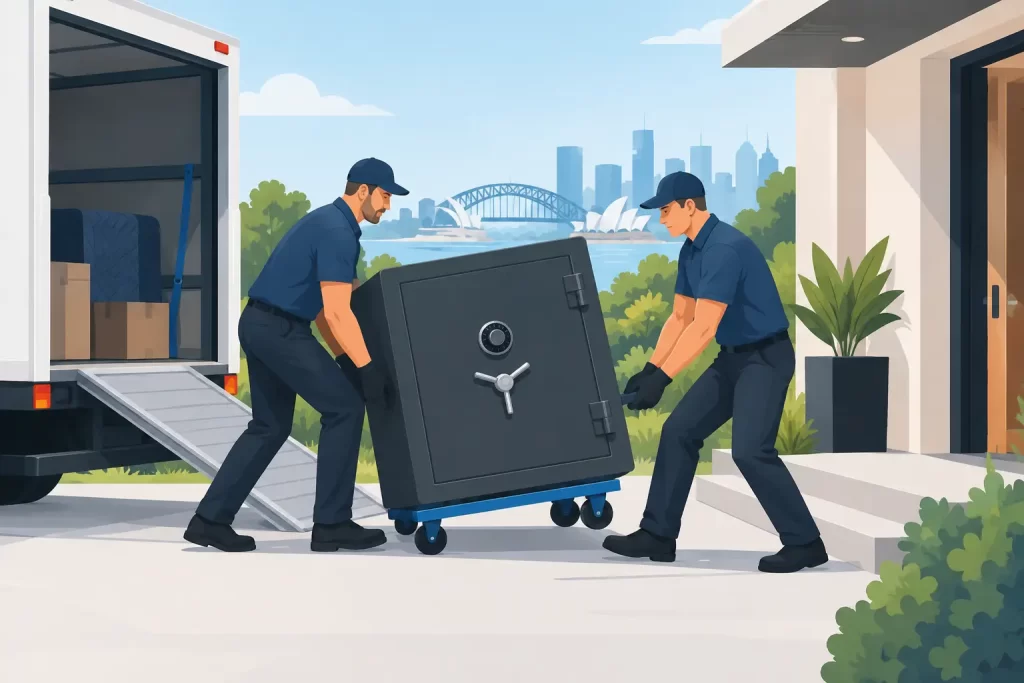
A safe is not just another heavy item in the house. Its weight is concentrated in a small footprint, it can be difficult to grip, and one wrong move can damage floors, stairs, walls or the safe itself. So, can removalists move large safes? In many cases, yes – but it depends on the safe’s size, weight, location and the equipment required to move it safely.
For a lighter home safe on a clear ground-floor path, an experienced removal team may be able to include it in a standard move. For a large gun safe, commercial safe, antique safe or any unit that must travel down stairs, around tight corners or over uneven ground, specialist safe-moving equipment and planning may be needed. The key is being upfront before your booking, not discovering the challenge on moving day.
Can Removalists Move Large Safes Without Damage?
Professional removalists can move many safes safely when the job is assessed properly. The safe needs to be secured, protected and moved using the right handling method for its weight and access conditions. This is not a job for lifting straps and good intentions alone.
A large safe can weigh anywhere from 150 kg to well over 1,000 kg. Even a compact-looking safe may be far heavier than expected because of its thick steel body, reinforced door and internal locking mechanisms. Its centre of gravity can also shift when the door is opened, which makes incorrect handling particularly risky.
The removal team will consider more than the safe’s listed weight. They need to know whether it is on a ground floor, in a garage, upstairs, bolted to concrete, or positioned behind narrow doorways. They will also assess steps, driveway gradients, loose gravel, wet surfaces and whether there is a suitable vehicle access point.
For suitable jobs, removalists may use heavy-duty trolleys, appliance dollies, protective boards, ramps, lifting equipment and secure tie-downs in the truck. On more complex jobs, a specialist safe mover may be the better choice. That is not an inconvenience – it is the safest and most cost-effective way to avoid an accident or property damage.
When a Specialist Safe Mover Is Needed
Not every safe requires a separate specialist, but some situations should be treated with extra caution. A removalist may recommend specialist assistance if the safe is exceptionally heavy, oversized, built into a wall or floor, or located upstairs.
Staircases are one of the biggest deciding factors. Carrying a heavy safe down internal stairs creates serious risk for the people moving it and can put pressure on treads, handrails and landings. Tight turns can make the job impossible without specialist lifting gear.
A specialist may also be required where the safe needs to be removed through a balcony, raised over a fence, lifted from a difficult commercial site, or transported in a way that requires a particular loading method. Some older safes are especially awkward because they are heavy, unbalanced and may have delicate external finishes worth protecting.
It also matters whether the safe is bolted down. Many home and business safes are fixed to a concrete slab or wall for security. Removalists generally should not unbolt a safe unless that work has been agreed to and they have confirmed it is within the job scope. You may need a locksmith, installer or qualified trade to disconnect it first.
Information to Give Your Removalist Before Moving Day
Clear information helps your removalist provide an accurate quote and send the right crew and equipment. It also reduces the chance of delays on the day.
When requesting a quote, provide the safe’s approximate height, width and depth, along with its brand or model if known. A photo is helpful, especially one that shows the safe in its current location and the path from the room to the vehicle. If you know the weight, include that too, but do not guess if you are unsure.
Explain where the safe is located and where it is going. Mention every step, staircase, narrow hall, sharp turn, lift, sloped driveway or uneven outdoor section involved. If access at the new property is different from the old one, share those details as well. A safe may be easy to remove from one home but difficult to install at the destination.
You should also confirm whether the safe is empty, unlocked and detached from the property. Remove cash, documents, firearms, keys, jewellery and other valuables before the move. A safe should never be moved with firearms or ammunition inside. This keeps the item more manageable and helps protect you from unnecessary risk.
Preparing a Large Safe for Removal
Once the move is booked, make the path clear. Move rugs, low furniture, pot plants, boxes and other items that could create a trip hazard. If there are fragile surfaces near the route, point them out to the team on arrival.
Keep the safe door closed and locked unless your removalist asks otherwise. Do not tape over a keypad in a way that could damage it, and avoid leaving keys in the lock. If the safe has a removable internal shelf or drawer, take it out only if the manufacturer allows it and it can be done safely.
Do not try to shift the safe closer to the front door yourself. Dragging it can gouge timber floors, crack tiles or damage the base of the unit. More importantly, a safe that starts to tip is extremely difficult to control. Leave the handling to trained movers with an agreed plan.
At the new property, decide on the final position before the team arrives. Measure the doorway and the intended space, particularly if the safe is going into a study, garage, storage room or office. It is far easier to position a safe once than to manoeuvre it again after unloading.
Moving Safes During Home and Office Relocations
A safe often becomes a last-minute issue in an otherwise straightforward move. It may sit in a wardrobe, workshop, office storeroom or garage and be overlooked while the larger furniture gets listed. Mentioning it early gives everyone a better outcome.
For home moves around Nowra, Wollongong and the wider South Coast, access can vary greatly between properties. A flat garage-to-driveway move may be simple, while a sloping block, split-level home or coastal property with limited vehicle access needs more planning. The same applies to office removals, where lifts, loading docks, building rules and after-hours access can affect how and when a safe can be moved.
Mr Muscle Removals can assess the details of your move and advise whether the safe can be included with your removal service or whether specialist arrangements are the safer option. Honest assessment matters more than making promises that do not fit the job.
What Affects the Cost of Moving a Safe?
Safe-moving costs are based on the work involved rather than the item alone. Weight, access, distance, crew size, protective materials, equipment and loading requirements all affect the quote. A safe moving from a ground-floor garage to another ground-floor garage will usually be simpler than one being taken from an upstairs office with restricted access.
Being transparent at the quote stage is the best way to avoid unexpected charges. If the safe is heavier or harder to access than described, the team may need additional labour, specialised equipment or a revised plan. That protects the crew, your property and the safe.
A large safe deserves the same careful planning as any major part of your move. Share clear photos and access details early, confirm whether it is fixed in place, and let your removalist recommend the safest method. That small amount of preparation can make moving day much smoother.