
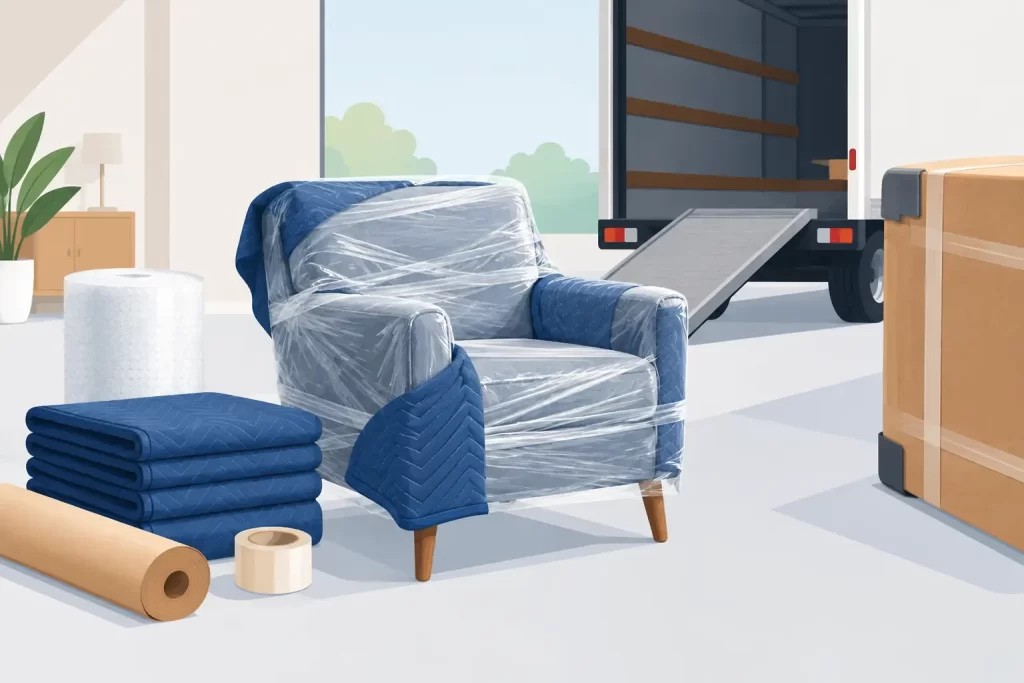
A dining table can look perfectly secure at the front door, then arrive with a chipped corner after one tight hallway, a sharp turn in the truck or a sudden stop. The right furniture protection materials are what stand between a straightforward move and damage that could have been avoided. They protect surfaces from rubbing, absorb knocks, keep drawers and doors secure, and make loading safer for both your belongings and the moving team.
Protection is not about wrapping every item in the same material. A timber sideboard, a fabric lounge, a glass tabletop and a mattress all need a different approach. The best results come from matching the material to the item, the access at each property and the distance it is travelling.
Why furniture protection matters during a move
Most moving damage does not happen because an item is dropped. It happens when furniture rubs against another item, corners catch on a doorway, loose parts shift in transit, or an unprotected surface meets grit, moisture or tape adhesive. Even a short move across Nowra or Wollongong can involve stairs, narrow passages, driveways and several loading points.
Protective materials also make the job more efficient. A properly wrapped lounge is easier to grip and less likely to snag. A blanket-covered cabinet can be placed safely beside other furniture in the truck. Mattress bags keep bedding clean while items move through garages, footpaths and loading areas.
There is a balance, though. Too little protection leaves high-value pieces exposed. Too much loose wrapping can create bulky, awkward loads and waste time. Professional packing focuses on secure coverage where it is needed, without making the item harder to handle.
Core furniture protection materials for moving
Moving blankets and padded furniture covers
Moving blankets are the workhorse of furniture protection. These thick, padded covers create a barrier between hard surfaces, making them ideal for timber furniture, appliances, cabinets, bed frames and bulky office items. They help prevent scuffs, dents and pressure marks when pieces are loaded close together.
A blanket should cover the full contact area, particularly corners, edges and polished surfaces. It then needs to be secured with stretch wrap, moving straps or tape applied to the blanket itself. Tape should never be placed directly on varnished timber, leather, painted surfaces or upholstery, as adhesive can leave residue or lift finishes.
Fitted padded covers are especially useful for lounges, armchairs and mattresses. They offer more consistent coverage than a loose blanket and are a practical choice for items that need to stay protected throughout a long interstate move.
Stretch wrap for secure, clean loads
Stretch wrap is a flexible plastic film used to hold blankets in place, secure drawers and protect surfaces from dust and light moisture. It is useful on wrapped timber pieces, upholstered furniture, chairs and bundles of smaller items.
It is not a substitute for padding. On its own, stretch wrap provides very little impact protection and can trap moisture if furniture is wrapped while damp. It also should not be pulled tightly over delicate finishes for long periods, particularly in hot conditions. Use it to secure protective layers, not as the only layer.
For drawers, stretch wrap can keep them closed without applying tape directly to the furniture. If drawers are lightweight and sturdy, they can sometimes remain in place. Heavy drawers, fragile contents and filing cabinets usually need a different plan to reduce weight and prevent internal movement.
Bubble wrap and foam for fragile surfaces
Bubble wrap provides cushioning for glass, mirrors, marble tops, delicate carvings and polished metal details. Larger bubbles offer better shock absorption for heavier items, while smaller bubbles suit finer surfaces and fittings. Foam sheets are useful where a smooth, non-abrasive layer is needed beneath other protection.
Glass tabletops should be wrapped with foam or bubble wrap, then protected with strong cardboard sheets or purpose-made cartons. Corners need extra reinforcement because they are the most vulnerable point. A glass top should travel upright where possible, never laid flat under heavy loads.
For mirrors and framed artwork, packing tape can be applied in a light criss-cross pattern over the glass only if appropriate, helping hold fragments together should breakage occur. The item still needs padded wrapping and firm support. The tape must be removed carefully afterwards.
Cardboard corner protectors and edge guards
Corners take the hardest hits during loading and unloading. Cardboard corner protectors, foam edge guards and reinforced cardboard strips are simple materials that make a real difference for table tops, cabinets, desks, mirrors and appliances.
They are particularly useful when an item has square edges or a fragile veneer. Add them before the blanket or outer wrap so they stay in position. For a large dining table, remove the legs where practical, protect each edge, wrap the tabletop and keep all hardware in a labelled bag secured to the table frame or packed separately.
Mattress and lounge bags
Mattress bags protect against dust, dirty floors, rain showers and marks picked up while moving through shared hallways or storage areas. They are affordable and especially worthwhile for a mattress that has been cleaned or is being moved into a new home.
Lounge bags offer similar cleanliness protection, but they do not replace padded covers where there is a risk of impact or rubbing. Fabric sofas can pick up snags and marks quickly, while leather can scratch against exposed metal, timber edges or rough cardboard. For valuable lounges, use both a fitted cover or blanket and an outer protective layer if conditions require it.
Protecting common furniture items properly
Timber furniture
Timber needs protection from knocks, scratches and adhesive damage. Empty cabinets and bookcases before moving them, remove loose shelves, and secure doors with stretch wrap over a moving blanket. For antique, veneer or high-gloss furniture, use clean blankets and avoid rough cardboard directly against the finish.
If the piece has removable legs, handles or glass inserts, taking them off can reduce the chance of damage. Label hardware clearly and keep it with the relevant item. A few minutes of preparation can prevent a frustrating reassembly job later.
Upholstered furniture
Vacuum fabric lounges before wrapping so grit is not pressed into the upholstery. Cover sharp timber feet and protruding parts, then use padded covers or blankets secured with wrap. Avoid storing heavy boxes on soft cushions, as this can leave dents or distort the frame.
Leather needs extra care in warm weather. It should be clean and dry before wrapping, and it should not be left tightly sealed in plastic for extended periods. Breathable padded covers are generally the safer choice for longer transport or storage.
Beds and mattresses
Disassemble bed frames where possible. Wrap headboards, footboards and rails separately, especially if they are upholstered or have polished finishes. Keep bolts, brackets and assembly instructions together in a labelled bag.
Mattresses should be bagged before they leave the bedroom. Do not bend spring mattresses sharply, and avoid dragging them across concrete or driveways. A mattress may look tough, but torn fabric and damaged edges can affect both appearance and support.
Office furniture and electronics
Desks, filing cabinets and boardroom tables often have heavy tops, removable legs and vulnerable corners. Protect each component separately and keep cables, screws and accessories clearly labelled. Lock filing cabinets if possible, or empty them to prevent drawers opening and make lifting safer.
Computer monitors, printers and other electronics need more than a blanket. Original cartons are ideal, but suitable boxes with internal cushioning are the next best option. Never place heavy furniture on top of cartons marked fragile.
Floor and access protection are part of the job
Furniture protection should include the property, not just the item. Floor runners, cardboard sheets and protective coverings help prevent marks on timber floors, tiles and carpet while the move is underway. They are especially useful when rain, mud or gravel may be tracked inside.
Before moving day, measure tight hallways, stairwells and doorways. Remove loose rugs, clear outdoor paths and identify difficult turns. If access is limited, a professional team may need to disassemble selected items or use extra protection around door frames and corners.
When professional wrapping is worth it
DIY materials are suitable for simple, low-risk items when you have time to pack carefully. Professional wrapping is worth considering for large furniture, fragile pieces, expensive finishes, office equipment and interstate loads. It is also a sensible choice when access is difficult or you simply do not want the pressure of preparing everything yourself.
At Mr Muscle Removals, careful wrapping and packing can be organised as part of a home or office move, so furniture is protected from pickup through to unloading. The goal is practical: fewer risks, less work for you and a move that stays on schedule.
The best protection is applied before furniture reaches the truck. Give each item the material it needs, keep hard surfaces separated, and make room for careful handling at both ends of the move. That preparation is what helps your furniture arrive ready for its next room, not ready for repairs.