
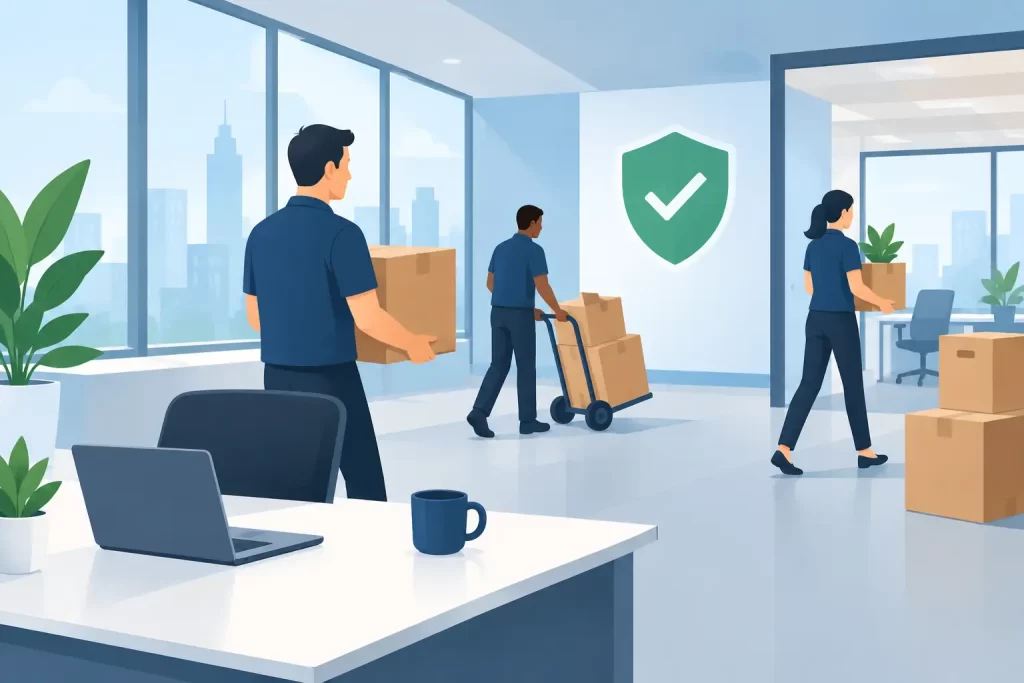
A delayed internet connection, a missing monitor or a loading dock booked by another tenant can turn an office relocation into days of lost work. Effective office move risk controls prevent those small issues from becoming expensive disruptions. They give your team a clear plan for protecting people, equipment, information and business continuity from the first site inspection to the final workstation check.
For a small or mid-sized business, the goal is not to make the move complicated. It is to identify what could stop staff from working, then put practical controls in place before moving day. A professional removals team can handle the heavy lifting, but the best results come from good coordination between your business, building management, IT providers and movers.
Start with an office move risk assessment
Every office has different pressure points. A business that relies on phone bookings may be most concerned about keeping lines open. A design studio may need extra protection for computers, screens and specialist equipment. A medical, legal or financial office may have strict requirements around confidential files and client data.
Walk through both premises before confirming the move date. Check access routes, lifts, loading zones, stairwells, parking restrictions and any narrow doorways. Measure bulky furniture and large equipment rather than assuming it will fit. This early inspection helps avoid last-minute dismantling, extra labour or damage to walls, floors and furniture.
It also pays to confirm the building rules in writing. Many commercial buildings have approved moving hours, lift bookings, insurance requirements and procedures for protecting common areas. If a loading dock is unavailable when the ute arrives, the whole schedule can quickly slip.
Office move risk controls for downtime
The biggest cost of an office move is often not the ute or packing materials. It is lost operating time. Start by deciding what services must keep running throughout the move and what can be paused for a planned period.
Create a move schedule that works back from the first day you need staff operational at the new site. Include IT disconnection, packing, transport, cleaning, installation, testing and contingency time. A Friday afternoon or weekend move may reduce disruption, but it only works if internet, phones, access cards and key systems can be tested before staff arrive on Monday.
Assign one person from your business as the move coordinator. They do not need to lift boxes or manage every detail, but they should be available to make quick decisions. That person can confirm priorities with the removalists, liaise with building management and keep staff informed if timings change.
It is wise to move critical items in a clearly identified order. Reception equipment, essential files, servers, priority workstations and meeting room technology may need to be unloaded first. A labelled floor plan at the new office makes this much faster than asking staff where every desk and cabinet belongs.
Keep IT separate from general packing
IT equipment needs its own plan. Back up business data before equipment is disconnected, including files held locally on desktops or portable drives. Photograph cable configurations where useful, label each device and cable set, and keep a simple asset list.
Your IT provider should confirm who is responsible for shutting down, disconnecting, transporting, reconnecting and testing each system. Removalists can carefully transport packed computers and screens, but only qualified IT personnel should handle technical disconnection where required. This division of responsibility protects equipment and avoids confusion when something does not start as expected.
Do not pack passwords, security tokens, backup drives or sensitive access devices in general cartons. Keep them with authorised staff and use a documented handover process.
Protect staff, visitors and removal crews
A busy office move introduces manual handling and access risks that are easy to underestimate. Desks, filing cabinets, compactus units, printers and boxed files can be heavy or awkward. Staff should not be asked to carry bulky items down stairs, lift furniture into vehicles or move items that require specialist equipment.
Clear walkways before the removal crew arrives. Remove loose cables, rubbish, floor mats and personal items from corridors and exits. Keep staff and visitors away from active loading areas, particularly where trolleys, furniture dollies and utes are moving in tight spaces.
For a controlled move, confirm these details before the day:
- who can access each building and loading area
- where utes can safely park and unload
- which lifts, stairwells and doors will be used
- what items need dismantling or special handling
- who has authority to approve changes on the day
If workstations, shelving or cabinets need to be dismantled, allow enough time for the job to be done properly. Rushing this stage can lead to damaged fittings, unstable furniture or parts going missing at the other end.
Control the risk of damaged or missing items
Clear labelling is one of the simplest and most effective controls. Label each carton with the destination room, workstation or department, not just the employee’s name. Numbering cartons and recording the total for each area makes it easier to check that everything has arrived.
Use suitable cartons, wrapping and protective materials for computers, monitors, glass panels, artwork and other fragile items. Filing cabinets should be emptied unless the cabinet is specifically designed and approved to be moved loaded. Heavy files can make a cabinet unsafe to lift and may damage drawers or rails in transit.
A detailed inventory is especially useful for high-value items. Record serial numbers for laptops, monitors, printers and other equipment, then check them off at the new site. For larger offices, a room-by-room checklist prevents the common problem of discovering a cupboard full of archived files after the ute has left.
Insurance is another consideration. Ask what cover applies to the removal service and make sure you understand what is included, any limits, and whether your own business insurance needs to be notified. The right protection depends on the value and type of items being moved, so it is worth clarifying before the move rather than after an incident.
Handle confidential material with care
Office moves can create security gaps. Boxes may be left unattended, staff may come and go from both sites, and confidential documents can be packed in a hurry. Treat paper records, client files, staff records and archived documents as controlled items.
Use sealed, labelled cartons for sensitive files and keep a record of who packed, transported and received them. Where confidentiality is critical, nominate authorised staff to oversee collection and delivery. Unneeded documents should be securely destroyed before the move, reducing both storage costs and the risk of carrying old information into the new office.
The same applies to keys, access cards, alarm fobs and security passes. Collect these in advance, record them, and arrange the handover for the new premises. Cancel or return access credentials for the old site once the move is complete.
Test the new office before calling the job finished
A move is not complete when the last box is unloaded. Before normal work resumes, check power, internet, phones, printers, meeting room equipment, security systems and staff access. Test these early enough that any fault can be fixed before it affects customers or employees.
Walk through the office with the floor plan and inventory. Check that furniture is stable, fire exits are clear, heavy storage is positioned safely and no cartons block shared areas. Give staff a simple process for reporting missing items, damaged equipment or workstation issues so problems are recorded and resolved quickly.
For businesses moving in Nowra, Wollongong or across the Illawarra, local access knowledge can make a real difference when timing, parking and building requirements are tight. Mr Muscle Removals can support office relocations with careful packing, organised transport and a removal team focused on getting your business set up with minimal disruption.
The most useful control is a calm, well-communicated plan. When everyone knows what is moving, where it is going, who is responsible and what must be working first, your office can reopen with far less stress and far fewer surprises.