
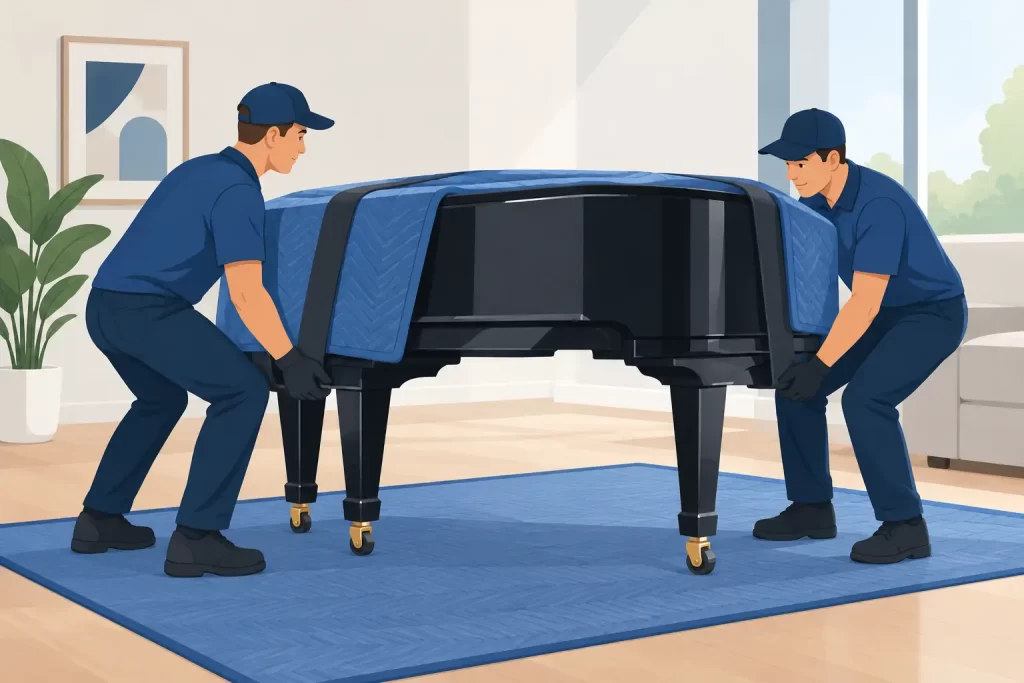
A piano can look settled and harmless in the corner of a room, but it is one of the most difficult household items to relocate. Knowing how to move pianos safely means thinking beyond weight. You need to protect the instrument’s delicate internal parts, the people carrying it, and the floors, walls and doorways along the way.
For most households, a professional piano move is the sensible option. Pianos are heavy, unevenly balanced and costly to repair if they are dropped, tipped or exposed to moisture. Careful planning makes a major difference, whether you are moving across Nowra, heading to Wollongong or preparing for a longer relocation.
How to move pianos safely starts with an assessment
Before anyone lifts a piano, identify exactly what is being moved. An upright piano may weigh anywhere from around 180 to 300 kilograms, while a baby grand or grand piano can weigh considerably more. The bulk of that weight is concentrated in the cast-iron frame, so it will not behave like a large cabinet or lounge.
Measure the piano and assess the full route from its current position to the removal vehicle. Check doorway widths, hallway turns, low ceilings, gates, driveways and the distance from the house to the truck. A route that works for a sofa may not allow enough room to turn an upright piano without damaging its corners or scraping the walls.
Stairs need special attention. Even a short set of steps can change a straightforward piano move into a high-risk job. Tight stairwells, uneven outdoor paths, steep driveways and wet surfaces may require extra crew members, specialised equipment or a different removal method. If access is not clear, do not assume force will solve the problem.
It also helps to tell your removalist the piano type, approximate dimensions, access conditions and whether there are stairs before booking. Clear information allows the right team, vehicle and equipment to arrive prepared, helping avoid delays on moving day.
Use the right equipment, not improvised solutions
A piano should never be moved with a couple of friends, loose blankets and a borrowed trolley. It needs purpose-made moving equipment and experienced handling. The setup depends on the piano, access and transport distance, but commonly includes heavy-duty piano dollies, moving straps, thick furniture pads, corner protection, ramps and a truck with secure tie-down points.
The piano lid, pedals, keys and legs all need protection. On an upright piano, the keyboard cover should be secured so it cannot open in transit. The instrument is then wrapped in padded moving blankets and secured firmly without placing undue pressure on vulnerable components.
Grand and baby grand pianos need a more specialised approach. Their legs and pedal lyre are generally removed and separately wrapped, while the piano body is placed securely on a piano skid or board. This is not a job for guesswork. Removing parts incorrectly or resting the piano on the wrong side can cause structural damage, cosmetic marks or expensive mechanical repairs.
Never roll a piano across timber floors, tiles or carpet on small household castors. Those castors were designed for minor repositioning within a room, not for transporting the instrument through a home. A proper piano dolly spreads the load more safely and gives the crew more control.
Prepare the home before moving day
A clear path is one of the simplest ways to reduce risk. Move rugs, pot plants, small furniture, children’s toys and other trip hazards out of the route. Keep pets in a separate room and make sure children stay well clear while the piano is being moved.
Protect vulnerable surfaces before the crew starts. Floor runners, cardboard, plywood sheets or purpose-made protection can help prevent marks on timber, tile and carpet. Corners, door frames and balustrades may also need padding, particularly in narrow homes or apartment buildings.
If you are moving from a unit or townhouse, arrange lift access and parking in advance. Let building management know about the removal where required, and reserve the loading zone if one is available. Carrying a piano over a long distance because the truck cannot park nearby adds time, fatigue and avoidable risk.
A useful moving-day check includes:
- confirming the access route is clear and dry
- checking the removal vehicle can park close to the property
- removing loose items from the piano and surrounding area
- keeping keys, gates and lift access ready for the crew
- advising the team of stairs, tight turns or changes to access.
Safe lifting is about control, not strength
The biggest mistake people make is trying to lift a piano by its handles, legs or decorative trim. These parts are not designed to carry the piano’s full weight. The instrument needs to be supported from its strong structural sections, with the load shared across a trained team.
Professional movers communicate before each movement: who is lifting, where they are stepping, when they are turning and when they are setting the piano down. Slow, coordinated movement is safer than rushing. The crew should keep hands and feet clear of pinch points, maintain a balanced posture and stop immediately if the load shifts or access becomes unsafe.
A piano should remain as upright as practical during handling. Some controlled tilting may be necessary to place it onto a dolly or navigate access, but laying it flat or tipping it excessively can create problems. Sudden shifts can also injure movers, especially when going down steps or ramps.
If the job involves stairs, the right technique and equipment matter more than extra muscle. This is where a professional team earns its value. Trying to save money with an inexperienced crew can quickly turn into damage to the piano, property repairs or a serious injury.
Secure the piano properly in the truck
Once the piano reaches the vehicle, the work is not finished. It needs to be positioned on a level section of the truck, away from items that could slide into it. It should be secured with rated straps to fixed anchor points and wrapped so it cannot rub against walls, furniture or other freight during transport.
Avoid placing heavy items on top of a piano or packing it tightly against sharp-edged furniture. A piano needs to be stable, but it should not be crushed or exposed to pressure on its lid, keyboard or outer case. Professional removal vehicles are set up to keep large items restrained throughout the trip, including during braking, turns and rough road conditions.
Weather also matters. Rain and high humidity can affect timber, felt and internal components. Minimise the time the instrument spends exposed outdoors, and make sure it is covered during loading and unloading if conditions change.
Give the piano time to settle after delivery
At the new home, place the piano against an internal wall where possible and keep it away from direct sun, fireplaces, heaters, air-conditioning outlets and damp areas. Big temperature and humidity changes can affect the timber soundboard and tuning stability.
Do not book a tuning immediately after the move. Let the instrument adjust to its new environment first. The exact timing depends on the season, travel distance and conditions in the home, but allowing a few weeks is often sensible before arranging a qualified piano tuner.
If there is any visible damage, unusual sticking keys or movement in the pedals after delivery, take note of it before playing. A technician can check the instrument and recommend the right repair or adjustment.
When to book professional piano movers
A professional move is strongly recommended for every piano, but it becomes essential when there are stairs, narrow access points, expensive flooring, long carrying distances or a grand piano involved. It is also the best option if you are moving interstate, combining the piano with a full household removal, or simply want to avoid asking friends to take on a risky lift.
Mr Muscle Removals can assess access, provide the right moving support and coordinate your piano as part of a carefully planned home relocation. Providing accurate details at the quote stage helps ensure the job is priced clearly and handled without last-minute surprises.
A piano often carries years of lessons, family occasions and memories. Give it the same care you would expect for any valuable item: plan the move properly, use trained hands and make safety the first priority from the first lift to final placement.