
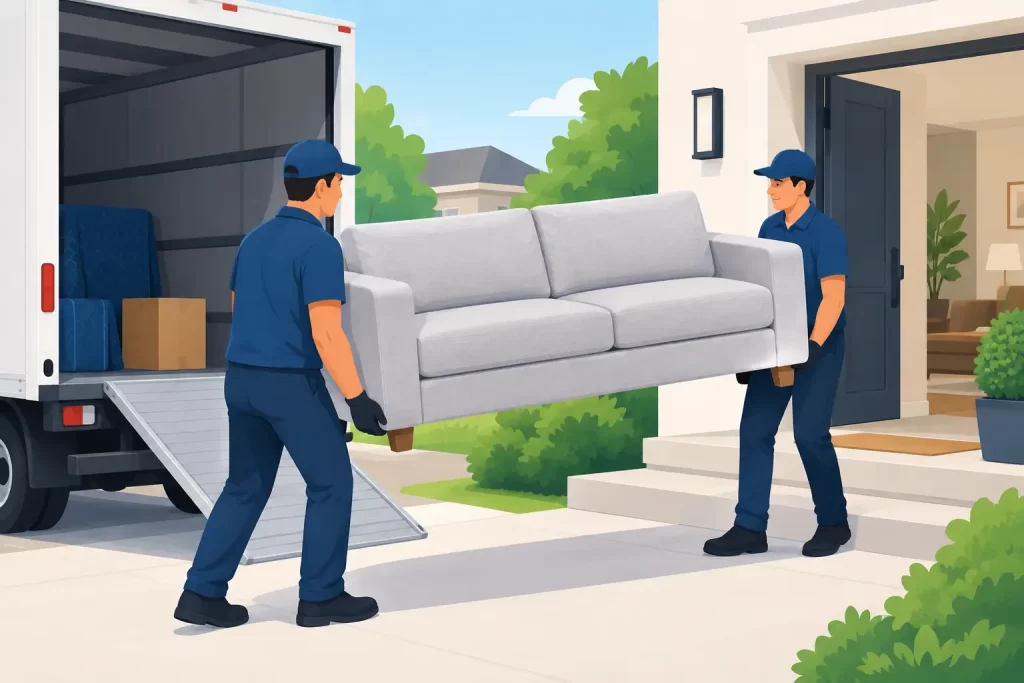
A large furniture delivery example is not simply a truck arriving, lifting a couch and driving away. Picture a family moving from a two-storey home in Worrigee to a unit in Wollongong. Their main items include a three-piece lounge suite, a solid timber dining table, a fridge, two beds, a heavy entertainment unit and several flat-pack wardrobes. The job succeeds because the move is planned before the first item is lifted.
Large furniture can be awkward, heavy and easily damaged when it is rushed through narrow doorways, stairwells or tight driveways. A professional removal team brings the right people, vehicle space, protective materials and lifting approach to get the job done carefully. Here is what a well-organised delivery looks like from start to finish.
Large furniture delivery example from pickup to placement
Before moving day, the customer provides an accurate list of large items and details about both properties. This includes stairs, lifts, parking restrictions, difficult driveways, narrow hallways and any furniture that needs to be dismantled. Clear information helps the removalist plan the right truck size, number of movers and equipment.
For this example, the pickup property has a steep driveway and an internal staircase. The delivery address is a second-floor unit with lift access, but the lift is small. The team knows the dining table will need to be carried up in sections, while the couch must be manoeuvred through a shared entry without blocking other residents.
On arrival, the removalists first walk through the home with the customer. They confirm which items are going, identify anything especially fragile, and check the safest path from each room to the truck. This short inspection avoids confusion later and gives the customer confidence that nothing has been missed.
Preparing bulky items properly
The dining table is dismantled where practical. Legs are removed, hardware is bagged and labelled, and each piece is kept with the table so it can be reassembled at the new address. The lounge is wrapped in padded moving blankets to protect the fabric and corners. The fridge is secured upright, while the mattress is placed in a protective cover.
Not every item should be pulled apart. A quality timber cabinet, for example, may be safer to move as one piece if dismantling could weaken it or damage its finish. The right approach depends on the item, access at both homes and how much handling is required. Good removalists assess this rather than using a one-size-fits-all method.
Furniture is not protected only to prevent scratches. Wrapping also reduces the risk of doors, walls, handrails and floors being marked during the move. For customers leaving a rental property, that care can help avoid unnecessary issues at the final inspection.
Loading the truck for a safe delivery
A large delivery needs more than available truck space. The load must be arranged in the right order and secured so it stays stable during transport. Heavier items are positioned carefully, with protection between furniture pieces. Sofas, cabinets and appliances are tied down using appropriate restraints rather than left to shift on corners or uneven roads.
In this example, items required first at the new home are loaded where they can be accessed efficiently. The beds, fridge and essential lounge furniture are given priority. That means the family can get the key rooms functional sooner, rather than searching through a truck full of boxes at the end of a long day.
A professional team also considers weight distribution. Loading every heavy item on one side can affect how the vehicle handles. Overloading a truck or leaving loose items in the back creates avoidable risk for both the furniture and everyone on the road.
Access can change the whole plan
Most large furniture delivery problems are caused by access, not distance. A short move from Nowra to South Nowra may still take careful planning if there are tight gates, low branches, restricted parking or multiple flights of stairs. A longer move can run smoothly when access is clear and the job has been prepared properly.
At the unit, the team checks the lift dimensions before unloading. The fridge fits, but the sofa does not. Rather than forcing it into a space that is too tight, the removalists take the sofa up the stairs using a controlled two-person carry. Corners are protected and the route is kept clear.
Where access is genuinely difficult, extra planning may be needed. This could involve booking a loading zone, arranging building access with the strata manager, reserving a lift or measuring a balcony entry. These details may feel small during packing, but they can save significant time and stress on delivery day.
What customers can do before the truck arrives
Customers do not need to do the heavy lifting, but a little preparation makes a real difference. Clear a path to large items, remove loose rugs or trip hazards, and make sure pets and children are safely out of the moving area. If parking is limited, save a suitable space as close to the property as possible.
It also helps to decide where major items will go before delivery begins. A room plan does not need to be formal. Knowing which bedroom receives each bed and where the dining table belongs helps the team place items directly into position. It prevents unnecessary rehandling and makes unpacking easier.
If an item has a special issue, mention it early. That might be a fragile glass panel, a recently polished timber surface, a difficult recliner mechanism or a sofa that only fits through one particular doorway. Honest details allow the removal team to prepare the right protection and lifting method.
Unloading, placement and final checks
Once the truck reaches the new home, the delivery is completed room by room. In this large furniture delivery example, the fridge is placed in the kitchen, the beds are taken to the correct bedrooms and the lounge is positioned in the living area. The dining table is reassembled after all parts have been carried upstairs.
Furniture should be placed with care, but customers should also be realistic about final positioning. A large timber table may need felt pads before it is slid across a timber floor. A washing machine may need connection by a qualified tradesperson. Removalists can place and transport heavy items safely, while specialised installation may sit outside the scope of a standard move.
Before the team leaves, the customer can check that the key large items have arrived in the correct rooms and that nothing has been left on the truck. This is also the best time to raise any questions about placement. A quick final walkthrough brings the job to a clean finish.
When a professional large-item delivery is worth it
Hiring removalists is particularly worthwhile when furniture is too heavy or bulky to move safely with friends, when either property has stairs or difficult access, or when valuable pieces need proper protection. It is also a practical choice for busy households that need the move completed within a set timeframe.
Trying to save money by using an undersized vehicle or too few people can lead to damaged furniture, strained backs and repeat trips. The cheapest option is not always the most affordable once delays, repairs and time off work are considered. A clear quote based on the actual job gives a more reliable starting point.
Mr Muscle Removals can plan local and interstate moves around the furniture you need transported, with careful wrapping, secure loading and practical delivery support. The best move begins with an accurate description of what needs to go and what access looks like at each end. When those details are sorted early, even the biggest items become manageable.