
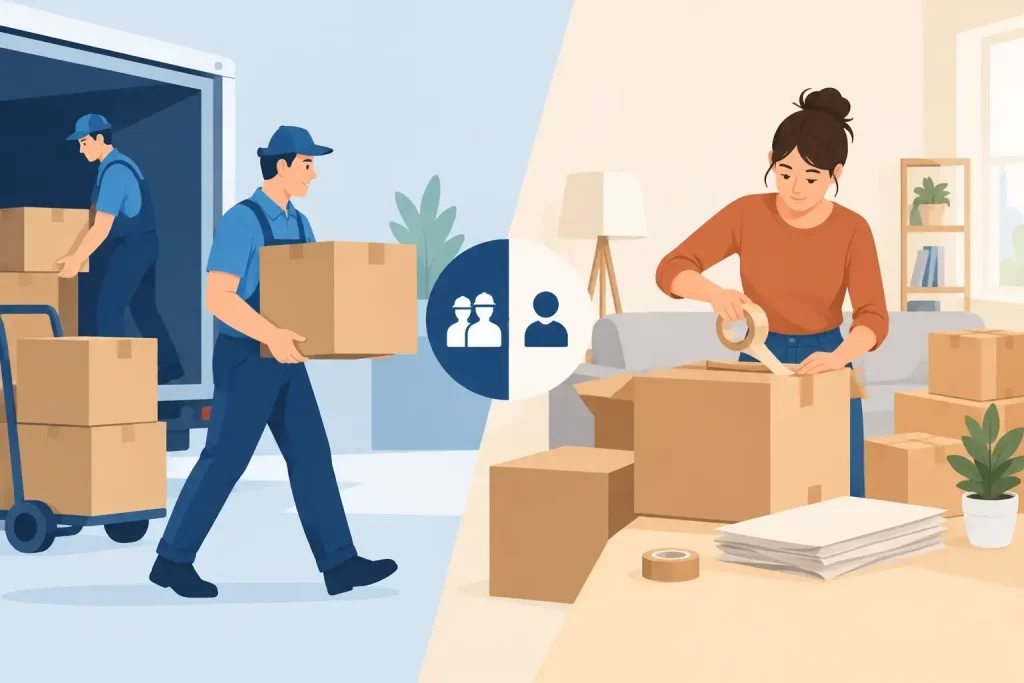
The boxes are stacked in the lounge room, the move is getting close, and suddenly the real question is not just how you will get everything to the new place. It is whether you can pack it all properly in time. When weighing up professional packers versus self packing, the best choice comes down to more than the price of cartons. Your available time, the items you own, your move date and the level of stress you are prepared to carry all matter.
For some households, packing themselves is a sensible way to keep costs down. For others, especially families, busy professionals and businesses, professional packing turns a difficult week into a managed job. Here is what to consider before you decide.
What professional packing actually includes
Professional packing is not simply putting belongings into boxes. A trained packing team works methodically through the home or workplace, using suitable cartons, wrapping materials and labelling to prepare items for transport. Fragile belongings such as glassware, mirrors, artwork and electronics receive extra protection, while furniture can be wrapped to help prevent scuffs and scratches in transit.
A good team also packs with unloading in mind. Boxes are labelled by room and contents, heavy items are packed safely, and loads are prepared so they can be handled efficiently on moving day. This helps when you arrive at a new home and need to find the kettle, kids’ school gear or important documents without opening every carton.
The scope can be flexible. You might arrange full packing for the entire property, or use professionals only for breakables, large furniture and difficult items. Partial packing is often a practical middle ground for people who are happy to handle clothes and books but do not want the risk or hassle of packing the kitchen.
Professional packers versus self packing: the real differences
The biggest difference is not effort alone. It is who takes responsibility for the planning, materials and physical work before moving day.
Time and energy
Self packing nearly always takes longer than expected. A two-bedroom home can contain hundreds of individual items, many of which need sorting, wrapping and labelling. Packing around work, school runs and everyday life can turn into several late nights and a rushed final weekend.
Professional packers bring people, materials and a clear process. What may take a household a week or two can often be completed in a day, depending on the size and condition of the property. That saved time can be especially valuable if you are settling a sale, ending a lease, preparing an office handover or moving interstate.
There is also the energy cost. Moving is physically demanding before the truck even arrives. Choosing a packing service means you can focus on change-of-address tasks, utilities, cleaning and the many small details that tend to pile up at the end.
Protection for fragile and valuable items
Most people can pack everyday belongings well enough with care. Books, linen, pantry items and clothing are straightforward, provided boxes are not overloaded. Fragile and awkward items are different. Plates need wrapping and tight packing to stop movement. TVs, artwork, mirrors and lamps need suitable protection. Furniture may need wrapping before it is carried through doorways, down stairs or into a truck.
Professional packers understand how weight, box strength and movement during transport affect your belongings. They also have access to purpose-made materials that are not always practical to buy for a one-off move.
This does not mean self packing is automatically unsafe. It means it requires patience, the right materials and honest judgement. If a treasured item would be difficult or expensive to replace, professional packing is often worth considering.
Cost and value
Self packing is usually cheaper upfront because you are paying with your own time. You will still need to budget for cartons, tape, packing paper, bubble wrap, protective covers and possibly a trolley or other equipment. Buying too few materials can lead to last-minute trips to the shops, while buying too much creates waste and clutter after the move.
Professional packing adds to the removal cost, but it can offer value where time is tight or the move involves a large volume of belongings. It may also reduce the chance of damage caused by poorly packed boxes, loose items or unsuitable cartons.
The right comparison is not simply the packing quote against the cost of boxes. Consider the days you would need to take off work, the pressure of packing late at night, and the potential cost of replacing damaged belongings. For some moves, self packing remains the clear budget choice. For others, paying for experienced help is the more affordable decision overall.
Control and privacy
Self packing gives you complete control over every drawer, cupboard and carton. That can be reassuring if you prefer to sort as you pack, donate unwanted items and keep private paperwork in your own hands. It can also make unpacking easier if you have a very particular system.
With professional packing, you still set the priorities. Before the team arrives, put aside passports, medications, jewellery, confidential documents, personal devices and anything you want to carry yourself. Then let the packers handle the remaining household items. Clear instructions at the start help the day run smoothly.
For office moves, privacy needs extra attention. Files, customer information and sensitive equipment should be identified in advance so the packing plan matches your workplace requirements.
When self packing makes good sense
Self packing can work very well if you are moving from a smaller home, have a flexible timeline and own mostly durable items. It is also a reasonable option when you have help from family or friends and can start early rather than leaving everything until the final week.
The key is to be realistic. Start with rooms you use least, such as spare bedrooms, storage areas and decorative items. Keep essential items out until the last few days, and avoid packing boxes so heavily that they split or become unsafe to lift. Books should go in small cartons, while light but bulky items can go in larger ones.
Label every box on at least two sides with the destination room and a short description. Writing only “miscellaneous” may save a few seconds now, but it creates unnecessary work when you are trying to set up your new home.
Self packing is less suitable when the move date is fixed and close, the property has many fragile items, or you are already stretched by work, children, renovations or an interstate relocation. In these situations, rushing can cost more than it saves.
When professional packers are worth it
Professional packers are often the right choice for larger homes, family moves, downsizing moves and relocations with limited time between settlement dates. They are also useful when access is difficult, such as apartments with stairs, tight hallways or long walks from the property to the truck.
They can make a major difference when moving an elderly relative or handling a deceased estate, where the work may be emotionally difficult as well as physically demanding. A calm, organised team can take pressure off the family while belongings are treated with care.
For businesses, professional packing helps reduce downtime. Office equipment, files, stock and furniture can be prepared in an orderly way so staff can get back to work sooner. The less time spent hunting for monitors, cables or key documents after the move, the better.
If you are arranging removals in Nowra, Wollongong or nearby areas, ask what packing options are available alongside transport. A removal company should be able to explain what materials are used, how fragile items are handled, whether partial packing is possible and what preparation is required before the team arrives.
A practical way to make the decision
Start by looking at your move through four questions. How much time do you genuinely have? How many fragile, valuable or awkward items need protection? What is the cost of materials and time away from work? And how much stress will packing add to an already busy move?
If the answers point to a manageable job with plenty of lead time, self packing may suit you well. If you are facing a large property, a tight deadline or a move that already feels overwhelming, professional packing is likely to provide better value than trying to do everything yourself.
There is no prize for doing every part of a move alone. A partial packing service can protect the items that worry you most, while leaving you in control of the simple jobs. Mr Muscle Removals can help tailor the level of packing and removal support to the move you actually have, not a one-size-fits-all plan.
The best moving plan is the one that leaves you ready to start the next chapter, rather than exhausted before you reach the new front door.