
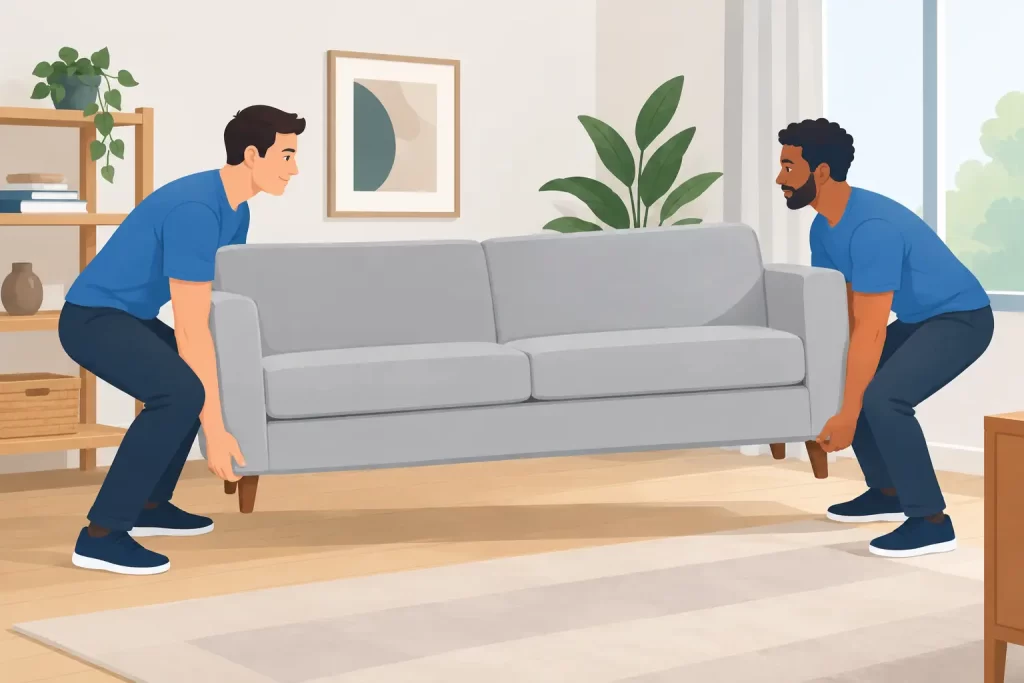
A lounge that seemed perfectly manageable in the showroom can become a serious safety risk when it needs to go down a narrow hallway, over a doorstep or into a moving truck. Knowing how to move heavy furniture is less about brute strength and more about planning the route, using the right equipment and knowing when to bring in professional help.
A rushed lift can damage your furniture, mark walls and floors, or leave you with a back injury that lasts far longer than moving day. Take a few extra minutes to prepare properly. It is the simplest way to make a difficult job safer and more controlled.
Start by planning the move
Before anyone puts their hands on a sofa, wardrobe or dining table, measure it. Check the furniture’s height, width and depth, then measure doorways, hallways, stairwells, lifts and tight turns. Remove obstacles such as rugs, shoes, pot plants, boxes and children’s toys from the path.
Pay attention to the route outside as well. A sloped driveway, wet pavers, loose gravel or a high front step changes how the item needs to be carried. If you are loading a truck, make sure there is a clear place to park close to the entrance and that the loading area is not blocked.
It also helps to decide where each large item will go before it leaves the old property. Standing in a new home with a heavy fridge or king-size bed and no plan creates unnecessary lifting and pressure. Mark rooms clearly and make sure the path at the destination is just as clear as the one you are leaving.
Prepare furniture before lifting
Heavy furniture is easier to control when it is as light, compact and stable as possible. Empty drawers, shelves and cupboards first. A chest of drawers may look solid enough to move full, but loose contents can shift suddenly and add far more weight than expected.
Remove detachable parts where practical. Take legs off tables, separate bed frames, remove glass shelves and lift cushions from lounges. Keep screws and fittings in labelled bags, then tape the bag securely to the matching item or place it in an essentials box.
Wrap vulnerable corners and surfaces with moving blankets, thick towels or protective padding. Secure the padding with tape or stretch wrap, but do not apply tape directly to timber, polished surfaces or upholstery. Glass doors, mirrors and tabletops need special attention. Wrap them fully, stand them upright rather than flat, and avoid placing heavy items against them.
For drawers that cannot be removed, secure them closed. Check that doors and handles are protected too. A handle catching on a doorway is an easy way to scratch paintwork or lose control of the load.
Use the right moving equipment
The safest way to move heavy furniture is usually to reduce how much weight people actually carry. Basic moving equipment can make a major difference, particularly for awkward or bulky pieces.
Furniture sliders work well on carpet, timber, tiles and vinyl when matched to the surface. They allow a heavy lounge, cabinet or bed base to be pushed gradually instead of lifted. Moving blankets protect both the furniture and the flooring while items are repositioned.
A hand trolley or furniture dolly is useful for appliances, filing cabinets and boxy furniture. Use tie-down straps to secure the load, keep it balanced over the wheels and move slowly over thresholds. Never stack items so high that you cannot see where you are going.
Shoulder straps can help experienced movers share the load of some items, but they are not suitable for every situation. They can make stairs, uneven ground and tight spaces harder to manage. If a piece feels unstable, too heavy or difficult to grip, stop rather than trying to force it through.
Lift properly and communicate clearly
Good lifting technique protects your back, shoulders and knees. Stand close to the item with your feet about shoulder-width apart. Bend at the knees and hips, keep your back as straight as possible and grip the strongest part of the furniture. Lift with your legs, not by bending and pulling through your back.
Keep the load close to your body. Carrying an item away from your torso puts much more strain on your back and reduces control. Avoid twisting while holding weight. Instead, take small steps and turn your whole body in the direction you need to go.
When two or more people are moving furniture, choose one person to call the moves. Simple instructions such as “lift”, “stop”, “turn” and “down” prevent people from working against each other. Tell the team about steps, low ceilings and tight corners before you reach them, not while everyone is already carrying the load.
Do not assume the strongest person should take the heaviest end. The most important thing is balance. A tall wardrobe, for example, may need to be tilted slightly and carried by people who can see clearly around it. If visibility is poor, use a spotter to guide the team.
Moving heavy furniture through tight spaces
Doorways and staircases are where many DIY moves go wrong. Pause before entering a narrow area and work out whether the piece should go through upright, on its side or at an angle. For a sofa, removing feet or taking off detachable sections may create the few centimetres needed to clear a doorway.
Protect door frames, walls and bannisters before you begin. Cardboard, blankets or corner protectors can save expensive touch-up work. Move slowly and make one adjustment at a time. Trying to rotate, lift and squeeze through a doorway all at once is how fingers get trapped and furniture gets damaged.
Stairs need extra caution. Keep the item stable, take one step at a time and use a spotter where possible. Never allow furniture to rest on someone below it, and do not attempt a large item on stairs if the team cannot maintain a secure grip throughout.
Load the truck for a safe trip
Getting furniture into the truck is only half the job. If it is not packed and secured properly, it can shift during transport and arrive damaged.
Load the heaviest, largest items first and position them against the front wall of the truck, closest to the cab. Keep the weight low and distribute it evenly from side to side. Mattresses, lounges and large flat pieces can then help create a protective layer around other furniture.
Use moving blankets between timber surfaces, appliances and other hard items. Tie-down straps should hold large pieces firmly against the truck’s anchor points. Do not rely on tightly packed boxes alone to stop furniture moving. On a local move around Nowra or a longer trip to Wollongong, braking, roundabouts and uneven roads can all shift an unsecured load.
Keep essentials and frequently needed items accessible, but avoid leaving loose items on top of heavy furniture. A lamp, toolbox or small box can become a hazard as soon as the vehicle moves.
Know when to call professional movers
There is a point where hiring experienced removalists is the safer and more affordable choice. Large solid-timber furniture, pianos, oversized lounges, commercial equipment, fragile antiques and items that need to travel up or down stairs all require more than extra hands.
Professional movers have the equipment, vehicle space and handling experience to manage difficult pieces without turning moving day into a gamble. They can also provide packing and wrapping support where furniture needs more protection, which is particularly useful for interstate moves or homes with a lot of delicate items.
Mr Muscle Removals can handle heavy furniture as part of a complete home or office move, with careful loading, transport and unloading organised around your schedule. A clear quote before the job helps you decide whether the time, equipment and physical effort of a DIY move are really worth it.
If a lift does not feel safe, it is not a lift to attempt. Protect your people first, then your furniture. A calm, well-planned move will always get you into your new place faster than an injury, damaged item or last-minute problem ever will.