
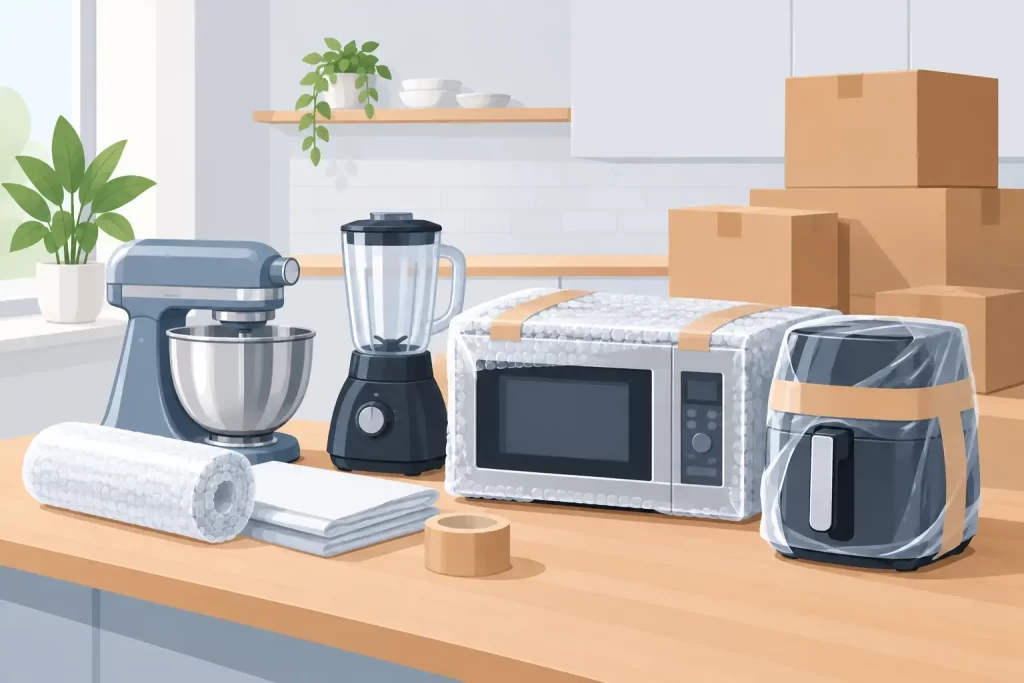
A kettle packed with water still inside, a blender with loose blades, or a fridge moved too soon after being switched off can turn moving day into a costly mess. Knowing how to pack kitchen appliances properly protects the items you use every day and makes unloading at the new place far easier.
The main rule is simple: clean, dry, secure and cushion every appliance before it goes into a box. Small appliances need protection from knocks, while larger items need careful preparation so they can be lifted, transported and installed safely.
Start packing kitchen appliances early
Kitchen appliances often take longer to prepare than people expect. They have cords, removable parts, glass components and small crevices that hold crumbs, grease or moisture. Start sorting them several days before your move rather than leaving the kitchen until the final night.
Begin by deciding what is actually coming with you. If the sandwich press has not been used in two years, or you have duplicate toasters and kettles, this is a good opportunity to donate, sell or responsibly dispose of them. Fewer appliances mean fewer boxes, less packing time and a more organised kitchen at the other end.
Keep the original box and foam inserts if you still have them, particularly for coffee machines, air fryers, mixers and food processors. Original packaging is designed for that exact appliance. If it is long gone, a strong moving box, packing paper, bubble wrap and sturdy tape will do the job well.
Clean and dry every appliance first
Never pack an appliance straight from the bench. Food residue can attract pests, leave odours in boxes and make packing materials damp. Moisture is especially risky around electrical parts, as it can cause mould or corrosion while items are stored or in transit.
Unplug each appliance and allow it to cool completely. Empty water reservoirs, crumb trays, drip trays and filter baskets. Wipe surfaces inside and out, then leave everything to air-dry before wrapping. A coffee machine or kettle may look dry on the outside but still hold water in its internal tank, so check carefully.
For appliances with removable pieces, wash and dry each part separately. This includes blender jugs, air fryer baskets, food processor bowls, microwave turntables and mixer attachments. Once dry, pack the pieces in a labelled bag or wrap them individually before placing them with the main unit.
Secure cords, loose parts and fragile components
Loose cords can scratch appliance surfaces, catch on other items and create a trip hazard during loading. Coil each cord loosely and secure it with a twist tie, reusable cable tie or a short piece of tape. Do not wrap cords tightly around the appliance, particularly where they connect to the unit, as this can strain the wiring.
Place small removable parts in a sealed bag and label the bag with the appliance name. Tape it to the outside of the wrapped appliance only if it will not damage the finish. For heavier or awkward parts, place the labelled bag in the same box instead.
Sharp components need extra attention. Wrap blender blades, food processor blades and mandoline attachments in several layers of packing paper or bubble wrap. Clearly mark the bundle as sharp so nobody reaches into a box without care. Glass blender jugs, microwave turntables and coffee machine carafes should be wrapped separately and packed upright with cushioning on every side.
How to pack small kitchen appliances
Small appliances are easiest to pack in medium-sized moving boxes. Avoid filling a large box with heavy items such as mixers, air fryers and sandwich presses. The box may be hard to lift safely and more likely to split from the weight.
Line the bottom of the box with scrunched packing paper or a folded towel. Wrap each appliance in packing paper, bubble wrap or clean linen, paying close attention to handles, control panels and corners. Place the heaviest appliance at the bottom, then build upwards with lighter items.
Fill gaps with packing paper, tea towels or other soft kitchen linens. Appliances should not move when the box is gently rocked. Before sealing the carton, add a final layer of cushioning on top and label the box with its contents and the word “Fragile” where appropriate.
There are a few appliances worth keeping separate from general kitchen boxes. A quality stand mixer, espresso machine or premium blender can be heavy and expensive, so packing it in its own suitably sized carton often gives better protection. If an item is especially fragile or valuable, professional wrapping may be the safer choice.
Prepare large appliances for transport
Large kitchen appliances require more planning because they are heavy, bulky and connected to power, water or gas. If you are taking a fridge, freezer, dishwasher or washing machine, arrange disconnection well before moving day. Gas appliances must be disconnected by a qualified professional.
Fridges and freezers
Empty the fridge and freezer ahead of time and use or give away food that cannot travel. Defrost the appliance at least 24 hours before the move, allowing extra time if there is significant ice build-up. Clean the interior and dry it thoroughly to prevent mildew and odours.
Remove shelves, drawers and removable trays where possible. Wrap them separately and label them clearly. Secure the doors with moving tape or a strap designed for appliances, but avoid placing adhesive tape directly on delicate finishes if it may leave residue.
A fridge should generally travel upright. If it must be tipped or laid down due to access or vehicle space, seek advice for your appliance model. Once it arrives, it may need to stand upright for several hours before being switched on so compressor oil can settle correctly.
Dishwashers and washing machines
Turn off water supplies and disconnect hoses carefully. Drain all remaining water from hoses, pumps and filters, then dry the interior. Pack hoses and fittings in a labelled bag and keep them with the appliance.
Washing machines can have internal moving parts that need transport bolts. Check the manufacturer instructions before moving it. Without the correct bolts, the drum can move around during transport and suffer damage. If the original bolts are missing, source suitable replacements rather than hoping padding alone will be enough.
Ovens and microwaves
Clean ovens well before the move, especially racks, trays and glass doors. Remove racks and trays, wrap them separately, and make sure the oven door is secured. Built-in ovens and cooktops need proper disconnection, particularly if gas or hardwired electrical connections are involved.
For microwaves, remove the glass turntable and roller ring, then wrap them separately. Keep the microwave upright in a snug box with cushioning around the base and sides. Do not use the microwave cavity as storage for loose items during transport.
Avoid common packing mistakes
The most common mistake is packing appliances while they are still damp or dirty. The next is using boxes that are too large or too weak for the item inside. A cheap carton is not a saving if it fails halfway down the path or in the back of the truck.
Avoid packing cords, blades and glass parts loose in the same carton. Also avoid using towels as the only protection for fragile appliances. Towels are useful as a cushioning layer, but they may not prevent damage when heavy boxes are stacked nearby.
Be realistic about lifting. A fridge, washing machine or large rangehood is not a one-person job. Tight hallways, stairs and wet weather can make heavy appliances even harder to handle safely. Professional removalists have the equipment, vehicle space and lifting experience to manage these items without unnecessary risk.
Label boxes for a quicker kitchen setup
Clear labels save time when you reach your new home. Instead of writing only “Kitchen”, note what is inside, such as “Kitchen – kettle, toaster and blender” or “Kitchen – fragile coffee machine parts”. Mark which boxes should be unpacked first.
Keep essential appliances accessible for the first night, especially the kettle, toaster, microwave and any baby bottle steriliser or coffee machine your household relies on. Pack these in a clearly marked essentials box and load it last, so it comes off the truck early.
For moves across Nowra, Wollongong or further afield, Mr Muscle Removals can provide careful packing and handling support when kitchen appliances need more than a spare carton and a roll of tape. A well-prepared kitchen keeps your belongings protected and lets you settle into the new home with fewer jobs waiting for you.