
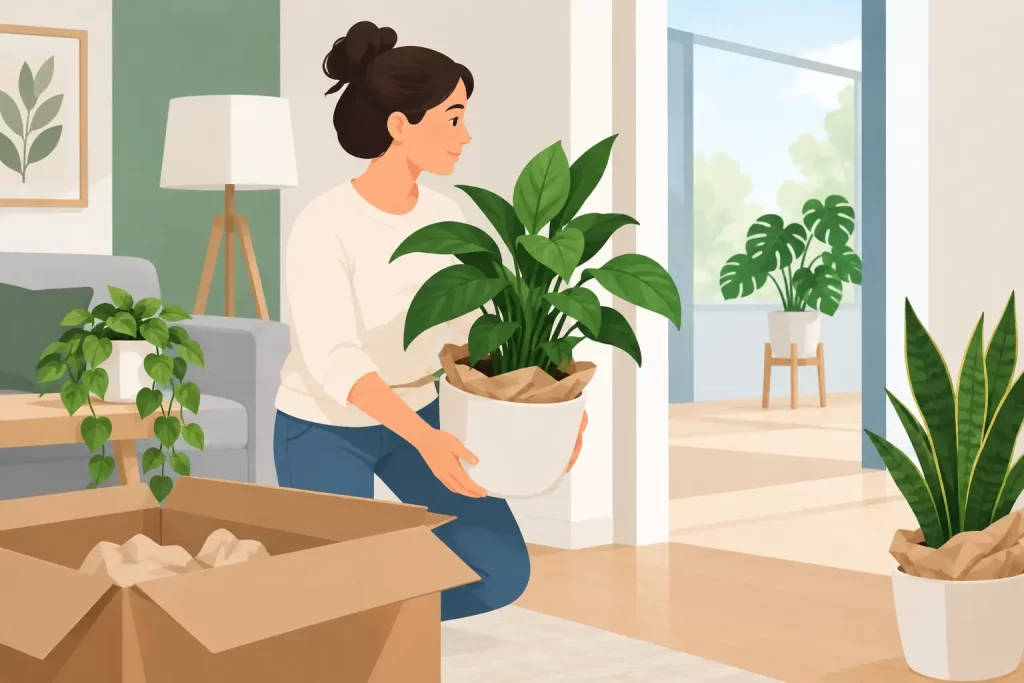
A pothos can survive a missed watering, but it may not forgive being left in a hot removal truck for hours or wedged under a carton. Knowing how to relocate indoor plants properly gives them the best chance of arriving healthy, upright and ready to settle into their new home.
Plants are living items, not standard furniture. They need careful timing, stable packing and a little patience after the move. Whether you are moving across Nowra or heading interstate, these practical steps will help you protect everything from small herbs on the kitchen sill to large fiddle-leaf figs in the lounge room.
Plan the move around your plants
Start by deciding which plants are worth taking. A move is a good time to check for pests, failing roots, cracked pots and plants that have outgrown their space. A healthy plant is more likely to handle the trip well. If a plant is diseased or heavily infested, it can introduce problems to the plants waiting at your new place.
Think about distance, weather and access. A short local move is usually straightforward if plants travel in the cab or are loaded last and unloaded first. Longer drives need more planning, especially in summer, when a parked vehicle can become dangerously hot, or in winter, when cold air can damage tropical varieties.
If you are moving across state borders, check the relevant biosecurity rules before loading plants, soil, potting mix or garden materials. Some states have restrictions designed to prevent the spread of pests and plant diseases. Do not assume every indoor plant can travel with you just because it lives in a pot.
How to relocate indoor plants before moving day
Preparation should begin several days before the removal date, not while the truck is waiting outside. Water most plants two or three days before the move. The soil should be lightly moist, not saturated. Wet pots are heavier, messier and more likely to leak, while completely dry plants can be stressed by the journey.
Avoid fertilising just before relocation. Fertiliser encourages new growth at the wrong time, when the plant needs to conserve energy and cope with a change in light, temperature and routine. It is also best not to repot immediately before moving unless a pot is broken or unsafe. Repotting disturbs roots, and combining that stress with transport can set the plant back.
Give leaves a quick wipe and inspect the undersides for insects. Remove dead leaves, spent flowers and loose soil from the top of the pot. For plants with long vines, gently gather and secure them with soft ties. Do not pull them tight or use anything that can cut into stems.
Tall plants may need support. Place a bamboo stake or similar support in the soil well before moving day and tie the main stems loosely. This reduces the chance of a stem snapping when the pot is carried through doorways, around corners or down stairs.
Choose the right container for the trip
Ceramic and terracotta pots look great at home, but they are vulnerable during a move. If possible, move valuable or heavy plants into plastic nursery pots a week or two beforehand. This gives roots time to settle while reducing the chance of breakage and making the load lighter.
For smaller plants, use sturdy open-top boxes, plastic crates or laundry baskets. Line the base with a towel, packing paper or a non-slip mat, then place pots snugly together. Fill gaps with scrunched paper or towels so the pots cannot slide. Keep foliage above the box edge wherever possible.
For medium and large pots that must stay in their containers, wrap the pot itself with towels, bubble wrap or thick packing material. Secure the protection around the pot, not around the foliage. A plastic bag or tray under the pot can catch any loose soil or moisture, but do not seal a living plant in plastic for an extended period.
Pack foliage for protection, not compression
Leaves and branches need space. The goal is to stop them from catching or bending, not to make every plant perfectly compact. Tall leafy plants can be lightly wrapped in clean paper, a breathable fabric sheet or a loose cardboard sleeve. Start at the base and work upward gently, leaving the top open where practical.
Cacti, succulents and spiky plants need extra care. Wear gloves and use folded cardboard around sharp sections before placing them in a box. Keep cacti upright and avoid packing them tightly against soft-leaved plants. Their spines can cause damage, and a pot that tips over can spill soil through an entire load.
Large feature plants, such as monstera, palms and fiddle-leaf figs, are often best moved individually. Mark the pot as upright and make sure it cannot tip. If a plant is too large for safe handling, ask your removal team about the best approach before moving day. Clear access, a suitable trolley and the right number of people make a real difference with heavy pots.
Keep plants out of the main furniture load
Indoor plants should not be stacked under boxes, squeezed beside hard furniture or left in an enclosed truck for longer than necessary. Even well-packed plants can be damaged by heat, poor airflow and shifting loads.
For a local move, the safest option is usually to transport small and delicate plants in your own vehicle. Put them on the floor behind the front seats or in the footwell, where they are less likely to slide. Avoid placing them on a seat where they can fall during braking. Keep the vehicle ventilated, but do not blast plants with cold air-conditioning or direct heater air.
For larger plants that need to travel with the removal load, let the team know in advance. They can plan the order of loading so plants are handled carefully and brought off promptly at the other end. Clear communication is particularly helpful when there are large pots, fragile planters, stairs or long walks from the vehicle to the house.
It is tempting to leave plants in the car while you deal with keys and paperwork. Try not to. In Australian conditions, the temperature inside a vehicle can rise quickly. Move plants inside as soon as you can, even if their final spot is not ready yet.
Set plants up gently at the new home
Unpack plants before decorative items and non-essential boxes. Place them in a protected area with indirect light, away from heaters, draughts, open windows and direct afternoon sun. Their usual position may not be available immediately, and that is fine. A calm temporary spot is better than repeatedly moving them around while furniture is being arranged.
Check each plant for broken stems, damaged leaves and spilled soil. Trim only parts that are clearly damaged. A few yellow leaves after a move are common and do not always mean the plant is dying. Changes in temperature, light and humidity can trigger leaf drop, especially in ficus, palms and other sensitive plants.
Wait at least a week before making major changes. Do not rush to repot, fertilise or heavily prune a plant that looks unsettled. Instead, keep its care routine steady. Check the soil with your finger before watering, because the new home’s light and airflow may mean it dries out more slowly or quickly than before.
Give them time to adjust
Most indoor plants need two to four weeks to adapt. Watch for signs that conditions need adjusting: scorched patches can mean too much direct sun, limp growth may point to watering issues, and persistent yellowing can be caused by poor drainage or low light. Move a plant only when there is a clear reason, then give it time in the new position.
If you have used professional packing or removal support, tell the team which plants are fragile, top-heavy or especially meaningful. Good handling starts with practical information, and it helps everyone work safely around living items as well as furniture.
A careful move will not make every plant look perfect on day one. It will, however, give them the stable start they need. Unpack them early, keep their conditions gentle, and let your plants find their feet while you settle into the new home.