
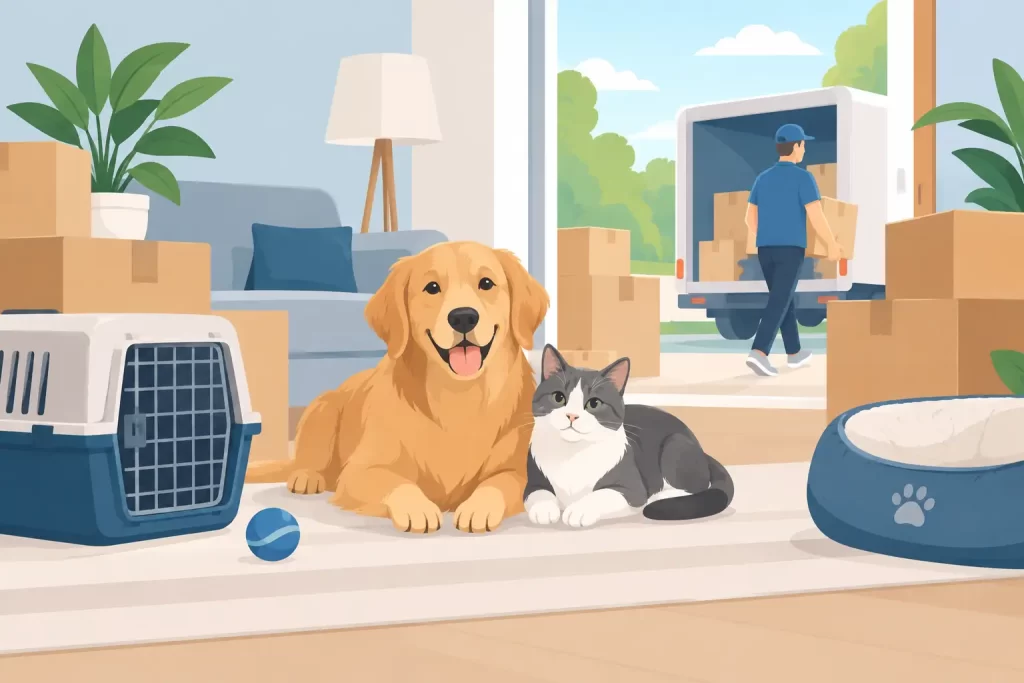
A move can be loud, busy and unfamiliar long before the truck arrives. For pets, that disruption can mean anxiety, escape attempts or a sudden change in behaviour. This moving with pets guide is designed to help Australian households plan ahead, protect their animals on moving day and make the first few days in a new home feel safer.
The main rule is simple: keep your pet’s routine as steady as possible while the house around them changes. A little preparation also gives you more time to focus on packing, access and the practical details of your move.
Start preparing before packing takes over
Pets notice changes quickly. Cardboard boxes, moved furniture and unfamiliar people in the home can unsettle even a normally relaxed dog or cat. Begin packing non-essential items early, rather than creating a last-minute rush that affects their routine.
Keep feeding, walks, playtime and bedtime consistent. If your dog is used to a morning walk or your cat eats at a particular time, stick to it where you can. Familiar routines provide reassurance when everything else looks different.
This is also the right time to update identification. Check that your pet’s microchip details, council registration and collar tag show your current mobile number. If you are moving interstate, check the requirements that apply to the destination state, particularly for restricted breeds, birds or other animals with specific transport rules.
If your pet has ongoing medication, anxiety issues or a condition that could make travel difficult, speak with your vet well before moving day. Your vet can advise on travel readiness, medication storage and whether your pet needs additional support. Avoid trying a new calming product for the first time on the day of the move.
Create a safe room on moving day
Removalists need clear paths, doors may stay open and furniture will be moving in and out. That creates an easy opportunity for a frightened pet to bolt. The safest option is usually to keep pets away from the action entirely.
Set up one quiet room with the door closed and a clear sign asking movers and visitors not to enter. Put in your pet’s bed, water, food, favourite toy and anything else that smells familiar. For cats, include a litter tray. For dogs, a secure crate can help if they are already comfortable using one.
If the property is too busy or does not have a suitable separate room, arrange for your pet to stay with a trusted friend, family member, pet sitter or boarding provider for the day. This can be the calmer choice for animals that react strongly to noise or strangers.
Before the team arrives, take dogs for a walk and give them a chance to toilet. Cats and smaller pets should be secured in suitable carriers before doors start opening. Do not rely on a pet being too nervous to leave the room. A scared animal can move very quickly.
Pack a pet essentials bag
Your overnight bag should not be the only one that stays with you. Pack a separate pet bag and keep it in your car, not in the removal truck. It means you can care for your animal straight away if unloading runs late or you cannot find a particular box.
Include these essentials:
- Enough food for several days, plus treats and clean water
- Bowls, a lead or harness, waste bags and a towel
- Medication, vaccination records and your vet’s contact details
- Bedding, toys and familiar comfort items
- A litter tray and litter for cats, or any supplies needed for small pets
- Cleaning products for accidents during travel or the first night
Bring more food than you think you will need, especially for a long-distance move. Changing food at the same time as changing homes can upset an animal’s stomach. Keeping their usual diet is one less adjustment for them to manage.
Plan pet travel separately from furniture transport
Pets should travel with you wherever possible, rather than in a removals vehicle. Removal trucks are designed to carry household goods safely, not to provide a controlled environment for animals. Temperatures, stops and loading schedules can vary, while pets need direct supervision, fresh water and regular comfort breaks.
For a local move around Nowra, Wollongong or the Illawarra, the trip may be short, but the change is still significant for your pet. Keep cats in a secure carrier for the full journey. Dogs should travel restrained with a proper harness, crate or barrier, depending on what is safe and familiar for them.
For interstate moves, plan your route around your pet’s needs. Schedule regular breaks for dogs in secure areas and never leave an animal alone in a parked car. Australian conditions can become dangerously hot very quickly, even on a mild-looking day. Keep water accessible, but avoid a large meal immediately before travel if your pet is prone to car sickness.
Birds, rabbits, guinea pigs, reptiles and fish need more specialised planning. Small animals can be sensitive to heat, cold, vibration and sudden noise. Their enclosures should be secure, well ventilated and protected from direct sun. Fish tanks require particular care: never move a full aquarium, and plan the temporary holding setup before draining it.
Make the new home safe before letting pets explore
Arrive early if possible, or check the property carefully before bringing your pet inside. Look for gaps in fencing, open gates, damaged flyscreens, exposed wires, pest baits and loose renovation materials. A new yard can be exciting for a dog, but it may also have escape points you have not noticed yet.
For cats, keep them indoors at first. Give them one quiet room with their litter tray, water, food and bedding, then gradually allow access to more of the house as they settle. Outdoor cats need extra caution. They may try to return to the old home or become disorientated in unfamiliar streets. Keeping them inside for a settling period is generally the safest approach.
Dogs can usually explore the home with you, but keep the first day calm. Show them where their bed, bowls and toileting area will be, then offer a short familiar walk. Do not expect normal behaviour immediately. Some pets become clingy, hide, eat less or become unusually vocal after a move.
Give pets time to settle
The first week is about routine, not perfection. Unpack the essentials, set up your pet’s regular sleeping area and keep meal times consistent. Try not to host visitors, schedule trades or make major changes to the home straight away if your animal is struggling.
Watch for signs that your pet is not settling, such as ongoing refusal to eat, vomiting, diarrhoea, destructive behaviour, heavy panting or unusual aggression. Mild nerves can be normal, but persistent changes deserve advice from a vet.
It also helps to keep a close eye on doors, gates and windows while you are still unpacking. Animals may look for familiar exits, and visitors helping with boxes may not know your new security routine. Clear communication matters, particularly during the first few days.
Choose moving support that keeps the day organised
A well-planned move gives you more control over your pet’s care. When booking removalists, tell them that pets will be on the property or explain that you will be keeping one room closed. This helps the crew work safely around your plan and reduces unnecessary interruptions.
Mr Muscle Removals can assist with organised home moves, packing and careful furniture handling, so you can spend less time managing heavy items and more time keeping your pets settled. Having a clear arrival time, access plan and packing schedule makes a real difference when animals are relying on you for reassurance.
Moving home will always be a big change for pets, but it does not need to be chaotic. Keep them secure, travel with them where possible, and let familiar food, bedding and routines do the quiet work of making the new place feel like home.