
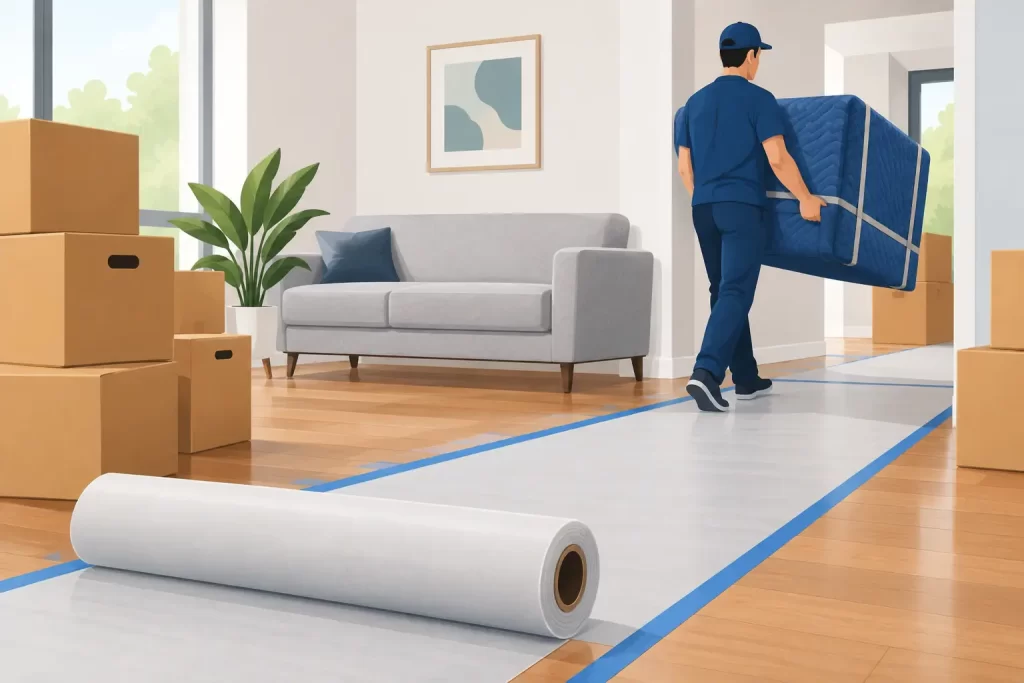
A sofa leg dragged across timber can leave a mark in seconds. A wet shoe can stain carpet, and a loaded trolley can crack a loose tile. To protect floors during moves, the best approach is to prepare the route before the first box, appliance or piece of furniture comes through the door.
Floor protection is not only about avoiding visible scratches. It also helps keep dirt, grit, moisture and small sharp objects away from surfaces that may be costly to repair. Whether you are leaving a rental, moving into a newly built home or relocating an office, a little planning can prevent an unnecessary repair bill and handover dispute.
Start with a clear moving path
Walk the route from the front door to the removal truck before moving day starts. Check entrances, hallways, stairs, lifts and the rooms where large furniture will be collected. This makes it easier to identify where floors are most likely to be damaged.
Pay close attention to tight corners, doorways and changes in floor level. These are the places where furniture is often turned, set down or repositioned. If a chest of drawers or fridge needs to be rested briefly, choose a protected area rather than placing it directly on timber, vinyl or tiles.
Remove loose mats, cables, shoes and other trip hazards. They can catch under a trolley or cause someone carrying a heavy item to lose their balance. Vacuum or sweep the route as well. Grit under a moving box, furniture foot or protective cover can scratch hard floors just as easily as grit brought in from outside.
Choose protection for the floor type
There is no single material that suits every property. The right choice depends on the surface, weather conditions, how far furniture must travel and whether people will be moving in and out repeatedly.
Timber, laminate and vinyl floors
Hard surfaces are vulnerable to grit, dragging and heavy point loads. Use clean floor runners, protective pads or purpose-made temporary floor covering along busy paths. Secure the edges with low-tack tape where appropriate, making sure the tape is compatible with the floor finish and is not left down longer than necessary.
Avoid using thin plastic sheeting by itself on polished timber or vinyl. It can become slippery and may trap moisture underneath, particularly on a wet day. Thick cardboard can help under stationary items for short periods, but it should be clean, dry and flat. Damp or dirty cardboard can transfer marks and soften under weight.
Furniture should be lifted wherever possible, not slid. Felt pads can reduce the risk of marks when moving light items, but they are not a substitute for proper lifting on heavy furniture. A dining table might be manageable with pads; a large buffet, fridge or solid timber wardrobe needs the right handling equipment and enough people to lift safely.
Carpet and rugs
Carpet may look forgiving, but it can collect mud, moisture, dust and oil from shoes or trolley wheels. Carpet film and clean runners are useful for high-traffic areas, particularly from the entry to the main rooms. Make sure any adhesive-backed carpet protection is designed for carpet and is removed within the recommended timeframe.
If rain is likely, have dry towels ready at the doorway and ask everyone involved in the move to wipe footwear before entering. It is better to pause and clean a wet patch straight away than let it be walked through several rooms. For pale carpets, this extra care can make a major difference at the end of the day.
Loose rugs should normally be rolled and moved early. Leaving them in place creates a trip risk and can allow grit to collect underneath while people walk over them.
Tiles, stone and concrete
Tiles and stone resist many marks but can chip or crack if heavy furniture is dropped or a trolley hits an edge. Cover high-traffic paths with runners or thick protective material and take extra care at grout lines and thresholds. Do not drag whitegoods or filing cabinets across tiled floors, even for a short distance.
Concrete floors are durable, but dust and grit can still be tracked into the home or office. Protection is especially worthwhile when moving through a garage, storage area or ground-floor entry before walking onto carpet or timber inside.
Protect the entrance from outside dirt and water
Most floor damage during a move begins outside. Driveways, lawns, footpaths and truck loading areas can be muddy, dusty or wet. Set up a simple transition zone at the entry, with absorbent mats or towels where people can clean their shoes and trolley wheels.
On wet days, reduce the number of trips through the house where possible. Group boxes near the door, keep external paths clear and use covered walkways if available. Never rush heavy lifting because of rain. Slips, falls and dropped furniture create far greater problems than a few extra minutes of careful handling.
If access involves gravel, a steep driveway or a long walk from the truck, professional-grade runners become even more valuable. They help contain debris and give the team a clearer, safer route between the vehicle and the property.
Move furniture with the right equipment
Floor protection works best when it is paired with good moving technique. Dollies, hand trolleys, lifting straps and furniture blankets reduce the need to drag or bump items across the home. They also protect furniture from knocks against skirting boards, door frames and walls.
Check trolley wheels before they enter the property. Small stones, hardened mud or damaged wheels can leave marks on timber, vinyl and polished concrete. Wheels should be clean and rolling freely, and heavy loads should be kept stable rather than piled too high.
Large appliances need particular care. Fridges, washing machines and dryers are heavy and awkward, with metal feet that can mark floors quickly. Use an appliance trolley and protect the route from the laundry or kitchen to the exit. Confirm that appliances are disconnected, emptied and dry before they are moved, as leaks can damage flooring as well as create a slip hazard.
For oversized furniture, measure doorways and hallways before moving day. Knowing that a couch needs to be turned upright or that a desk must be dismantled prevents last-minute manoeuvres on a vulnerable floor. If an item is too heavy or difficult to move safely, do not force it through a tight space.
Give the property a final check
Once the truck is loaded, remove protective coverings carefully and inspect the route in good light. Check for moisture, dirt, loose tape and any small pieces of cardboard left behind. Vacuum carpeted areas if needed and wipe hard floors with a product suitable for that surface.
This check is especially useful for renters preparing for a final inspection. Take clear photos of key rooms after the move, particularly if the property had pre-existing marks. For businesses, a quick walkthrough can also confirm that common areas, lifts and building entrances have been left clean and clear.
When moving into a new home, inspect floors before placing all furniture. Photograph any existing scratches, chips or stains before they are hidden by rugs and heavy items. It is much easier to record the condition of a room while it is empty.
When professional moving support makes sense
DIY moves can work for a few boxes and light furniture, but floor risks increase with large homes, stairs, valuable finishes and heavy items. An experienced removal team can plan the route, bring suitable equipment and handle bulky furniture without relying on dragging or rushed lifting.
For households and businesses across Nowra, Wollongong and surrounding areas, Mr Muscle Removals can assist with careful packing, furniture removals and organised moving support. The aim is straightforward: get your belongings from one place to the next while treating both properties with care.
A protected path, clean equipment and calm handling are small details that make moving day safer. Set them up before the first load, and your floors have a far better chance of looking exactly as they should when the last box is inside.