
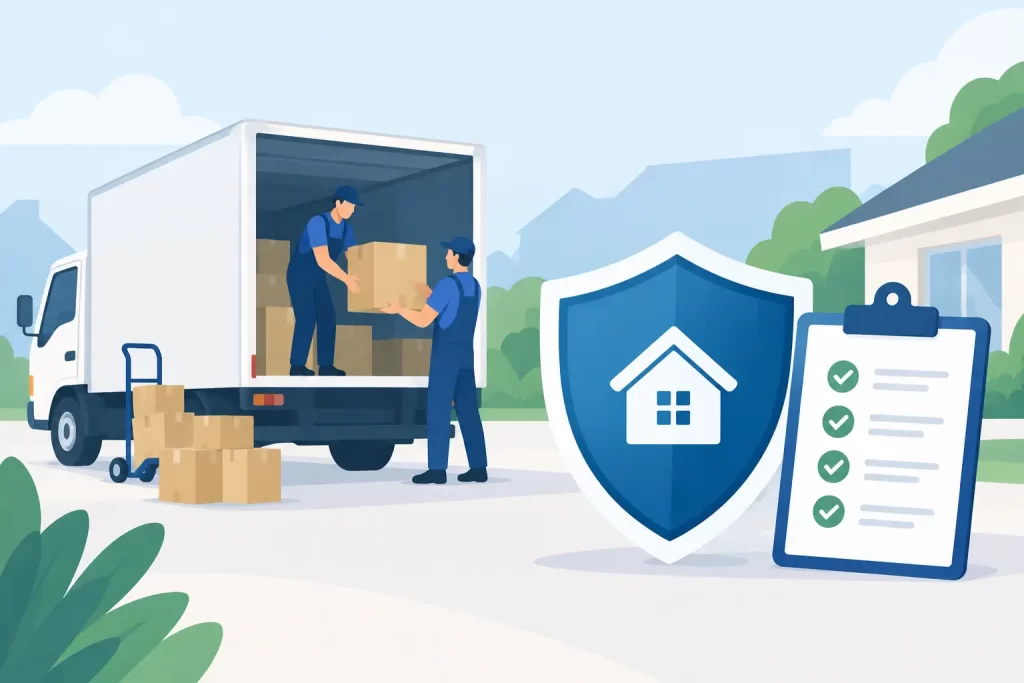
A removalist insurance review should happen before moving day, not after a scratched table, broken television or missing box creates a problem. When you are comparing quotes, it is easy to focus on the price and available date. Taking a few minutes to understand how your belongings are protected can save a lot of stress if something goes wrong in transit.
The key point is simple: do not assume that a professional removal quote automatically includes full insurance cover for every item. Removal companies may have public liability insurance, transit cover, limited liability terms or optional goods-in-transit cover. These are not all the same thing. Ask clear questions, get the answers in writing and choose cover that reflects the value of what you are moving.
What removalist insurance can cover
Insurance arrangements vary between removal companies and policies, but cover may be designed to help if your belongings are accidentally damaged, lost or destroyed while being packed, loaded, transported or unloaded. Some policies can also apply while goods are in storage, although this must be confirmed separately.
The level of cover matters. A policy may pay the cost to repair an item, its current value, an agreed declared value or the replacement cost. Those outcomes can be very different. If a five-year-old lounge is damaged, for example, a policy based on current market value may not pay enough to buy a brand-new replacement.
This is why a low-cost move is not always the best value. The right removalist should be open about how they handle belongings, what protection applies and whether additional cover is available for higher-value goods. Careful wrapping, secure loading and an experienced crew remain the first line of defence. Insurance is there for the unexpected, not as a substitute for proper moving practices.
Removalist insurance review: questions to ask
Before accepting a quote, ask the removalist what insurance they hold and what applies specifically to your move. A straightforward conversation now is better than trying to interpret terms after an incident.
Start by asking whether the quoted price includes cover for loss or damage to your goods, or whether you need to arrange separate transit insurance. Ask what the policy pays for: repair, replacement, current value or an amount you nominate. You should also ask whether there is an excess, who pays it and whether a claim can affect the final outcome.
It is sensible to confirm when cover starts and finishes. Does it apply from the time the removalists begin loading at your old address until unloading at the new one? Does it extend to packing services, temporary storage or an interstate move with more than one transport stage?
For a clear comparison, request the following details in writing:
- the type of insurance or liability cover that applies to your goods;
- the maximum amount payable per item and for the whole move;
- any excess, claim time limit and evidence required;
- exclusions for fragile, valuable or owner-packed items; and
- the process for reporting damage and lodging a claim.
A reputable team should not make you chase vague answers. Clear terms help you decide whether the offered cover suits your household or business move.
Watch for exclusions that affect your belongings
Most insurance products have exclusions and conditions. Reading these is not exciting, but it is necessary. Some policies exclude damage to goods packed by the owner, particularly if the item was not packed securely. Others may limit cover for fragile items such as glass, artwork, mirrors, stone tops, plants or electronics.
Valuables can require special attention. Jewellery, cash, important documents, collectables and irreplaceable family items may be excluded or subject to strict limits. The safest option is often to transport small, high-value and sentimental items yourself, where practical. Keep passports, legal documents, medicines, laptops and backup drives with you rather than placing them in the removal truck.
Pre-existing damage is another common issue. If a dining table already has a cracked leg or a cabinet door is loose, take a clear photo before the move and point it out to the crew. This avoids confusion about the item’s condition and helps everyone handle it appropriately.
Access conditions can also influence responsibility. Narrow stairwells, wet driveways, difficult parking, poor lighting and oversized furniture all increase the chance of damage. Tell the removalist about access challenges during the quote process. A team that can plan for the conditions is less likely to face a rushed or unsafe situation on the day.
Packing affects the protection you receive
How items are packed has a direct impact on both their safety and any potential claim. A box that is overfilled, unlabelled or packed with loose glassware is far more likely to be damaged in normal handling. It may also be harder to establish whether the removalist caused the damage.
Professional packing is worth considering for fragile, awkward or high-value items. Removalists use suitable cartons, wrapping materials and techniques to protect furniture, crockery, artwork and electronics. It can add to the cost of the move, but it may reduce the risk of damage and provide clearer accountability for how those items were packed.
If you pack yourself, use strong cartons in good condition, keep heavy items in smaller boxes and fill empty spaces with packing paper or other protective material. Clearly mark fragile cartons, but do not rely on labels alone. Plates should be wrapped individually, televisions should be protected with purpose-made covers or suitable padding, and screws or fittings should be bagged and labelled for reassembly.
Take photographs of valuable items before they are packed. Keep receipts, valuations or model details where available. If you need to make a claim, these records can help establish the item’s condition and value.
Liability is not the same as full cover
Customers sometimes hear that a removalist is insured and assume their possessions are covered for any loss. That may not be the case. Public liability insurance generally relates to accidental injury or damage to third-party property, such as damage to a building during a move. It does not automatically mean your furniture is insured for full replacement value while being transported.
Likewise, a removalist’s terms may set limits on liability for goods in their care. Australian Consumer Law provides important consumer protections, including a requirement for services to be provided with due care and skill. However, it does not guarantee that every damaged item will be replaced at new-for-old value. The specific facts, the service terms and the available evidence can all matter.
For this reason, consider your own home and contents policy as well. Some policies include moving cover, while others offer it as an option or exclude professional transit. Contact your insurer before the move and ask whether cover applies to a local or interstate relocation, whether you need to notify them and whether any limits apply.
Compare the whole moving quote
When comparing removalists, insurance should sit alongside experience, packing options, vehicle suitability, communication and the total quoted cost. The cheapest quote can become expensive if it leaves you with limited support after a problem.
Look for a written quote that describes the scope of work. It should make clear whether packing, disassembly, reassembly, stairs, long carries, storage or special handling are included. A detailed quote gives the removalist a better chance to allocate the right crew, vehicle and equipment, and it reduces surprise charges on moving day.
For families moving around Nowra, Wollongong or further interstate, timing and planning matter just as much as protection. Give the removalist an accurate inventory, flag oversized pieces early and let them know about access restrictions. Good information allows the crew to arrive prepared and handle your move efficiently.
If damage happens, act promptly
Check your goods as they are unloaded where possible. If you notice damage, take photos straight away and tell the crew before they leave. Keep the damaged item, its packaging and any relevant paperwork until you receive instructions about the claim.
Report the issue to the removalist as soon as possible and follow their claims process. Provide a clear description, supporting photos, proof of value and any pre-move images you have. Staying factual and organised gives the matter the best chance of being assessed quickly.
A good move is built on preparation: accurate information, careful packing, a professional crew and a clear understanding of your protection. Before booking, ask the insurance questions that matter to you, then choose a removalist you feel confident trusting with the things that make your house a home.