
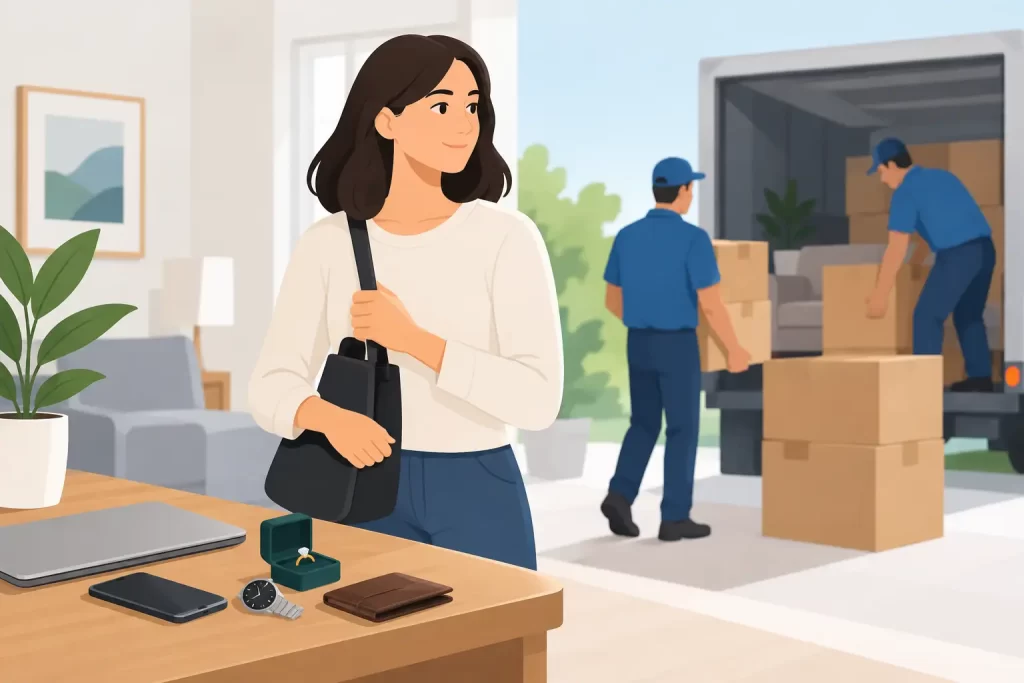
A move can put your most prized belongings in one place at the worst possible time: just before they are loaded onto a truck. So, should movers pack valuables? Usually, professional movers can safely pack many high-value household items, but some belongings are better kept in your own care from door to door.
The right choice comes down to value, replaceability, insurance and how easily you can supervise the item. A quality packing team can protect furniture, artwork, fragile décor and boxed collections far better than a rushed DIY pack. But cash, passports, jewellery and everyday essentials should not disappear into a moving carton.
Should movers pack valuables or should you?
There is no single rule for every valuable item. Movers are trained to wrap, cushion, lift and load fragile belongings efficiently. For items that are valuable because they are large, awkward or breakable, professional packing is often the sensible option. Think mirrors, paintings, antique furniture, crystal, televisions, computers and carefully packed kitchenware.
Items that are small, highly personal or difficult to replace are different. Even with a careful, insured removal service, keeping these close removes uncertainty. You know where they are, you can access them straight away, and they are not exposed to the normal handling involved in a move.
A practical test is to ask two questions: would this cause serious stress if it went missing, and would I need it before the last box is unpacked? If the answer is yes to either, take it with you.
What to keep with you on moving day
Pack a small valuables and essentials bag that stays in your car or with you throughout the move. It should not go into the removals truck, even if you are using a full packing service.
Keep these items with you:
- Passports, birth certificates, property documents, wills and other original paperwork
- Cash, bank cards, cheque books, spare keys and car keys
- Jewellery, watches, heirlooms and small collectibles with high sentimental or financial value
- Prescription medication, glasses, hearing aids and essential medical equipment
- Laptops, mobile phones, chargers, external hard drives and items containing private information
- A change of clothes, toiletries, snacks and anything children or pets will need that day
This is not a judgement on the removalists. It is simply good moving practice. A passport or medication can be worth far more to you in the first 24 hours after a move than its dollar value suggests.
What professional movers are well placed to pack
A professional packing service is especially useful when you have fragile or bulky belongings that need the right materials and handling. Proper wrapping, sturdy cartons, protective padding and clear labelling all reduce the chance of damage during loading, transport and unloading.
Furniture, antiques and large fragile pieces
Solid timber furniture, dining tables, display cabinets, mirrors and antique pieces often need more than a blanket thrown over them. Movers can use padded removal blankets, corner protection and secure wrapping to protect vulnerable surfaces and edges. Larger items may also need to be dismantled before transport and reassembled at the new property.
If an antique has a known weak point, loose veneer or a repair that needs special care, point it out before packing begins. Clear information helps the crew choose the safest method.
Artwork, glassware and decorative items
Artwork, framed photographs, lamps, glass tabletops and delicate ornaments benefit from individual wrapping and purpose-sized cartons. Do not rely on newspaper alone for items you genuinely care about. Ink can transfer, and thin paper offers limited protection from impact.
For a valuable painting, print or sculpture, take clear photos before it is packed. This creates a simple record of its condition and makes it easier to explain any special handling requirements.
Electronics and office equipment
Most electronics can travel safely when packed well, but there are a few steps worth taking first. Back up important files, photograph cable connections, remove loose accessories and use original boxes if you still have them. If not, a professional packing team can use suitable cartons and cushioning.
For office moves, label each device by person, desk or department. That small bit of organisation can save a lot of downtime once you arrive at the new premises.
Check insurance and declare high-value items
Insurance is a safety net, not a reason to be casual with valuables. Before moving day, ask what cover is included, whether there are exclusions, and whether high-value items need to be declared separately. Policies can have limits for jewellery, artwork, antiques, electronics or items packed by the owner.
Be accurate when describing an item’s value. If you have receipts, valuation certificates or photographs, keep them somewhere accessible rather than inside a moving box. For particularly valuable artwork, rare collections or heirlooms, specialist transit cover may be worth considering.
It also helps to understand the difference between damage and loss, and between market value and replacement cost. An item may be insured, but no payment can fully replace a family heirloom or original document. That is another reason to carry irreplaceable small items yourself.
Make the packing plan clear before the truck arrives
A smooth move starts before anyone lifts a box. Walk through the home and decide which items the movers will pack, which items you will pack yourself, and which items will travel with you. Do not leave this decision until the crew is at the front door and the day is already moving quickly.
Create a short inventory of significant items. You do not need to catalogue every mug and cushion, but note valuable furniture, artwork, electronics and collections. Take photos of their condition, particularly where there are existing marks, scratches or damage. This is useful for your own records and keeps expectations clear.
Use direct labels on boxes containing fragile belongings. “Fragile” is helpful, but a label such as “Glassware – upright only” or “Office monitor – do not stack” gives the team better information. Avoid writing “Jewellery” or “Expensive” on cartons, as this draws attention to their contents.
If you are packing some items yourself, use strong cartons and do not overfill them. Heavy books belong in smaller boxes. Fragile items need cushioning on the bottom, between each piece and on top before the carton is sealed. A poorly packed box can be damaged no matter how carefully it is carried.
When it makes sense to use a packing service
Full or partial packing is a practical choice when time is tight, you are moving interstate, or you have a home full of fragile possessions. It is also helpful for families managing children, older residents who cannot safely pack and lift, or business owners who need to keep working while a relocation is organised.
The trade-off is cost versus convenience. Packing yourself may reduce the upfront price, but it takes longer and leaves more room for packing mistakes. Professional packers bring the materials, process and experience needed to prepare a household efficiently. For many people, that means fewer late nights surrounded by half-filled cartons.
Mr Muscle Removals can assist with professional wrapping and packing for local and interstate moves, helping customers protect the belongings that are suitable to travel in the truck. Let the team know early about fragile, oversized or unusually valuable items so the right preparation can be arranged.
The safest approach is a shared responsibility
Movers should pack valuables when those items need professional protection, are difficult to handle or are safer in properly prepared cartons. Keep the smallest, most personal and most irreplaceable belongings with you instead. This gives you the benefit of expert packing without handing over control of the things you simply cannot afford to misplace.
Before moving day, set aside your essentials bag, photograph key items and speak openly with your removal team about anything requiring extra care. A clear plan lets everyone focus on the same goal: getting you into your new place with your belongings protected and your stress kept to a minimum.