
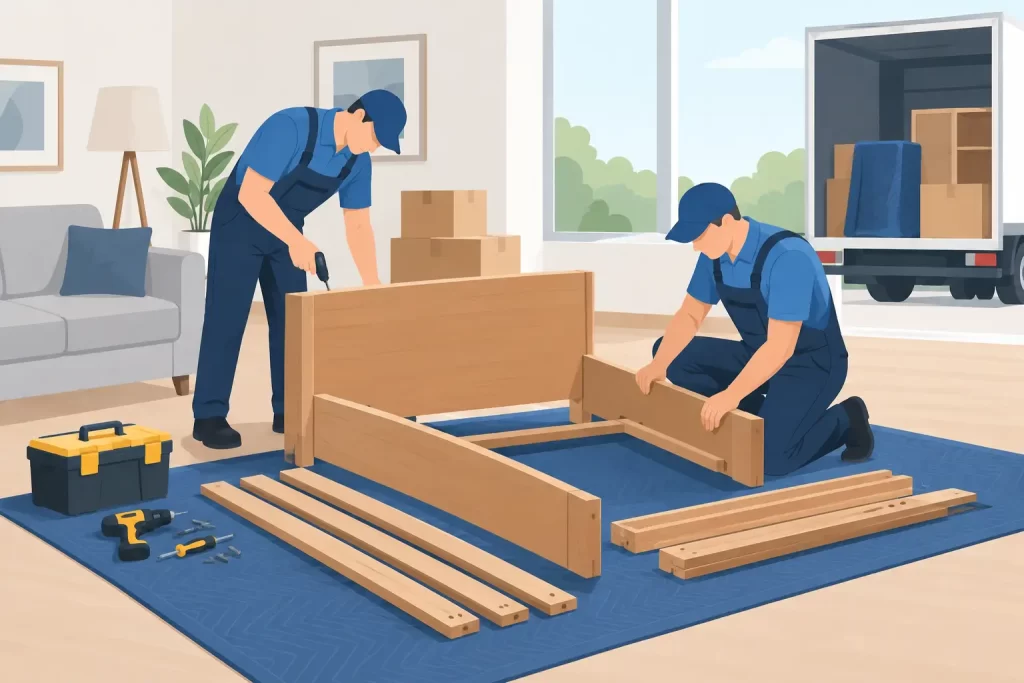
A bulky bed frame that will not fit through the hallway, a dining table too wide for the doorway, or a desk that needs to travel upstairs can quickly turn moving day into a problem. So, do removalists dismantle furniture? Often, yes – but it depends on the item, the removalist’s service level and whether the work has been agreed to before the truck arrives.
For most household moves, dismantling standard furniture is a practical way to protect your belongings, prevent damage to walls and doorframes, and make loading safer. The key is clear communication. Let your moving team know what needs attention when you request your quote, rather than leaving it until moving day.
Do removalists dismantle furniture as part of a move?
Professional removalists can often dismantle common household furniture where it is needed for safe access or transport. This may include bed frames, dining tables, desks, modular lounges, shelving units and some wardrobes. Once dismantled, the pieces can be wrapped, carried and secured in the truck more safely than a large assembled item.
That said, dismantling is not always automatically included in a basic removal service. Some items take only a few minutes to take apart, while others require specialist tools, careful labelling, extra labour or a longer booking. A clear quote helps avoid surprises and ensures the crew arrives with enough time, equipment and protective materials.
At Mr Muscle Removals, the focus is on making the move practical from the start. If furniture needs to be dismantled to get it safely out of your home or into your new place, raising it during the quoting process gives the team the best chance to plan the job properly.
Furniture removalists commonly dismantle
Most removal teams can assist with straightforward, free-standing furniture designed to be assembled and taken apart. Bed bases and frames are among the most common examples, particularly queen and king beds. Taking off the headboard, side rails and slats makes them easier to move through tight spaces and reduces the risk of snapped joints.
Dining tables may also need to be dismantled. Removing legs can make a large table far easier to wrap and manoeuvre, especially in units, townhouses or homes with narrow entryways. Desks, bookcases and modular furniture can be handled the same way where their design allows it.
Outdoor settings are another common case. Large tables, bench seats and umbrellas can take up valuable truck space when left assembled. Breaking them down carefully may help protect them and allow the load to be packed more efficiently.
Items that may need a different approach
Not every item should be dismantled. Older furniture, antique pieces and cheaply made flat-pack items can be more fragile once screws and joints are removed. Some items lose strength after repeated assembly, while others use glued sections or fittings that are difficult to restore securely.
Built-in wardrobes, wall-mounted shelving, cabinetry and fixed office workstations are different again. These may be attached to walls, floors or electrical services. They can require a carpenter, electrician or other qualified tradesperson before removalists can safely transport them.
Furniture with complex mechanisms also needs extra care. Electric recliners, adjustable beds, large entertainment units and certain gym equipment may have wiring, motors or specialised parts. Tell your removalist exactly what you have, preferably with photos, so the job can be assessed before moving day.
What happens after furniture is taken apart?
Dismantling is only useful when the parts are protected and kept together. A professional team should wrap larger panels and vulnerable edges, then secure them for transport. Smaller components such as legs, shelves and slats should be grouped so they are not lost among boxes and loose items.
Hardware matters just as much. Screws, bolts, brackets and Allen keys should be placed in labelled bags and attached securely to the relevant furniture where possible. This makes reassembly at the new address much simpler and avoids the frustrating hunt for one missing fitting after a long day.
Whether reassembly is included should also be confirmed before you book. A removalist may be able to rebuild standard beds, tables and furniture that they dismantled, but the scope can vary. If you need key items assembled before the crew leaves – such as beds for the family’s first night – make that clear when arranging your move.
When should you dismantle furniture yourself?
If you are confident with the item and have the right tools, dismantling simple furniture before the removalists arrive can save time on moving day. This can work well for basic flat-pack shelving, small tables and bed frames you have assembled before.
However, doing it yourself is not always the best option. Rushing the job the night before a move can lead to stripped screws, damaged panels or parts that are not labelled properly. It can also create loose pieces that are harder to protect during transport.
A good middle ground is to prepare the furniture without fully dismantling it. Empty drawers and shelves, remove decorative glass or loose cushions, and clear a path around the item. Your removalists can then assess whether it is safer to carry the piece as it is or dismantle it on site.
How to prepare furniture for removalists
A little preparation keeps the job moving and helps the crew work safely. Before the booking, measure large furniture as well as tight doorways, stairwells, lifts and corridors. Include access details in your quote request, particularly if there are steep driveways, limited parking or several flights of stairs.
For furniture that needs dismantling, keep instruction manuals if you still have them. They are particularly helpful for complex beds, modular desks and large flat-pack wardrobes. If there are existing chips, scratches or unstable sections, point these out before loading so the team can take appropriate care.
You should also remove personal items from drawers, cabinets and desks. A unit may feel manageable when empty but become unsafe to lift when full of books, files or kitchenware. Empty furniture is easier to dismantle, safer to carry and less likely to suffer damage in transit.
For a smooth move, it helps to have a simple plan for the new home as well. Decide where large pieces will go before the truck arrives and check that assembled furniture will fit in the intended room. There is little benefit in reassembling a king bed upstairs only to find the frame blocks a door or leaves no room to move around it.
Questions to ask before booking
The best time to discuss dismantling is before you accept a quote. Ask whether dismantling and reassembly are included, which items the team can handle, and whether there is an additional charge for extra labour or time. You should also ask whether your furniture will be wrapped and how small hardware will be managed.
Be upfront about anything unusual. Mention oversized pieces, fragile antiques, wall-mounted furniture, electric mechanisms and access restrictions. Accurate information allows removalists to allocate the right crew, truck space and equipment, which is usually more affordable than dealing with delays on the day.
If you are moving an office, identify desks, workstations, filing cabinets and shelving that need to come apart. Commercial moves often have more components, cables and layout requirements than a household job, so planning makes a real difference to downtime.
Dismantling furniture is not about taking everything apart for the sake of it. It is about choosing the safest, most efficient way to get each item from one home or workplace to the next. With the right details provided early, your removalists can arrive prepared and leave you with the important things ready to put back together.