
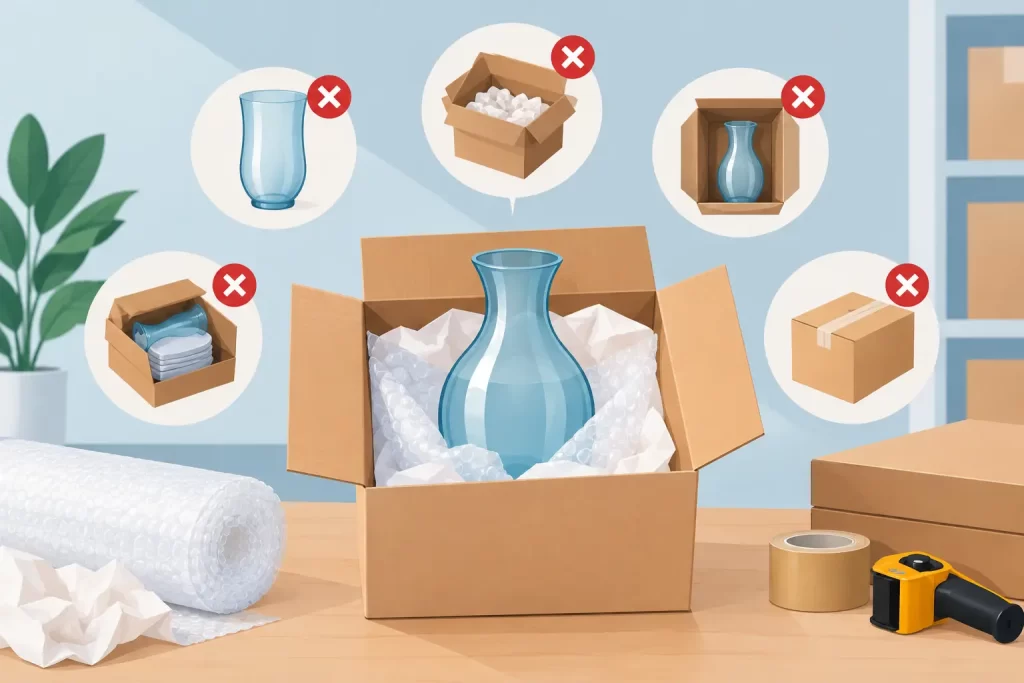
A wine glass can survive years in the cupboard, then crack during a 15-minute drive because it was packed in a box with too much empty space. Fragile item packing mistakes are usually small decisions made in a hurry, but they can turn unpacking day into an expensive and frustrating clean-up.
The good news is that most breakages are preventable. Safe packing is less about using mountains of bubble wrap and more about choosing the right box, supporting each item properly and loading it with care. Whether you are moving house, downsizing or relocating an office, these are the mistakes worth avoiding.
1. Using worn, oversized or mismatched boxes
A box that is soft from a previous move, split at the corners or too large for its contents offers very little protection. Heavy fragile items placed in an oversized carton can shift, collide and crush the base when the box is lifted.
Use clean, dry, sturdy cartons that suit the item inside. Books and small framed pieces belong in smaller boxes, while lightweight items such as lampshades can go into larger cartons. For plates, glassware and ornaments, a medium-sized box is generally easier to carry without overloading it.
It also pays to reinforce the bottom with packing tape, especially if the box is holding ceramics, bottles or kitchenware. Tape across the centre seam and then across it in the other direction. A strong box is only useful if its base stays closed.
2. Skipping the protective layer at the bottom
Putting fragile items directly onto the cardboard base is one of the most common fragile item packing mistakes. Even a carefully wrapped bowl can crack if the carton is set down firmly or catches a bump during transport.
Create a cushion before anything goes in. Crumpled packing paper, corrugated cardboard or a folded moving blanket can work well. The goal is to make a soft, even layer that absorbs shock without leaving the item unstable.
Avoid relying on loose clothing or towels for every delicate item. They can help as extra padding for durable pieces, but they do not always provide consistent protection for fine glassware, screens or sharp-edged ceramics. Purpose-made packing paper and sturdy cartons are more reliable where the item has real value or sentimental importance.
3. Wrapping several items together
It may feel efficient to bundle glasses, plates or decorative pieces into one large wrap. The problem is that when two hard surfaces touch, they can chip or crack against each other. One break can also damage everything packed beside it.
Wrap each fragile item individually. Glasses should be filled lightly with packing paper, then wrapped from the base upwards, with extra paper around stems and handles. Plates are best packed on their edge, not stacked flat, with paper between every piece. Think of records in a crate rather than pancakes on a plate.
For artwork, mirrors and framed photos, protect the corners first. Corners take the first impact when an item is bumped or put down. Use cardboard corner protectors or folded pieces of cardboard before wrapping the full frame.
4. Leaving gaps inside the carton
A carton should not rattle when you gently move it. Empty spaces allow items to gain momentum, and that movement is what causes damage on corners, roundabouts and uneven roads.
Once the box is mostly full, fill gaps with crushed packing paper, cardboard inserts or clean linen. Then add a final cushioning layer on top before closing the carton. The contents should feel snug, but not packed so tightly that pressure is placed on glass, porcelain or timber finishes.
There is a balance here. Overfilling a box can be just as risky as underfilling it. If you need to force the flaps shut, remove an item and start a second carton. A box should close flat and tape easily.
5. Packing heavy and light items in the same box
A cast-iron pan, a stack of books or a heavy vase can easily crush lighter fragile belongings underneath. This often happens in kitchen boxes where people try to pack every remaining item together at the end of the day.
Keep weight distribution sensible. Heavy items should sit at the bottom, but ideally they should be packed separately from delicate items wherever possible. A box of plates may be heavy, but the plates are designed to fit together when individually wrapped and packed upright. A box containing plates, a blender, wine glasses and loose pantry jars is much harder to protect and carry safely.
Keep each carton at a manageable lifting weight. If it requires two people to lift from the floor, it is probably too heavy for regular household packing. Splitting the load reduces both breakage risk and the chance of an injury on moving day.
6. Forgetting that labels guide the whole move
Writing ‘fragile’ on a box is useful, but it is not enough on its own. A label should tell you what is inside, which room it belongs in and how it needs to sit. This helps prevent delicate cartons being stacked in the wrong spot or left beneath heavier furniture.
Mark the top of the box clearly on more than one side. Add instructions such as ‘This way up’, ‘Do not stack’ or ‘Glassware – kitchen’. Keep labels simple and easy to read from a distance.
For particularly valuable or sentimental pieces, let your removalists know directly. A clear conversation at pickup is more dependable than assuming a handwritten note will be noticed among dozens of cartons.
7. Treating electronics like ordinary household items
Televisions, monitors, printers and desktop computers are fragile in ways that are not always obvious. Screens can crack under pressure, internal components can be damaged by movement, and cords can scratch surfaces when packed loosely.
If you still have the original box and foam inserts, use them. If not, wrap the item in a clean moving blanket or protective material, secure it gently and stand it upright during transport. Avoid placing anything on top of a television or monitor, even if it appears well padded.
Take photos of cable connections before unplugging office equipment or home entertainment systems. Place cables, remotes and small accessories in labelled bags, then pack them with their matching item. This prevents a stressful search when you need to get work or Wi-Fi running again.
8. Packing valuables into the removal truck unnecessarily
Some fragile belongings are better kept with you. Jewellery, important documents, heirlooms, small collectibles, medication and irreplaceable photographs deserve special handling and easy access.
This is not a reflection on the care taken during a professional move. It is simply sensible risk management. If an item would be difficult to replace, causes worry when out of sight or is needed soon after arrival, carry it in your own vehicle where practical.
For larger valuables such as antiques, sculptures or a grand mirror, professional wrapping and a clear handling plan are usually the safer choice. These items may need custom protection, careful lifting and a designated spot in the truck.
9. Loading fragile boxes in the wrong order
Good packing can be undone by poor loading. Fragile cartons should never become the base for furniture, appliances or boxes of books. They need a stable, protected position where they cannot slide or be compressed.
Load heavy furniture and dense cartons first, securing them so they cannot move. Fragile boxes should be placed upright later in the load, away from sharp edges and protected by blankets where needed. Do not stack cartons marked ‘fragile’ unless they are light, strong and clearly safe to stack.
The route matters too. For a local move around Nowra, Wollongong or the surrounding areas, a short trip still includes braking, turns and uneven surfaces. Secure loading matters just as much as the distance travelled.
When professional packing is worth it
DIY packing works well for many households, particularly when there is enough time to do it carefully. Professional packing is worth considering when you have a large kitchen, expensive artwork, antique furniture, fragile office equipment or a move happening on a tight schedule.
A trained packing team brings suitable materials, practical experience and a faster process. At Mr Muscle Removals, careful wrapping and packing can be arranged as part of a move, helping take the pressure off before the truck arrives.
Start with the items you would be most disappointed to see damaged. Give them the best boxes, enough padding and a clear place in the load. A few extra minutes spent packing properly can make arriving at your new place feel exactly as it should: organised, safe and ready to settle into.