
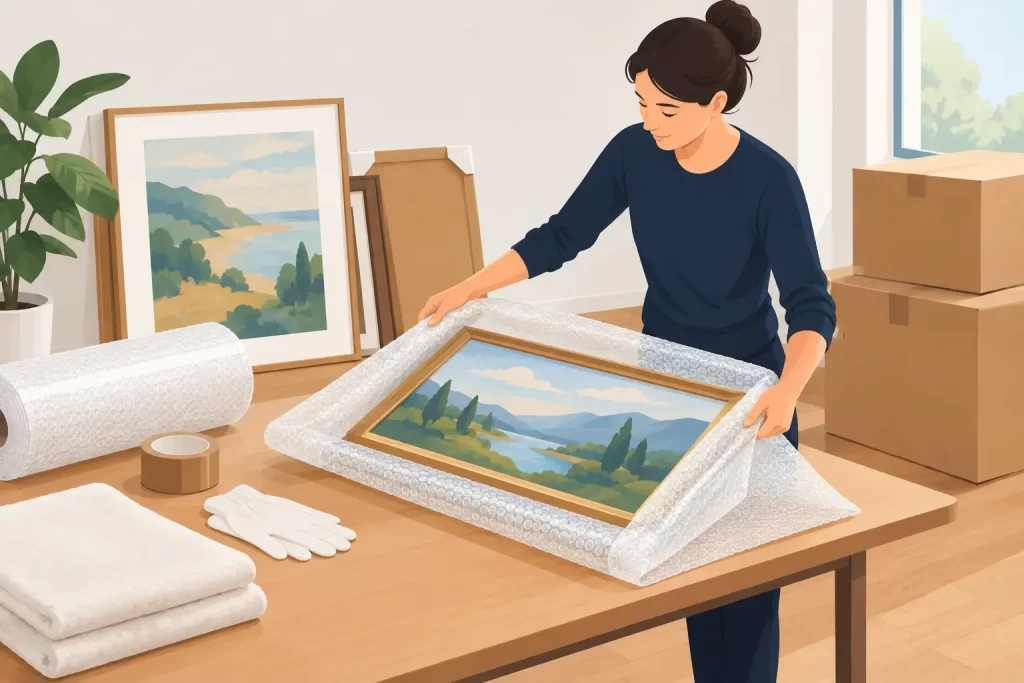
A framed family photo, a large canvas or an original painting can be difficult to replace. When you pack moving artwork, the goal is not simply to stop it getting scratched. You need to protect the glass, frame, corners and painted surface from pressure, vibration and moisture while it is being carried and transported.
Artwork is one of the items people often leave until the end of packing. That can lead to rushed wrapping, unsuitable boxes and fragile pieces stacked in the wrong place. Allow time to prepare it properly, especially if you are moving interstate or have several large framed pieces to manage.
Start by sorting your artwork
Before buying materials, lay each piece out and check its condition. Take clear photos of the front, back and corners. This gives you a record of existing marks, and it makes it easier to identify every item when you unpack.
Separate artwork into groups: framed pieces with glass, framed pieces without glass, stretched canvases, unframed prints and unusually shaped items such as mirrors or sculptures. Each group needs slightly different protection. A small framed print can often be packed with similar-sized pieces, while a valuable oil painting or oversized mirror deserves its own plan.
If an item is particularly valuable, antique or sentimental, consider having it professionally packed. The right packing method depends on the material, the age of the work and the distance it will travel. More padding is not always better if it puts pressure directly onto a delicate painted surface.
Materials that protect artwork in transit
Use clean, dry packing materials. Newsprint can transfer ink, and old blankets may contain grit that can rub against a frame or glass. You do not need specialised supplies for every item, but quality materials make a real difference.
For most household artwork, gather packing paper, acid-free tissue paper for delicate surfaces, bubble wrap, cardboard corner protectors, packing tape, sturdy flat-pack art cartons and moving blankets. A permanent marker and fragile labels are also useful.
Avoid placing bubble wrap directly against an unvarnished painting, acrylic surface or other artwork with a textured finish. The bubbles can leave an imprint or catch on the surface, particularly in warm conditions. Instead, place a smooth protective layer, such as acid-free tissue or clean packing paper, over the face first. Bubble wrap can then go around the outside.
For framed work with glass, painter’s tape can be applied in a large X across the glass. This will not prevent the glass from breaking, but it may help hold fragments together if an impact occurs. Do not use strong tape directly on a painted canvas or delicate frame.
How to pack framed artwork with glass
Framed pictures need protection at their most vulnerable points: the glass and corners. Start by wrapping the entire frame in clean packing paper. Place cardboard corner protectors over all four corners, then add another layer of paper or a thin sheet of cardboard across the face.
Wrap the piece in bubble wrap, securing it with tape around the wrapping rather than directly on the frame. Keep the tape firm enough to hold the wrapping in place, but do not pull it tight across the glass. Pressure can crack glass before the item even reaches the truck.
Slide the wrapped frame into a purpose-made picture carton where possible. If you do not have one, make a sandwich from two pieces of strong cardboard that extend beyond every edge of the frame. Tape the cardboard together securely, then mark both sides with “FRAGILE”, “GLASS” and “THIS WAY UP”.
Never pack framed artwork flat underneath cartons, books or other heavy household items. Even a well-wrapped frame can crack when weight is placed across it.
Pack similar sizes together carefully
When packing multiple framed prints in one carton, choose pieces of a similar size. Place cardboard between each wrapped frame and keep them standing upright, like records in a crate. Fill empty space with crumpled packing paper so the pieces cannot slide or knock together.
Do not overfill the carton. A box that is too heavy is harder to carry safely and more likely to be dropped or placed flat. It is better to use an extra carton than risk several pieces in one overloaded box.
Packing canvases and unframed prints
A stretched canvas does not have glass, but its corners and painted face are still easily damaged. Wrap the front in acid-free tissue or clean packing paper, add corner protectors, then wrap loosely in bubble wrap. Keep pressure off the canvas face, particularly if there is visible texture or thick paint.
Small canvases can be packed upright in a carton with cardboard dividers. Larger canvases are best packed individually and moved on their edge. Never rest a heavy object against the front or back of a canvas.
Unframed prints, posters and photographs should be placed flat between clean sheets of cardboard. Use a rigid folder or flat carton that is larger than the print. Rolling a print into a tube can save space, but it is not suitable for older, brittle or valuable paper. It can also create a curl that takes time to flatten after the move.
Label boxes so handlers know what matters
A fragile label helps, but clear instructions are more useful. Mark cartons on more than one side, especially when they are likely to be stacked in the truck. Write the room they belong to, whether the box must stay upright, and whether it contains glass.
If you have a group of valuable pieces, number the cartons and keep a simple list on your mobile. This is helpful during a busy move, when boxes may be unloaded into different rooms or temporarily stored in a garage.
For large standalone pieces, attach a label to the protective wrapping, not the artwork itself. Include the destination room and an instruction such as “carry upright” where needed.
Loading artwork into the moving truck
The way artwork is loaded matters as much as the wrapping. Framed pieces and mirrors should travel upright, never flat, in a protected section of the truck. They should be secured so they cannot shift when the vehicle brakes or turns.
A professional removals team will usually place them between padded items or in purpose-built spaces, using moving blankets and straps to prevent movement. Artwork should not be packed beside loose tools, sharp furniture edges or heavy appliances. It also should not sit where it can be exposed to rain during loading.
For a local move around Nowra, Wollongong or the Illawarra, it can be tempting to carry artwork in a personal car without protection. This can work for one or two small pieces, but the same rules still apply: keep artwork upright, secure it from sliding and avoid placing anything on top. Large pieces can obstruct your view or become unsafe in a sudden stop, so leave them to the removalists where possible.
Let artwork adjust after the move
Once you arrive, bring artwork inside before unpacking less sensitive items. Do not hang it straight away if it has come from a very hot, cold or humid environment. Let it sit in the new room for several hours so the frame, canvas and paper can adjust to the indoor conditions.
Unwrap each item carefully and inspect it against the photos you took before packing. Keep the protective materials until you are satisfied everything is in good condition. If you are painting walls or still moving furniture around, store artwork safely against an internal wall, upright and away from direct sun, damp areas and busy walkways.
When the move includes valuable, oversized or fragile artwork, professional packing can take a major risk off your list. Mr Muscle Removals can help prepare and transport delicate household items with the care they need, so you can focus on getting settled rather than worrying about what is travelling in the back of the truck.