
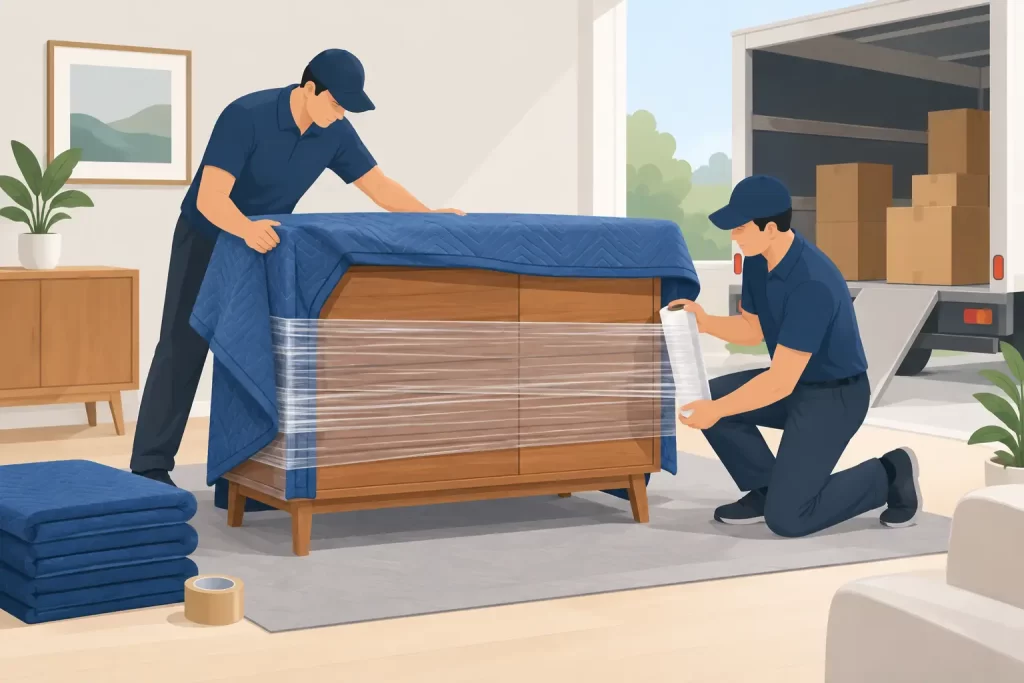
A solid timber dining table or family dresser can last for decades, but one rushed move can leave it with scratched edges, loose joints or water marks. Knowing how to protect timber furniture starts well before moving day. The right preparation, packing materials and handling method reduce the chance of costly damage while making loading and unloading safer for everyone.
Timber is tough, but its finish is vulnerable. Heat, moisture, pressure, sharp corners and friction can all cause problems, particularly when furniture is stacked, dragged or wrapped incorrectly. Whether you are moving one room or a full home, treat each timber piece as an item that needs protection from both impact and changing conditions.
Assess Each Piece Before You Pack
Start by looking closely at the furniture you are moving. Check for existing dents, scratches, wobbly legs, loose handles and weak joints. Take clear photos before packing, especially for valuable, antique or sentimental pieces. This gives you a useful record of the furniture’s condition and helps you plan how it should be handled.
Work out what can be dismantled without causing damage. Dining tables often travel better with legs removed, while bed frames, bookcases and cabinets may need shelves and doors taken off. Keep screws, brackets and bolts in labelled bags, then tape the bag securely to the underside or inside of the matching item. Do not place tape directly on polished timber, veneer or painted surfaces, as adhesive can lift the finish.
If a piece is already unstable, avoid forcing it apart. A loose antique chair or an older sideboard may be safer moved as one item with extra support and careful lifting. It depends on the furniture’s construction, its age and the access at both properties.
Clean and Dry Timber Furniture Properly
Dust and grit can act like sandpaper once furniture is wrapped or moved against another surface. Wipe timber down with a soft, dry or slightly damp microfibre cloth before packing. Allow it to dry completely, including around joins, handles and carved details.
Avoid applying fresh furniture polish, wax or oil immediately before a move. While these products are useful as part of routine care, a newly treated surface can remain soft or tacky. It may mark more easily under padding or transfer residue to wrapping materials. If furniture needs maintenance, do it several days before the move and follow the product directions.
How to Protect Timber Furniture With the Right Materials
The order of your wrapping matters. Put a soft, breathable layer against the timber first, then add cushioning and an outer protective layer. Clean moving blankets, padded furniture covers, cotton sheets or protective pads are suitable for the first layer. They reduce rubbing against the surface.
Bubble wrap is useful around corners, legs, handles and delicate carvings, but avoid wrapping polished timber tightly in plastic for an extended period. In warm Australian conditions, plastic can trap moisture and heat against the finish. For a short move, use it over a soft fabric layer rather than directly against the timber.
Secure pads with packing tape, stretch wrap or straps around the padding, not directly on the furniture. The wrap should be firm enough that it will not shift while carried, but not so tight that it places pressure on drawers, doors or decorative trim. Corners deserve extra attention because they are the first part of a table or cabinet to strike a wall, doorway or truck interior.
For glass-fronted timber cabinets, remove the glass shelves if possible and pack them separately. If fixed glass cannot be removed, protect it with cardboard and padded wrapping, then label the item clearly. Never rely on tape across glass alone to prevent breakage.
Prepare Drawers, Doors and Moving Parts
Empty drawers before moving. A full drawer adds weight, puts strain on runners and can shift unexpectedly when furniture is tilted. For lightweight, sturdy drawers, you may be able to leave them in place once empty, but secure them with a furniture strap or wrap around the outside of the padding.
Cabinet doors should be closed and secured so they cannot swing open. Avoid using tape directly on the timber. For pieces with removable shelves, take them out and wrap them separately to prevent internal movement. Protect handles and knobs with a small amount of padding, particularly on wardrobes, buffets and bedside tables where hardware sticks out.
Lift Timber Furniture, Never Drag It
Dragging a timber table across a floor can damage both the furniture and the flooring. It can also twist legs and loosen joints. Use enough people for the weight and shape of the item, lift from the strongest structural points and keep the piece as level as practical.
Do not lift a table by its top, a chair by its arms or a cabinet by a handle. These parts are not designed to carry the full load. Instead, lift from the frame or base. Before moving anything, measure doorways, hallways, stairwells and tight turns. Taking a few minutes to plan the route is far better than trying to pivot a wrapped table through a narrow doorway under pressure.
Furniture sliders can help move heavy items across carpet or hard floors, but use them carefully and only on stable pieces. They are useful for positioning furniture before it is lifted, not as a substitute for safe carrying. If access is difficult, professional removalists have the equipment, team size and experience to move awkward timber pieces without taking unnecessary risks.
Load the Truck in the Right Order
A well-packed truck protects furniture as much as good wrapping does. Timber furniture should sit upright where its design allows, be positioned against a secure wall of the truck, and be held in place with moving blankets and straps. Heavy items need to be low and stable, with weight distributed across the load.
Do not stack boxes directly on a timber tabletop, even if the boxes feel light. Movement during transport can create pressure marks or scratches. Likewise, avoid placing timber furniture beside items with exposed metal, sharp edges or dirty wheels. Mattresses, lounges and padded blankets can create a useful buffer, provided they are clean and dry.
Keep timber away from potential moisture. Wet garden equipment, leaking boxes, damp mats and recently cleaned outdoor furniture should not travel alongside indoor timber pieces. If rain is expected, have covers ready before loading begins and minimise the time furniture is exposed outdoors.
Protect Timber Furniture in Storage
Storage creates different risks from transport. Timber can react to long periods of humidity, heat and poor ventilation. Choose a clean, dry storage space and keep furniture off a concrete floor using pallets, boards or blocks. Concrete can hold and transfer moisture, particularly after wet weather.
Leave a small amount of airflow around wrapped furniture. Heavy plastic may be acceptable for a very short period, but long-term storage is better with breathable covers or blankets. Avoid storing timber next to external walls where temperature changes and condensation are more likely.
If you need to stack furniture, do so only where it is structurally safe. A strong dining table may support light, padded items placed carefully on top, but chairs, drawers and delicate cabinets should not carry weight. Check stored items from time to time, particularly through humid summers or extended wet periods.
Give Furniture Time to Settle at the New Home
Once delivered, unwrap timber furniture as soon as practical. Check each item against the photos taken before the move, then allow it to adjust to the room before putting heavy objects on it. This is especially helpful if the furniture has moved between very different temperatures or humidity levels.
Place tables, cabinets and drawers away from direct afternoon sun, heaters and air-conditioning outlets where possible. Use felt pads under legs to protect floors and make future repositioning easier. If a joint feels loose after the move, deal with it early rather than continuing to use the piece under load.
For households moving across Nowra, Wollongong or further afield, professional packing can be worthwhile for heavy timber furniture, antiques and large dining settings. Mr Muscle Removals can provide careful wrapping and handling so your furniture is prepared for the journey, not simply loaded onto a truck.
Good furniture protection is not about using the most packaging. It is about using the right layers, planning each lift and keeping timber dry, stable and supported from door to door.